







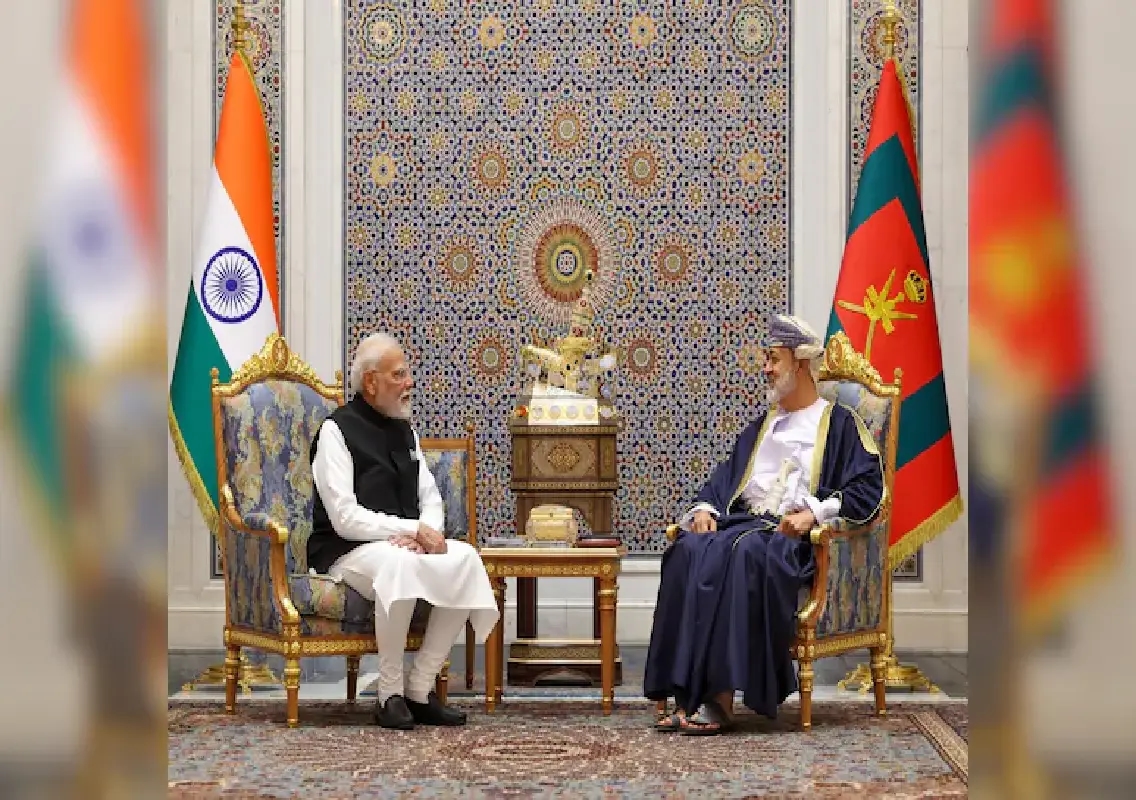


New Delhi: Prime Minister Narendra Modi on Tuesday held telephonic conversations with Haitham bin Tarik, Sultan of Oman, and Sheikh Sabah Al-Khaled Al-Hamad Al-Mubarak Al-Sabah, Crown Prince of Kuwait, expressing concern over recent attacks on their countries during the ongoing conflict in the Middle East, officials said.
During the discussions, the Prime Minister also reviewed the welfare and security of the Indian community residing in the two Gulf nations.
Concern over regional escalation
According to an official statement, the Prime Minister conveyed India’s deep concern over the escalating situation in the region and reiterated solidarity with the people of Oman and Kuwait.
“The Prime Minister spoke to two important leaders from the Gulf region on Tuesday afternoon. He had a phone call with the Sultan of Oman and also held a conversation with the Crown Prince of Kuwait,” an official said.
The calls came in the backdrop of a rapidly evolving security situation following a coordinated offensive reportedly launched against Iran by the United States and Israel. In the aftermath, Iran is said to have retaliated by launching drones and missiles targeting Israel and US military installations in the Gulf region, as well as strategic business and aviation hubs such as Dubai and Doha.
The regional flare-up has triggered heightened security alerts across several Gulf countries, home to millions of expatriates, including a large Indian diaspora.
Focus on Indian community’s safety
During his conversations, PM Modi placed particular emphasis on the welfare and safety of the Indian community in Oman and Kuwait. Both countries host sizeable Indian populations engaged in sectors ranging from construction and healthcare to education and oil and gas.
Officials said the Prime Minister sought updates on measures being taken to ensure the security of foreign nationals amid the volatile situation. He also assured India’s full cooperation in maintaining peace and stability in the region.
India shares deep historical, economic and cultural ties with Gulf nations. Bilateral trade between India and countries in the Gulf Cooperation Council (GCC) runs into several lakh crore rupees annually, and the region remains critical for India’s energy security.
Series of diplomatic engagements
The Prime Minister’s outreach to Oman and Kuwait is part of a broader diplomatic engagement over the past two days. He has also spoken to Hamad bin Isa Al Khalifa, King of Bahrain, and Mohammed bin Salman, Crown Prince of Saudi Arabia, condemning recent attacks on their countries and emphasising respect for sovereignty and territorial integrity.
In addition, PM Modi held discussions with Abdullah II, King of Jordan, expressing deep concern over the evolving security situation in West Asia.
He has also spoken to Mohamed bin Zayed Al Nahyan, President of the United Arab Emirates, and Benjamin Netanyahu, Prime Minister of Israel, as part of India’s diplomatic outreach amid the crisis.
These high-level contacts underline India’s efforts to maintain balanced relations in the region while advocating restraint and dialogue.
India’s strategic interests in the Gulf
The Gulf region holds immense strategic importance for India. Apart from being a key source of crude oil and liquefied natural gas, it is also a major destination for Indian workers. Remittances sent home by Indians working in Gulf countries contribute significantly to India’s foreign exchange reserves.
Given the potential impact of regional instability on global oil prices and maritime routes such as the Strait of Hormuz, the government is closely monitoring developments.
Officials indicated that India’s embassies in the affected countries are maintaining regular contact with community leaders and local authorities to ensure timely assistance if required.
Conclusion
As tensions continue to simmer in the Middle East, India has stepped up diplomatic engagement with key Gulf partners to safeguard its strategic interests and the wellbeing of its citizens abroad. The Prime Minister’s telephonic conversations reflect New Delhi’s proactive approach in navigating a complex and rapidly changing geopolitical landscape.