







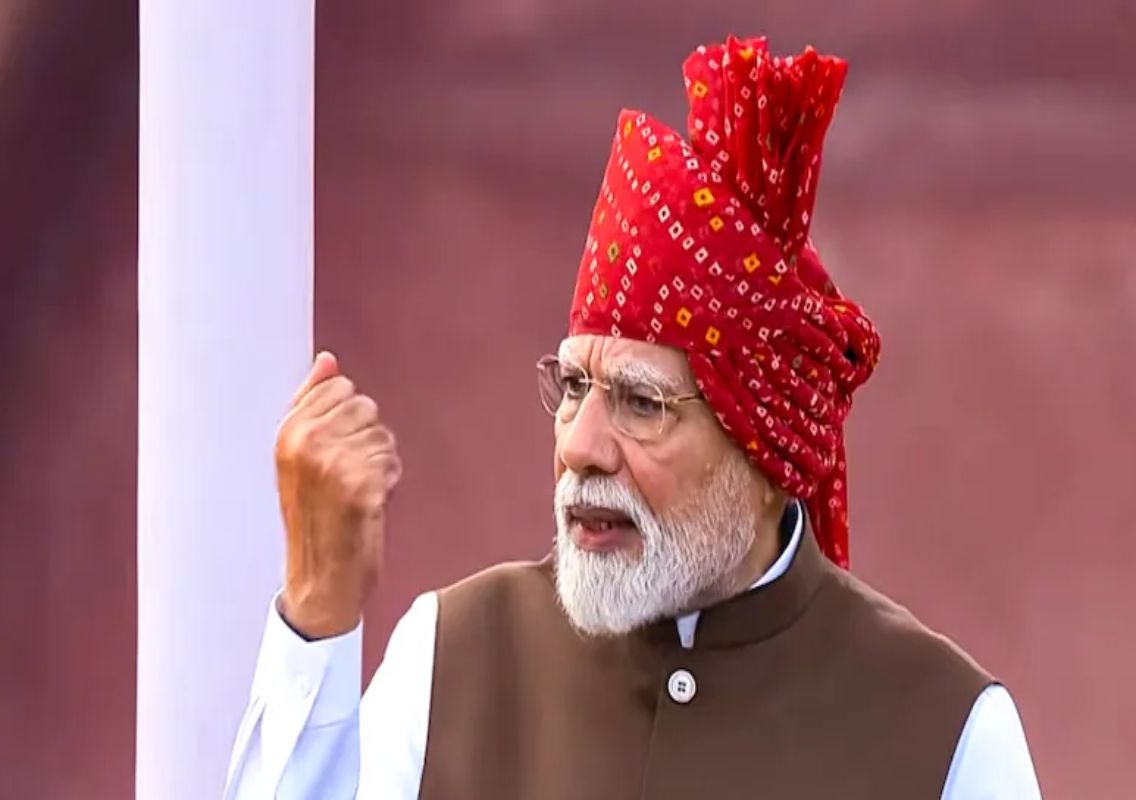


New Delhi: Prime Minister Narendra Modi, addressing the nation from the Red Fort on India’s 80th Independence Day, warned against what he described as a new challenge posed by “dimaagi Naxals”, saying people holding such a mindset must be identified and isolated. He said India had made significant progress in tackling armed Naxalism but cautioned that the ideology could continue to influence society and institutions.
In his Independence Day address on Saturday, August 15, the Prime Minister said individuals influenced by Maoist ideology had previously established themselves within the country’s corridors of power and had influenced policymaking through various positions, including advisory roles on government committees.
PM Modi says armed Naxal threat has been eliminated
PM Modi said the country had successfully tackled the armed Naxal challenge in forested areas. According to him, the government’s efforts had helped free the country from the crisis posed by armed Naxal groups.
However, he said the end of armed violence did not necessarily mean the end of the ideology associated with it.
“Dimaagi Naxals”, as the Prime Minister described them, represented what he portrayed as a continuing ideological challenge. He alleged that people holding such views could still be waiting for opportunities to influence society and create divisions.
The remarks formed part of a wider Independence Day speech in which the Prime Minister outlined his government’s priorities and spoke about India’s ambitions for the future.
‘Need to identify and isolate’ such people
PM Modi said those whom he described as “dimaagi Naxals” needed to be identified and isolated.
He alleged that people influenced by such thinking could contribute to violence and social discord through different methods. He also urged the country’s youth to remain aligned with what he described as the mainstream national effort to transform India into a developed nation.
The Prime Minister’s comments expand the use of the term Naxalism beyond armed insurgency. While armed Naxal groups have historically operated in parts of central and eastern India, Modi’s Independence Day remarks focused on an ideological dimension that he said could continue to affect public life even after the decline of armed Naxal activity.
Reference to Maoist influence in policymaking
During his speech, PM Modi said that individuals with a Maoist mindset had, over the years, become entrenched in the corridors of power.
He claimed that this ideology had influenced policies and that some individuals had done so while serving as advisers on government committees.
The Prime Minister did not identify specific individuals or organisations in the remarks reported by NDTV. Instead, he used the broader expression “dimaagi Naxals” to describe people whom he believes continue to subscribe to such an ideology.
His warning comes against the backdrop of the government’s long-running campaign against left-wing extremism. Security operations, development programmes and efforts to strengthen administrative and security infrastructure in affected areas have been central to the government’s approach to the Naxal problem.
Focus shifts from armed violence to ideology
One of the notable aspects of PM Modi’s remarks was the distinction he drew between armed Naxals and those who, according to him, continue to hold what he considers a Naxal or Maoist mindset.
The Prime Minister said armed Naxals had been eliminated from the forests, but argued that the ideological challenge remained.
He claimed that people with this mindset could use different tactics to pull society towards what he described as the “wrong path” and could contribute to violence and discord.
This framing places ideological influence alongside physical insurgency as a security and social concern. It also makes the issue relevant beyond areas traditionally associated with left-wing extremism.
Appeal to India’s youth
PM Modi linked his warning to India’s broader development ambitions, particularly the role of young people.
He called for the country’s youth to be aligned with the mainstream effort to build a developed India.
The appeal was consistent with the wider themes of the Independence Day address, where the Prime Minister spoke about India’s future and the need to strengthen national development.
By connecting his warning about ideological extremism with India’s development goals, Modi presented the issue not only as a matter of internal security but also as a challenge to the country’s broader social and economic progress.
Independence Day address comes at a significant moment
The Prime Minister’s remarks came during India’s 80th Independence Day celebrations at the Red Fort in New Delhi.
His speech covered several issues concerning India’s national priorities. Among the themes highlighted during the address were national security, energy security, economic development and India’s ambition to become a developed nation.
The comments on “dimaagi Naxals” therefore formed one part of a larger address rather than a standalone announcement of a new security policy.
The Prime Minister’s use of the term is also likely to attract political attention because it goes beyond the conventional description of Naxalism as an armed insurgency. The specific definition and application of the expression will be important in determining how it is interpreted in the political and public debate.
What PM Modi said about the Naxal challenge
The core message from the Prime Minister was that the government considers the decline of armed Naxalism only one part of the broader challenge.
He said:
- Armed Naxals had been eliminated from the forests.
- Maoist ideology had previously influenced policymaking, according to his claim.
- People with what he called a “dimaagi Naxal” mindset could continue to pose a threat.
- Such individuals should be identified and isolated.
- India’s youth should remain focused on the country’s development journey.
The remarks underline the government’s continued focus on left-wing extremism even as the nature of the threat changes.
Conclusion
PM Narendra Modi’s Independence Day warning about “dimaagi Naxals” adds an ideological dimension to his government’s narrative on the Naxal challenge. While he said armed Naxalism had been successfully tackled in the forests, he cautioned that people holding Maoist-oriented views could continue to influence society and institutions.
His call to identify and isolate such individuals, along with his appeal to young Indians to contribute to the country’s development, places the issue within the larger national security and development agenda outlined in his 80th Independence Day address.