


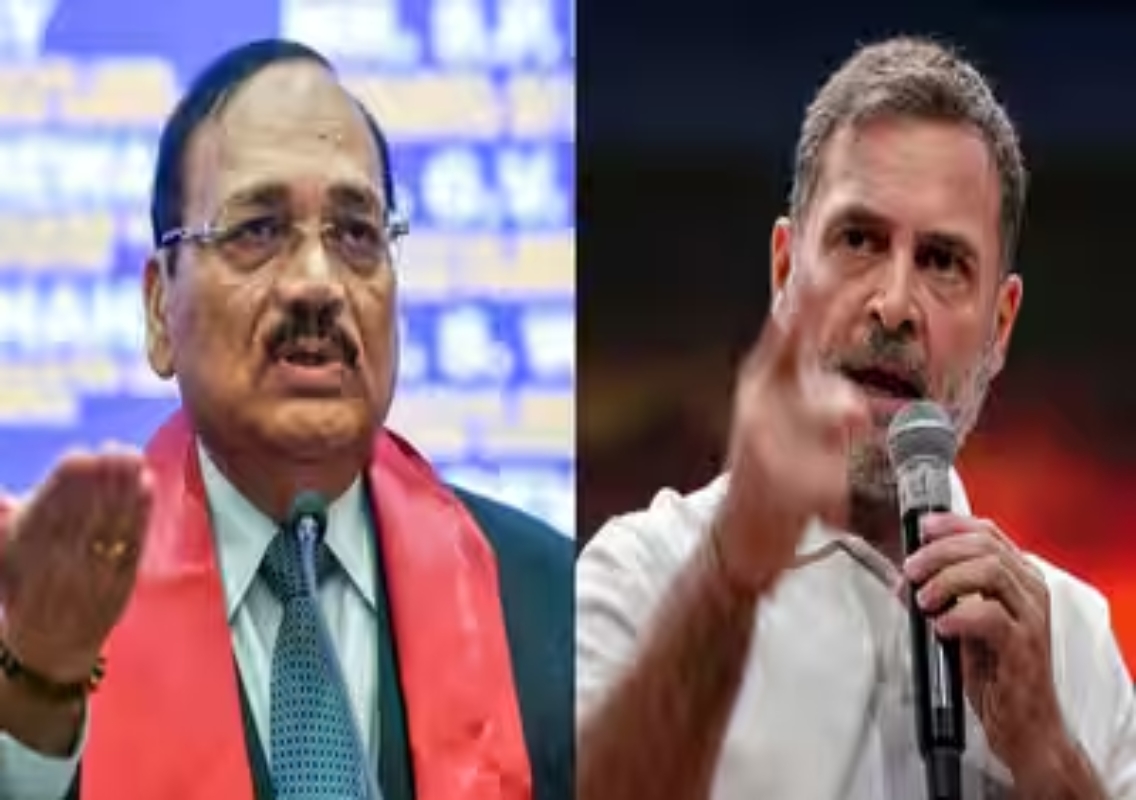


New Delhi: The Supreme Court registry has flagged more than 10 procedural defects in a petition filed by INDIA bloc leaders against Chief Election Commissioner Gyanesh Kumar over alleged large-scale voter deletions and irregularities in the Special Intensive Revision (SIR) of electoral rolls. The objections include missing or illegible pages, a shortfall of more than ₹200 in the court fee and a request for a clearer copy of Congress president Mallikarjun Kharge’s identity card, according to a report by The Times of India, citing sources and PTI.
The petition was filed by opposition leaders led by Rahul Gandhi, who sought judicial scrutiny of the Election Commission’s functioning and alleged irregularities in the revision of electoral rolls. The registry’s objections concern the paperwork submitted with the plea; they do not, by themselves, determine the merits of the allegations raised by the petitioners.
The development came after Rahul Gandhi and several opposition leaders marched to the Supreme Court to submit their petition. The INDIA bloc leaders sought measures relating to the Election Commission’s decision-making, voter deletions during SIR and the use and deployment of electronic voting machines (EVMs).
Supreme Court registry identifies filing-related issues
According to the report, the Supreme Court registry identified more than 10 defects in the petition on Monday. Among the objections was a request for a clear copy of the identity card of Mallikarjun Kharge, Congress president and Leader of the Opposition in the Rajya Sabha, who is one of the co-petitioners.
The registry also flagged pages that were either illegible or missing from the petition. In addition, it pointed out a shortfall of more than ₹200 in the court fee submitted with the filing. These issues were reported by PTI, citing sources.
The objections relate to the completeness and documentation of the submission. The available report does not state that the Supreme Court has ruled on the substance of the allegations against the Election Commission.
What the INDIA bloc leaders have sought
The petition raises concerns about alleged arbitrary deletions of voters during the Special Intensive Revision of electoral rolls. The opposition leaders have sought scrutiny of the Election Commission’s functioning and measures to prevent Chief Election Commissioner Gyanesh Kumar from taking decisions unilaterally, according to the report.
The petitioners have also called for the suspension of SIR without challenging its legality. They have sought the inclusion of eligible voters in the electoral rolls of Punjab and other states preparing for elections.
The plea also addresses the system governing the use and deployment of electronic voting machines. These requests form part of the opposition’s broader demand for scrutiny of electoral processes and the management of voter lists.
The petitioners’ concerns are allegations and requests for judicial consideration. The report does not establish that the alleged voter deletions or other irregularities have been judicially proven.
Several opposition leaders join the petition
The petition was filed by a group of opposition leaders from different political parties. Besides Rahul Gandhi and Mallikarjun Kharge, the listed petitioners include Trinamool Congress leader Saugata Roy, Samajwadi Party chief Akhilesh Yadav and Rashtriya Janata Dal leader Tejashwi Yadav.
Other petitioners named in the report are Shiv Sena (UBT) leader Sanjay Raut, Communist Party of India (Marxist) leader M A Baby, Communist Party of India leader D Raja, Jharkhand Mukti Morcha leader Mahua Majhi, Nationalist Congress Party (Sharadchandra Pawar) leader Supriya Sule and Indian Union Muslim League leader E T Mohammed Basheer.
The participation of leaders from several parties reflects the INDIA bloc’s collective effort to bring its concerns over electoral-roll revisions and election administration before the Supreme Court.
Petition seeks independent audit of electoral rolls
The petition has also sought the formation of an independent committee headed by a retired Supreme Court judge, assisted by technical experts and other eminent citizens. The proposed panel would conduct an independent audit, within a fixed timeframe, of deletions and changes made to electoral rolls during SIR.
In addition, the petition requests a panel to examine the integrity of electoral-roll databases and the implementation of the revision exercise.
These requests indicate that the petitioners are seeking an independent examination of how electoral rolls are maintained and revised. The proposed audit would focus on changes made during SIR, while the requested panel would examine the integrity of the underlying databases and the rollout of the exercise.
The report does not indicate that the Supreme Court has accepted these requests or ordered the formation of either panel. They remain demands placed before the court by the petitioners.
Rahul Gandhi responds after CJI declines meeting
Before filing the petition, Rahul Gandhi and other opposition leaders marched to the Supreme Court. The delegation sought to meet the Chief Justice of India (CJI), but the CJI declined to meet them, according to the report.
Rahul Gandhi subsequently said that the opposition respected the CJI and the Supreme Court and welcomed the indication that the leaders could file a petition. He described the opportunity to approach the court as “a path forward”.
His response indicated that the opposition intended to pursue its concerns through legal proceedings rather than rely solely on its request for a meeting with the CJI.
What happens next?
The registry’s objections highlight procedural issues in the petition submitted by the INDIA bloc leaders. The reported defects include missing or illegible pages, an identity-document requirement and a shortfall in the court fee.
The petition seeks scrutiny of alleged voter deletions during SIR, examination of the Election Commission’s functioning and an independent audit of electoral-roll changes. However, the registry’s objections should be distinguished from the substantive questions raised in the case.
The report does not confirm the final status of the filing after the objections were raised or indicate that the court has delivered a ruling on the petition’s demands. The next steps will depend on the petitioners addressing the filing-related issues and the subsequent course of proceedings.