







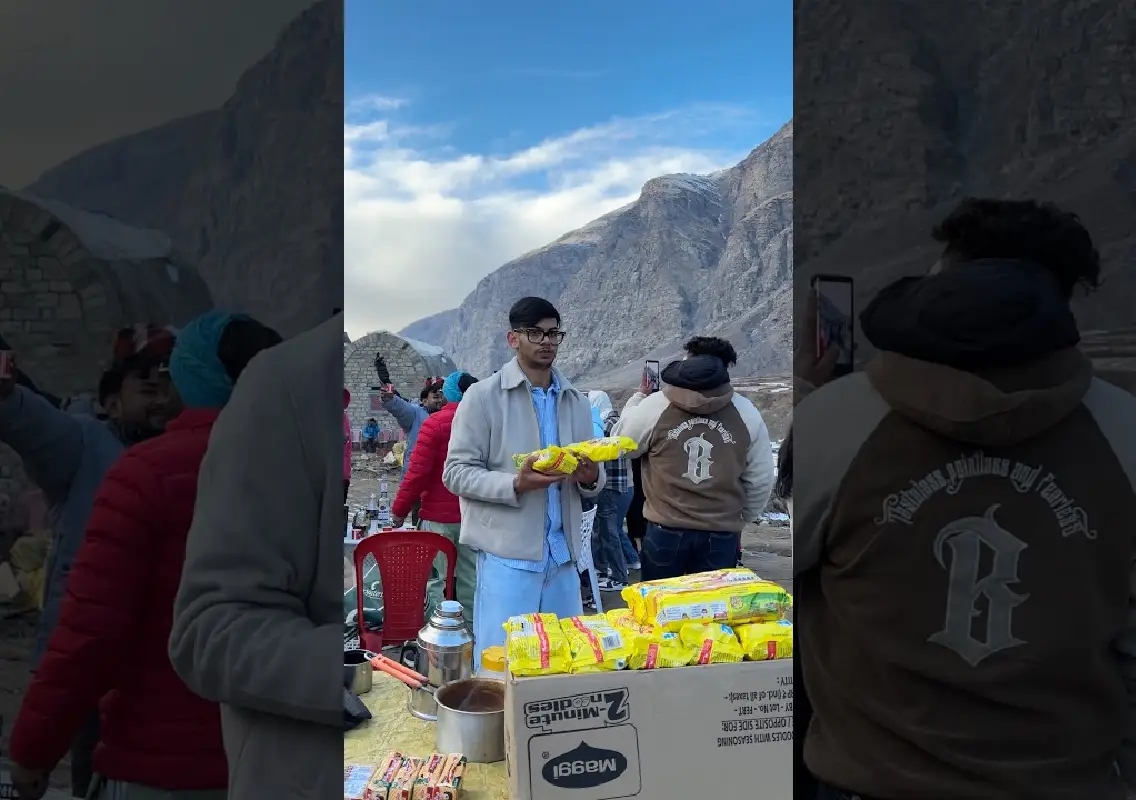


A video shared by a content creator claiming he earned around ₹21,000 in a single day by selling Maggi noodles in the mountains has gone viral, triggering widespread discussion on social media about alternative livelihoods and the realities behind such earnings.
The video was posted by content creator Badal Thakur, who documented his one-day experiment of setting up a small Maggi stall at an undisclosed mountainous location. Equipped with a table and an LPG cylinder, he sold regular Maggi at ₹70 per plate and cheese Maggi at ₹100.
Viral claim draws massive attention
According to Thakur, he sold between 300 and 350 plates throughout the day, generating a gross income of approximately ₹21,000. Captioned “Selling Maggi in Mountains for a Day”, the video crossed 4 million views, underlining Maggi’s enduring popularity as a comfort food in hill stations.
The clip showed steady footfall, with tourists stopping by for quick, hot meals — a familiar sight across India’s mountain destinations.
Social media reacts with humour and caution
The claim stunned many viewers, with users calculating that such earnings could translate to over ₹6 lakh a month. Comments ranged from humorous — “Should I quit my job?” — to aspirational takes from fellow creators joking about switching careers.
However, several users pointed out that the ₹21,000 figure represented gross revenue, not net profit. They highlighted expenses such as raw Maggi packets, LPG costs, transportation in hilly terrain, disposable plates, and labour.
One detailed comment estimated that after deducting costs — including ingredients, fuel, transport and a helper’s wages — the daily profit could be closer to ₹8,000. “It’s still good money, but struggles are real, especially working in minus temperatures,” the user noted.
Reality behind viral success
While the video showcased the earning potential of small food stalls in tourist-heavy areas, it also sparked a broader conversation about sustainability, physical hardship, and the difference between one-day experiments and long-term livelihoods.
The viral moment has once again highlighted how social media can amplify simple ideas — while also reminding viewers to look beyond headline figures and consider the ground realities behind them.