







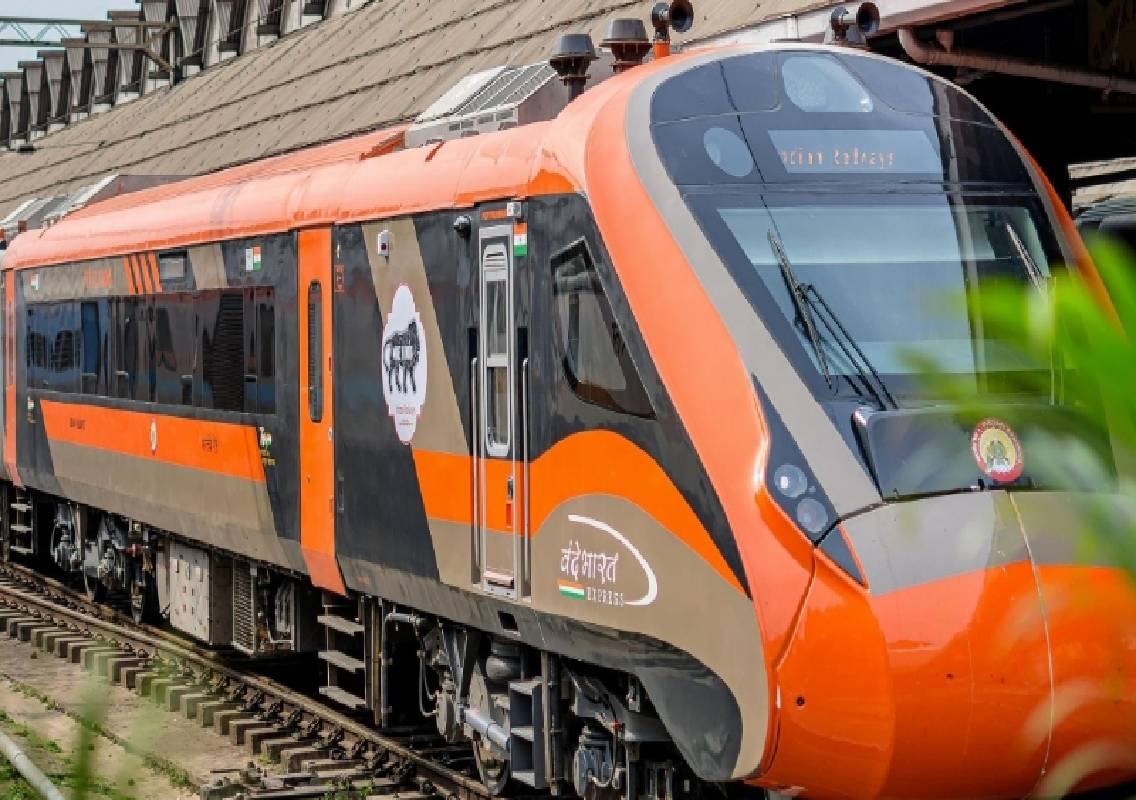


Bengaluru: The much-awaited Bengaluru-Mangaluru Vande Bharat Express is set to undergo another crucial trial run on September 5, with an empty 16-coach rake scheduled to operate between Yesvantpur and Mangaluru Central. The trial is intended to assess the train’s running time and the feasibility of operating the service through the challenging Western Ghats section.
According to the tentative schedule reported by Public TV, the train will depart from Yesvantpur Junction at 6.05 am and reach Mangaluru Central at 2.25 pm. On the return journey, it is scheduled to leave Mangaluru Central at 3 pm and arrive at Yesvantpur at around 11 pm. The timings are only for the trial run and should not be treated as the final commercial schedule.
The latest trial marks another step towards introducing a faster Vande Bharat connection between Bengaluru and the coastal city.
Trial run scheduled for September 5
The September 5 exercise will use a vacant 16-coach Vande Bharat rake. The primary objective is to evaluate the operating time and route feasibility between Yesvantpur and Mangaluru Central.
The tentative timetable includes halts at Hassan, Sakleshpur and Subrahmanya Road. The train is scheduled to reach Hassan at 9 am, Sakleshpur at 9.55 am and Subrahmanya Road at 12.30 pm on its onward journey before arriving at Mangaluru Central at 2.25 pm.
On the return journey, the rake is scheduled to leave Mangaluru Central at 3 pm, reach Subrahmanya Road at 4.30 pm, Sakleshpur at 6.30 pm and Hassan at 7.20 pm before reaching Yesvantpur at 11 pm.
Railway authorities are expected to use the trial to examine timings and operational requirements along the route.
Ghat section remains the biggest challenge
The most technically challenging part of the Bengaluru-Mangaluru route is the Sakleshpur-Subrahmanya Road ghat section.
The approximately 55-km stretch passes through the Western Ghats and includes numerous tunnels, bridges and sharp curves. Earlier reporting by the Times of India noted that the section has 57 tunnels, 226 bridges and 108 sharp curves.
The steep gradients on this route have been a major reason for delays in introducing a Vande Bharat service between Bengaluru and Mangaluru.
Conventional Vande Bharat trainsets were not initially equipped with the automatic emergency braking technology required for operating safely on the ghat section. The Railway authorities therefore worked towards deploying a rake fitted with an Automatic Emergency Braking (AEB) system.
Why Automatic Emergency Braking is important
The AEB system is particularly important because of the steep gradients on the Sakleshpur-Subrahmanya Road section.
According to Public TV, the system can automatically control the train’s speed in the ghat section and apply emergency braking if required. The report states that the system is designed to limit the train to a maximum speed of 30 kmph in the relevant section.
The requirement is linked to the railway’s safety assessment of the challenging terrain.
At present, conventional trains operating through the ghat section may require additional banker locomotives to assist them on steep gradients. Public TV reported that using such locomotives with a Vande Bharat would reduce the operational advantage of the faster train and involve additional time for attaching and detaching the locomotives.
The AEB-equipped rake is therefore an important part of the effort to make Vande Bharat operations possible on this route.
Earlier trials focused on the ghat section
The September 5 trial follows earlier technical testing conducted on the route.
In August, trials were carried out on the Sakleshpur-Subrahmanya Road ghat section to assess the performance of the Vande Bharat rake and its braking systems. Business Today reported that trials on the challenging section were scheduled from August 11 to 20, with particular attention to the train’s ability to operate safely through the Western Ghats.
The trials were significant because successful operation through this section is essential before a full Bengaluru-Mangaluru service can be introduced.
Earlier reports had also indicated that the Railways was working on retrofitting an existing Vande Bharat rake with the necessary automatic emergency braking system.
Tentative timings show an eight-hour journey
The September 5 trial schedule indicates a journey of approximately 8 hours and 20 minutes from Yesvantpur to Mangaluru Central, based on the scheduled 6.05 am departure and 2.25 pm arrival.
The return trial is expected to take about 8 hours, with the rake leaving Mangaluru Central at 3 pm and reaching Yesvantpur at 11 pm.
However, these timings should not be considered the final schedule for passengers. Trial runs are conducted to assess operational feasibility, and the commercial timetable can change after railway authorities complete their evaluations and obtain the necessary approvals.
Earlier reporting had suggested that a Bengaluru-Mangaluru Vande Bharat could significantly reduce travel time compared with conventional services on the route.
Proposed stops include Hassan and Subrahmanya Road
The trial timetable provides an indication of the stations that could play an important role in the proposed service.
The rake is scheduled to halt at Hassan Junction, Sakleshpur and Subrahmanya Road during the September 5 trial. Mangaluru Central and Yesvantpur are the two terminal stations for this particular test.
Whether these will remain the final commercial stops, or whether additional changes will be made, will depend on the eventual railway notification.
Passengers should therefore wait for an official commercial timetable before planning journeys based on the trial timings.
Commercial launch still requires approvals
The September 5 trial does not mean that passengers can immediately book tickets on the route.
The Vande Bharat service will have to complete the required technical and safety procedures before commercial operations can begin. Earlier reporting had noted that safety certificates and approvals would be required after the trials before the service could be launched.
Public TV reported that once the trial run is successfully completed, approval from the Railway Board would be required before commercial operations can begin.
The exact inauguration date, ticket fares, frequency and final stoppages have therefore not been confirmed through the September 5 trial schedule.
Boost for Bengaluru-Mangaluru connectivity
A Vande Bharat service between Bengaluru and Mangaluru would provide an important rail connectivity upgrade between Karnataka’s capital and its coastal region.
Mangaluru is a major commercial, educational and tourism centre, while Bengaluru has strong business and employment links with the coastal districts. Faster rail connectivity could benefit business travellers, students, tourists and other passengers travelling between the two cities.
The service could also offer an alternative to road and air travel for passengers looking for a faster rail option.
The route’s geographical challenges, however, mean that speed cannot be considered separately from safety. The testing of AEB technology and detailed trials through the Western Ghats are therefore crucial steps before passenger operations begin.
September 5 trial marks another milestone
The proposed September 5 trial run is an important milestone in the long-awaited Bengaluru-Mangaluru Vande Bharat project. The operation of an empty 16-coach rake between Yesvantpur and Mangaluru Central will allow railway officials to assess the route and operating schedule once again.
With the difficult Sakleshpur-Subrahmanya Road section being a central focus, the successful completion of the trial could bring the proposed service closer to commercial operations.
For now, the 6.05 am Yesvantpur departure and 2.25 pm Mangaluru arrival are trial timings only. Passengers will have to wait for the Railway authorities to announce the final commercial schedule, fares, stoppages and launch date.
If the remaining safety and operational approvals are secured, the Bengaluru-Mangaluru Vande Bharat could become a significant addition to Karnataka’s intercity rail network, offering faster connectivity between the State’s capital and the coastal city.