







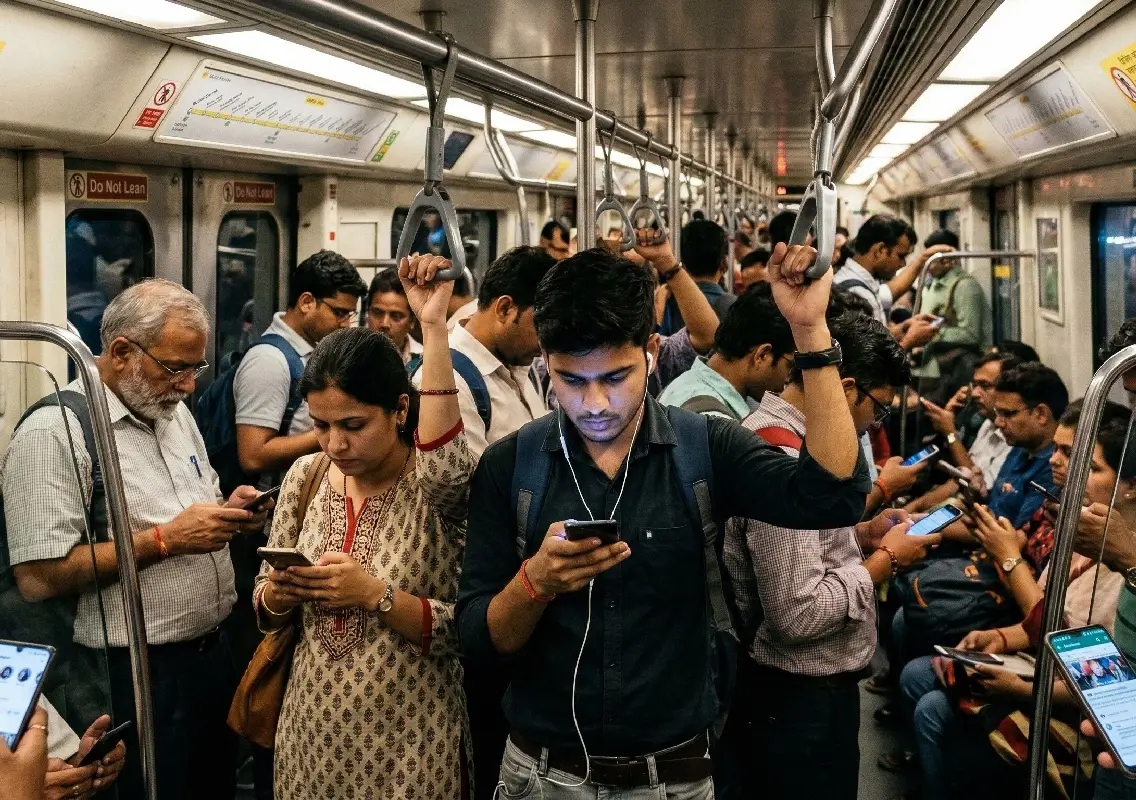


A simple observation made during an early morning metro ride in Bengaluru has sparked a lively online discussion about social media habits and the growing dependence on short-form content.
Entrepreneur Vasant Shetty shared his experience on social media platform X after travelling in the city’s metro following a family event in Udupi.
According to his post, he reached Bengaluru around 5:00 am and boarded the metro from Goraguntepalya. While travelling inside the coach, he noticed a pattern in how passengers were spending their time.
Three types of commuters
Shetty said he observed three distinct groups of passengers during the journey.
According to his estimate, around 10 per cent of commuters were trying to catch a quick nap, while another 10 per cent were talking to friends or simply sitting quietly.
However, the majority—about 80 per cent of passengers—were looking at their phones, many of them scrolling through Instagram reels, which he identified from the characteristic thumb movements.
“Instagram addiction is very real,” Shetty wrote in his post, suggesting that the habit of endlessly scrolling short videos has become deeply embedded in everyday routines.
Viral post sparks debate online
The observation quickly gained attention online, prompting users to share their own experiences from daily commutes.
Some agreed with Shetty’s perspective and said they had noticed similar behaviour on public transport, where many passengers remain glued to their screens throughout the journey.
One user commented that they felt like an exception, writing that they do not use platforms like Instagram or Facebook and mainly rely on X or LinkedIn.
Others criticised what they described as an increasing culture of “doom-scrolling”, where users spend long periods watching short videos and social media content.
Different perspectives on social media use
Not everyone agreed with the idea that such behaviour indicates addiction. Some users argued that social media simply fills idle time during travel.
One commenter noted that if smartphones were not available, commuters might have spent the same time reading newspapers, listening to the radio or music, or engaging in other forms of entertainment.
Another user suggested that smartphones often serve as a convenient way to avoid awkward social situations during crowded commutes.
“Phones sometimes help avoid making eye contact with people who might ask for your seat,” the comment read.
A reflection of modern urban life
The viral discussion highlights a relatable aspect of modern urban living, where digital devices increasingly shape everyday habits.
In busy cities like Bengaluru, where thousands of commuters rely on public transport daily, mobile phones often become a quick escape during travel.
Whether seen as convenience, entertainment or a sign of digital dependence, Shetty’s simple metro observation has opened a broader conversation about how technology influences human behaviour in public spaces.