







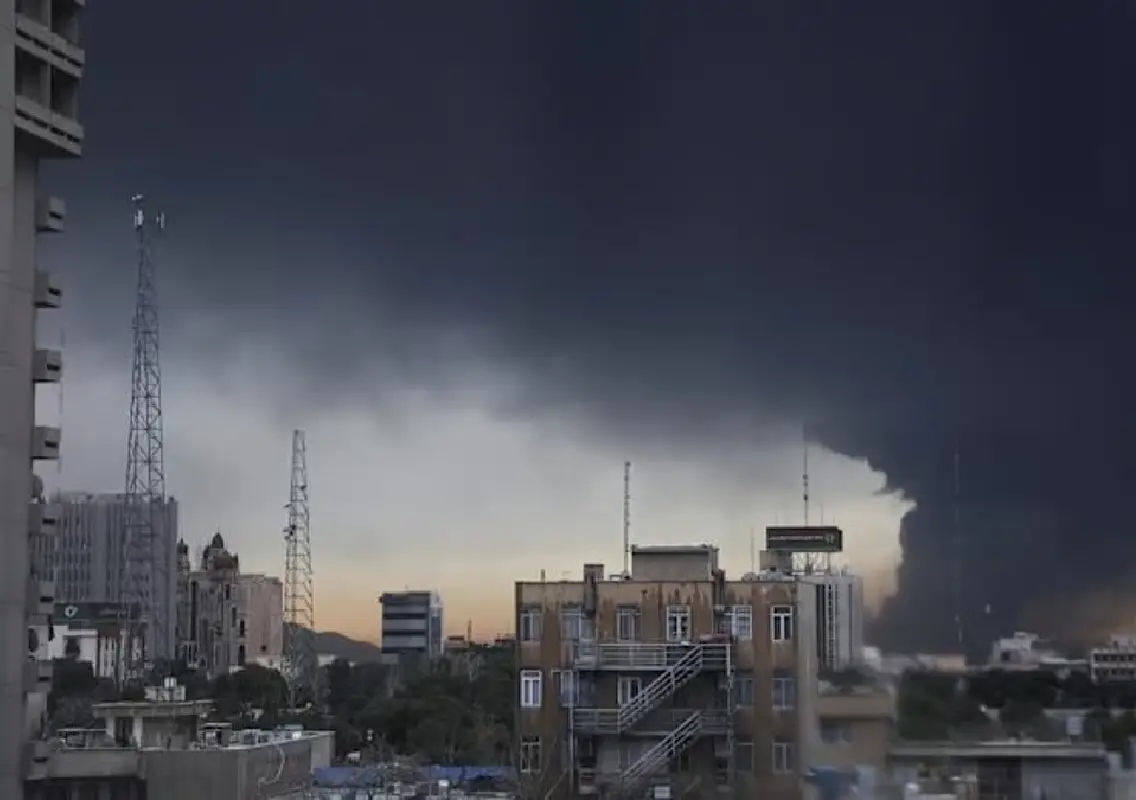


Despite reports of multiple bombings and strikes targeting energy infrastructure in Iran’s capital, Tehran recorded relatively clean air on Monday, with its Air Quality Index (AQI) remaining within the ‘good’ category.
Real-time data showed Tehran’s AQI fluctuating between 33 and 42, which falls within the healthy range of 0–50. The readings came even after visuals circulating on social media showed thick plumes of smoke following explosions that reportedly targeted oil deposits and fuel storage facilities in and around the city.
Air quality remains stable after blasts
Concerns were raised about toxic emissions and possible environmental damage after the reported strikes. However, air quality monitoring data indicated that pollution levels remained largely stable in Tehran despite the short-term smoke and emissions.
Experts note that temporary incidents such as fires or explosions may cause short spikes in pollutants but do not always lead to prolonged deterioration in air quality if winds disperse the emissions quickly.
More information about the air quality scale can be found here:
https://en.wikipedia.org/wiki/Air_quality_index
Indian cities record higher pollution levels
In contrast, several major cities in India recorded higher AQI levels on Monday.
According to available data, Delhi reported an AQI of around 133, Bengaluru 146, Mumbai 122, and Hyderabad 154. These readings fall within the moderate to poor categories on the AQI scale.
During winter months, pollution in the Delhi-NCR region frequently worsens, with AQI levels crossing 300–350, entering the ‘very poor’ category and occasionally reaching the ‘severe’ range.
Why pollution remains a challenge in India
Environmental experts attribute India’s persistent air pollution to a combination of structural and environmental factors.
Vehicle emissions from rapidly increasing private vehicles, dust from large-scale construction activities, and industrial emissions from factories and power plants are among the key contributors.
Seasonal crop stubble burning in northern states also worsens air quality during winter months. In addition, geographical conditions such as temperature inversion during colder seasons trap pollutants close to the ground, preventing them from dispersing.
Serious health concerns
Long-term exposure to polluted air has been linked to severe health risks including asthma, bronchitis, cardiovascular disease, and lung cancer.
According to a report published in The Lancet, approximately 17.18 lakh deaths in India in 2022 were linked to air pollution and related causes, highlighting the scale of the public health challenge.