







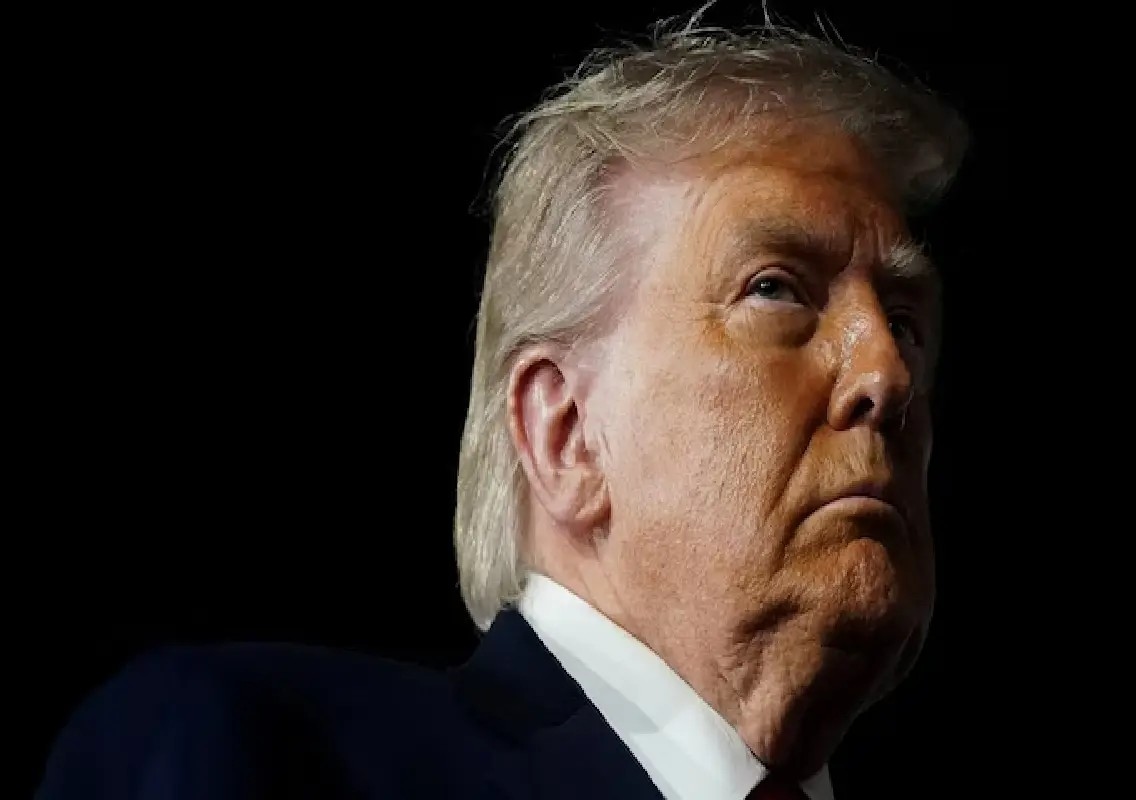


Washington: US President Donald Trump on Saturday warned that “the Islamic Republic of Iran will no longer exist” if the United States is forced to “militarily complete the job” it had begun earlier this year, following a second consecutive day of American strikes against Iranian targets.
The latest escalation comes amid growing tensions between Washington and Tehran, with the United States accusing Iran of violating a ceasefire agreement and carrying out attacks on commercial shipping in the Strait of Hormuz.
Trump issues stern warning
In a post on his Truth Social platform, Trump said US aircraft had struck Iranian missile and drone storage facilities as well as coastal radar installations.
“United States aircraft just struck Iranian missile and drone storage locations, and coastal radar sites, for violating the ceasefire agreement, again,” Trump wrote.
He further warned that if the United States was forced to escalate military action, “the Islamic Republic of Iran will no longer exist.”
The remarks represent one of Trump’s strongest statements against Iran since tensions resurfaced in the region.
Fresh US military action
According to the United States Central Command (CENTCOM), the latest strikes targeted Iranian surveillance infrastructure, communication systems, air defence sites, drone storage facilities and minelayer capabilities.
The US military said the operation was carried out after Iran allegedly launched a one-way attack drone that struck the Panama-flagged tanker M/T Kiku near the Strait of Hormuz.
According to CENTCOM, the vessel was carrying more than two million barrels of crude oil when it was hit.
The strikes followed similar military action by the United States on Friday against Iranian missile and drone facilities and coastal radar sites.
Washington accuses Iran of violating ceasefire
US officials said the latest operations marked the first direct American military response since Washington and Tehran reached a preliminary memorandum of understanding aimed at reducing tensions and preventing further escalation.
Hours before Friday’s strikes, Trump had hinted at possible retaliation when asked by reporters whether the United States would respond.
“You’ll find out,” the President said.
US Vice President JD Vance also defended the military action and warned Tehran against further attacks.
“Iran signed a ceasefire agreement. We have honoured it. If they have disagreements about how the MOU is being applied, they can pick up the phone. But violence will be met with violence,” Vance wrote on X.
Concerns over Strait of Hormuz security
The renewed confrontation has heightened concerns over security in and around the Strait of Hormuz, one of the world’s most critical energy shipping routes.
The narrow waterway handles a significant share of global crude oil exports and has long been a flashpoint in relations between Iran and the United States.
Analysts fear that any prolonged disruption in the Strait of Hormuz could have serious implications for global energy markets and regional stability.
Fragile understanding under strain
The exchange of military action and sharp rhetoric marks the most serious test yet of the fragile understanding reached between Washington and Tehran.
Both countries have accused each other of undermining efforts to maintain stability in the region, raising fears of a broader confrontation if diplomatic channels fail to contain the crisis.
As tensions continue to rise, the international community is closely monitoring developments, with concerns growing that further escalation could have far-reaching consequences for Middle East security and global energy supplies.