


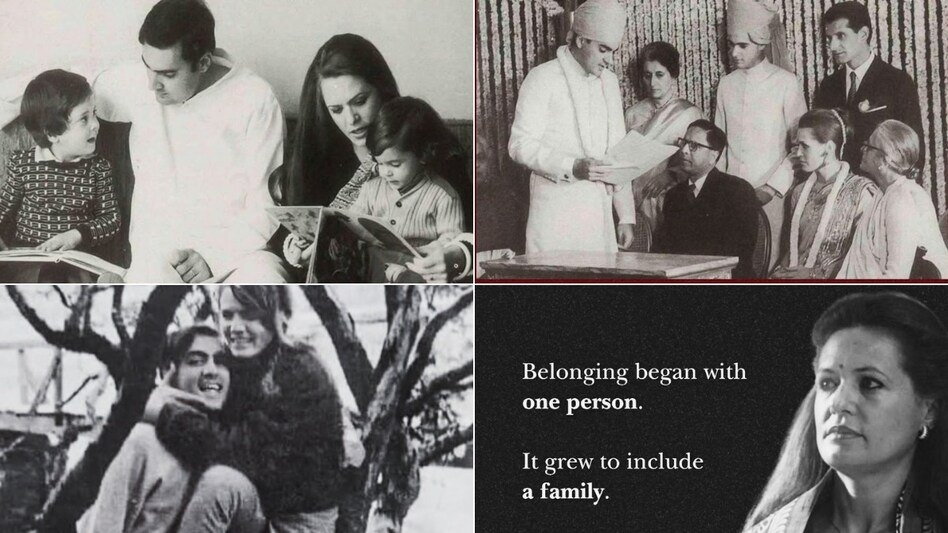


New Delhi: Sonia Gandhi‘s memoir Belonging: A Journey of Love offers a personal account of the warmth and affection she received from the Bachchan family when she arrived in India in January 1968 to marry Rajiv Gandhi. Her recollections focus particularly on poet Harivansh Rai Bachchan and his wife, Teji Bachchan, who helped her adjust to an unfamiliar country and its customs.
However, despite the decades-long friendship between the Gandhi and Bachchan families, the memoir largely avoids discussing how their relationship later became distant. Amitabh Bachchan, who was a close friend of Rajiv Gandhi, receives only brief mentions, while his wife, Jaya Bachchan, is not mentioned in the book, according to the account.
The contrast between Sonia’s affectionate memories of her early days in India and the absence of any detailed discussion of the families’ later differences makes the memoir’s treatment of the Bachchans particularly notable.
How the Bachchans welcomed Sonia Gandhi to India
Sonia arrived in India from Italy in January 1968, ahead of her marriage to Rajiv Gandhi. She was entering a country whose language, customs and social expectations were largely unfamiliar to her. The transition was not easy, particularly as she had left behind her family and the life she had known in Italy.
It was Indira Gandhi who arranged for Sonia to stay with the Bachchan family at their Delhi residence at 13 Willingdon Crescent before the wedding. The Bachchans had been close friends of the Nehru-Gandhi family for years, with their association dating back to Allahabad.
Their home became Sonia’s first place of comfort in India. Amitabh Bachchan, who was already friends with Rajiv, was also among those who welcomed her at the airport.
In the memoir, Sonia remembers Teji Bachchan as one of the first people who made her feel at home. She describes her as warm, attentive and maternal, someone who helped her understand Indian traditions and offered reassurance during a difficult period of adjustment.
Recalling the first meeting, Sonia writes: “Tiny Mrs. Bachchan, clad in a jacket and slacks, head covered in a French-style scarf, welcomed me in the porch with the sweetest of smiles and a warm embrace. I felt at once relieved and reassured.”
The description captures the importance of that welcome for a young woman who was far away from her family and familiar surroundings.
Teji Bachchan became a maternal figure
Sonia’s recollections suggest that Teji’s support extended well beyond the initial days of hospitality. She looked after Sonia when she fell ill and remained attentive to her needs as she settled into her new life.
Their relationship also continued through the years. Sonia remembers receiving gifts from Teji, including a puppy after the death of her firstborn son, who lived for only a few hours.
The gesture is recalled as an example of the personal affection that existed between them. At a time of profound grief, Teji’s thoughtfulness offered Sonia a source of comfort.
Sonia portrays her as someone who was consistently willing to help and guide her. Rather than treating her merely as a guest staying before a wedding, Teji appears in the memoir as a person who took a genuine interest in her well-being.
These memories also provide a glimpse into the close personal relationships that existed between the two families before their later public differences.
Harivansh Rai Bachchan’s advice stayed with Sonia
While Teji helped Sonia adjust to Indian customs and daily life, Harivansh Rai Bachchan played a different role. The celebrated Hindi poet helped her with the language and occasionally used their conversations to offer advice about life in India.
Sonia had studied English for years, but communicating comfortably in her new surroundings was still challenging. She found it difficult to understand certain Indian accents and struggled with the language barrier.
Harivansh Rai Bachchan would sometimes teach her Hindi during their brief interactions. However, one particular piece of advice became more memorable than the language lessons.
He told her: “You must know, Sonia beti, child, that in this country it is not what you are that counts, it is what people think you to be.”
At the time, Sonia found the observation difficult to understand. She wondered whether the poet was suggesting that she would never be able to express her real self and would instead have to present herself according to other people’s expectations.
She recalls that the advice often left her confused. On several occasions, after Rajiv dropped her back, she would quietly cry and long for her family and home in Italy.
Rajiv tried to reassure her during this period, but the emotional adjustment remained difficult.
Looking back, however, Sonia says she eventually understood the significance of Harivansh Rai Bachchan’s words. She recognised that the poet, who had himself experienced the unpredictability of public opinion, was warning her about the way people could form perceptions and judgements.
In the memoir, she writes: “This warning invariably left me wondering—does he mean that I can never be myself? I was I, and that’s the way I was; how could I possibly show myself differently?”
She later acknowledges the wisdom behind his observation, describing him as a poet and a sensitive man who understood the fickleness of the public.
Rajiv Gandhi and Amitabh Bachchan’s long friendship
The memoir’s warm recollections take on added significance when viewed against the history of the relationship between the two families.
Amitabh Bachchan and Rajiv Gandhi’s friendship went back to their younger years. Their families had known each other for decades through the association between Harivansh Rai Bachchan and the Nehru family in Allahabad.
The two men grew up around each other and maintained their friendship into adulthood. Their personal association also meant that the Bachchan family was closely connected to some important moments in the Gandhi family’s life.
One such instance came in 1982, when Amitabh suffered a near-fatal accident while shooting for the film Coolie. Indira Gandhi and Rajiv Gandhi were among those who stood by the Bachchan family during the actor’s difficult recovery.
Amitabh later entered politics in 1984, contesting the Lok Sabha election from Allahabad as a Congress candidate. He won by a substantial margin, defeating former Uttar Pradesh chief minister HN Bahuguna.
His political career, however, was relatively short.
Bofors controversy and the gradual distance
The Bofors controversy, which emerged in 1987 over allegations of kickbacks in the purchase of Swedish artillery guns, created significant political pressure on the Congress government led by Rajiv Gandhi.
Amitabh Bachchan’s name also became associated with the controversy. He denied wrongdoing and subsequently fought legal battles to clear his name. He resigned from Parliament in 1987.
Over the following years, the relationship between the Gandhi and Bachchan families reportedly became strained. Different accounts have referred to political developments, disagreements and personal differences while discussing the gradual deterioration of their friendship.
The distance between the families became more apparent after Rajiv Gandhi’s assassination in 1991.
There were also public indications of the strained relationship in later years. In 2004, Jaya Bachchan, who was then associated with the Samajwadi Party, and Rahul Gandhi were involved in a public exchange of remarks concerning the relationship between the two families.
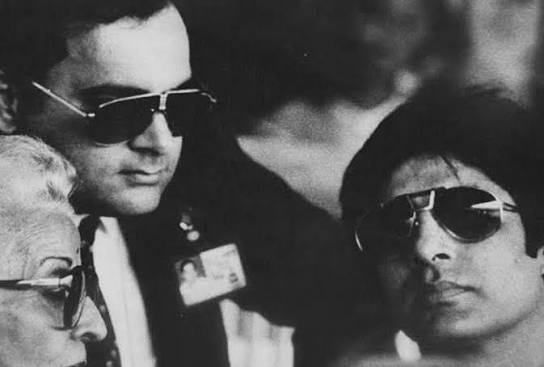
However, the exact reasons behind the estrangement have remained a subject of discussion, with no single explanation accounting for the entire history of their falling out.
Why Amitabh and Jaya Bachchan receive little attention
One of the more striking aspects of Sonia Gandhi’s memoir is the limited space given to Amitabh Bachchan, considering his longstanding friendship with Rajiv Gandhi and his family’s close association with the Nehru-Gandhis.
According to a count of references in the book, Amitabh’s name appears only three times. His presence is recalled mainly in connection with Sonia’s arrival in India and his friendship with Rajiv.
The memoir does not provide a detailed account of their relationship in the years that followed. It also does not substantially discuss Amitabh’s entry into politics, the Bofors controversy or the reported differences between the families.
Jaya Bachchan is not mentioned in the book, according to the account. There is also no extended discussion of the relationship between the younger members of the two families or the public exchanges that emerged in later years.
This absence is particularly noticeable because the Bachchans were not merely acquaintances of the Gandhi family. They had been part of its personal circle for decades, and Teji and Harivansh Rai Bachchan had played an important role in Sonia’s early experience of India.
A memoir focused on personal memories, not the estrangement
Sonia Gandhi’s recollections present the Bachchan family through the lens of her early years in India. Teji’s affection and Harivansh Rai Bachchan’s guidance occupy a central place in the memories she chooses to share.
Yet the memoir largely leaves unanswered the question of how a relationship built on decades of friendship eventually became distant. It does not offer a detailed explanation of the political and personal developments that contributed to the reported estrangement.
The result is a portrait that celebrates the warmth of an earlier period without attempting to revisit every chapter of the families’ later history. For readers interested in the Gandhi-Bachchan connection, what Sonia remembers is significant. What she chooses not to discuss is equally striking.