







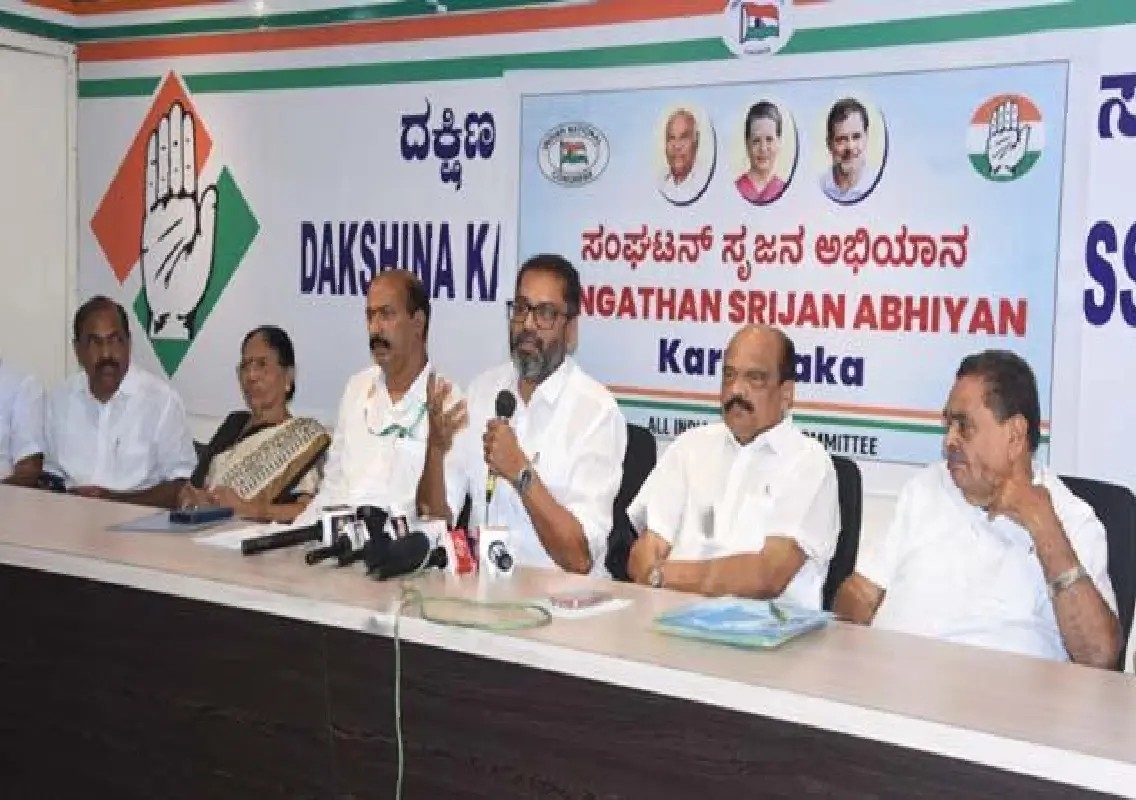


Mangaluru: The Congress party has initiated the process of selecting a new president for the Dakshina Kannada District Congress Committee (DCC), marking a new approach that focuses on gathering feedback from grassroots workers and leaders before the appointment is finalised. The exercise is being carried out under the party’s ‘Sanghatana Srujan Abhiyan’, which aims to strengthen the organisational structure of the Congress by ensuring greater participation from members at all levels.
The selection process officially began with the appointment of an observer by the All India Congress Committee (AICC), who is tasked with interacting with party workers and collecting their views regarding the next district president. The initiative is expected to provide the party high command with a broader understanding of the expectations of Congress workers in Dakshina Kannada.
AICC observer outlines selection process
Addressing reporters in Mangaluru on Tuesday, AICC observer Jayant said the exercise is not limited to identifying a new district Congress president but is intended to create a stronger organisational framework by listening to the voices of party workers.
“This is not merely an exercise to find a Congress president. It is an effort to listen to the voices of party workers,” he said.
According to Jayant, opinions and suggestions will be collected from Congress workers, office-bearers and leaders at different levels across the district. These inputs will be compiled into a report and submitted to the All India Congress Committee, which will take the final decision on appointing the new Dakshina Kannada District Congress Committee president.
He clarified that while local consultations are being conducted extensively, the authority to appoint the district president rests with the Congress high command.
Focus on grassroots representation
Jayant said the ongoing exercise gives importance to identifying capable leaders who have worked actively at the grassroots level. He added that the selection process would also ensure representation from different sections of society, reflecting the Congress party’s emphasis on inclusive leadership.
The observer noted that strengthening the organisation requires recognising committed party workers who have contributed consistently at the local level. By involving workers in the consultation process, the party hopes to select a leader who enjoys wider acceptance within the district unit.
He further stated that the initiative is designed to improve organisational cohesion and encourage greater participation from Congress members across Dakshina Kannada.
New approach adopted for district president selection
The Congress has introduced a different mechanism for selecting the district president this time, moving beyond the conventional process followed in previous appointments.
Jayant said this is the first time the party has adopted such an extensive consultative approach for choosing the district unit chief. The objective, he explained, is to ensure that the views of party workers form an important part of the decision-making process before the leadership makes the final appointment.
The observer also revealed that several aspirants have already collected application forms to contest for the post of Dakshina Kannada District Congress Committee president, indicating significant interest within the party.
No deadline fixed for applications
Clarifying the application process, Jayant said there is currently no specific deadline for submitting applications for the district president’s post.
The consultation exercise will continue while applications are being received, allowing workers and leaders sufficient time to participate in the organisational process. The collected feedback will eventually be forwarded to the AICC for further consideration.
Party leaders believe that the absence of a strict deadline will enable wider participation and allow more eligible aspirants to express their willingness to take up the responsibility.
Aim is to strengthen the organisation
The Congress leadership views the exercise as part of a broader effort to revitalise the party organisation in Dakshina Kannada, a district that has witnessed intense political competition over the years.
By engaging with workers directly and seeking suggestions from various organisational levels, the party hopes to identify a leader capable of strengthening the Congress network and improving coordination among local units.
The consultative process is also expected to enhance transparency in organisational appointments while giving grassroots workers an opportunity to contribute to the selection of the district leadership.
Once the consultations are completed and the report is submitted, the Congress high command will take the final call on appointing the next Dakshina Kannada District Congress Committee president.