







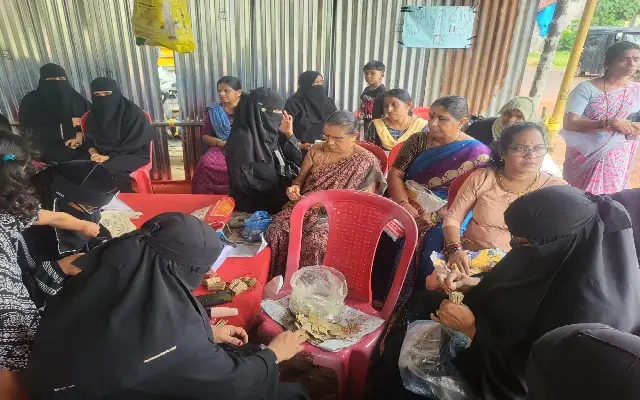


Mangaluru: While debates over religious identity grip the youth of Tulunadu, a powerful counter-narrative is quietly unfolding in front of the Kuppepadu Gram Panchayat office. Here, a group of young women from the working class — both Hindu and Muslim — have come together in protest, standing shoulder to shoulder for a common cause: the rightful allocation of government-sanctioned house plots.
Their sit-in has entered its 11th day, and instead of giving in to communal discord, they are setting a striking example of unity. These women are not just fighting for land; they are rejecting the growing divide and embracing a shared identity — that of the underprivileged, the labouring class.
Under the makeshift shelter of the dharna venue, the women prepare and share their simple meals. One rice pot feeds all — no separation of faiths, only solidarity. Their shared porridge, cooked and eaten together, symbolizes more than sustenance; it represents the spirit of togetherness that transcends religion.
The image of Hindu and Muslim girls laughing, cooking, and protesting side by side is a visual lesson in coexistence. It delivers a quiet but profound message to the coastal region: the struggles of the poor cut across religious lines, and unity is the only path forward.
This movement is not just a demand for housing — it’s a declaration of social harmony and class-consciousness.
Read Also: