







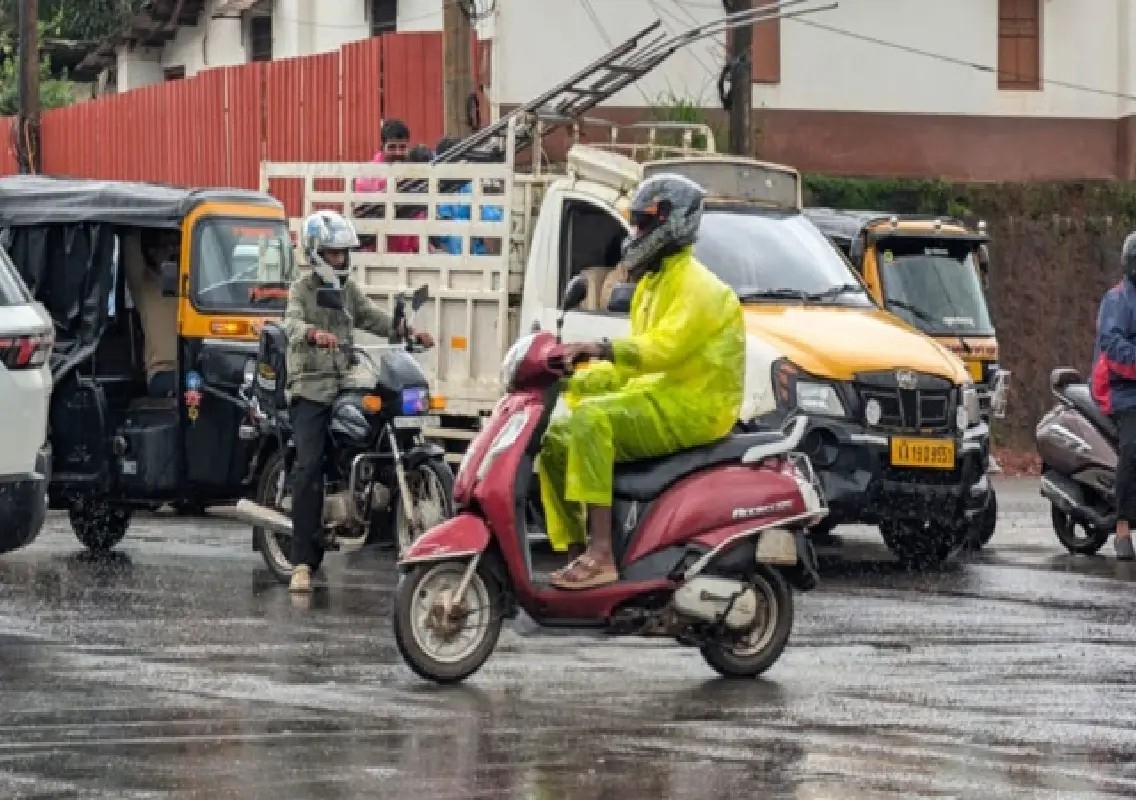


Mangaluru: As the monsoon continues to drench coastal Karnataka, an inexpensive plastic raincoat costing around Rs 100 has quietly become the preferred choice for thousands of people. Once considered a temporary or emergency option, the budget-friendly raincoat has now emerged as an everyday essential for commuters, plantation workers, farmers and schoolchildren alike, challenging the dominance of premium rain gear that often costs well above Rs 1,000.
For many residents, the shift is driven by practicality rather than price alone. While branded raincoats are often marketed as durable and waterproof, several users say even expensive products sometimes fail to withstand continuous exposure to heavy monsoon showers. In contrast, the low-cost plastic raincoat offers a simple, lightweight and affordable solution that can be replaced easily if damaged.
Over the past two to three years, the popularity of these raincoats has grown significantly across villages and towns. From busy urban roads to remote agricultural fields, the colourful plastic raincoat has become a familiar sight during every spell of rain.
Affordable alternative gains popularity
The biggest attraction of the raincoat is undoubtedly its affordability. Priced at nearly Rs 100, it costs only a fraction of conventional rainwear available in the market. With premium raincoats often priced between Rs 1,000 and Rs 2,000 or even more, many consumers are choosing the economical option instead.
The trend reflects a change in consumer preference, especially among people who use raincoats regularly during the monsoon season. Rather than investing heavily in expensive rain gear every year, many now prefer purchasing a low-cost raincoat that adequately serves its purpose.
Its affordability also means users do not hesitate to replace it whenever necessary, making it an economical option for households with multiple members.
Designed for everyday use
Made from thin plastic, the raincoat is remarkably compact when folded. Local residents often joke that it is so small it could fit inside a matchbox. Despite its lightweight design, it provides sufficient protection against moderate to heavy rain during routine outdoor activities.
Available in a variety of bright colours, the raincoat features full sleeves, extends below the knees and includes an attached hood that protects the head and neck from rain. It can be worn within seconds and removed just as quickly, making it convenient for people who frequently move between indoor and outdoor environments.
Its light weight also means users hardly feel any additional burden while travelling or working. The simple design makes it suitable for rough handling, whether in muddy paddy fields or on crowded city roads.
Common sight on roads and in fields
The inexpensive raincoat has found acceptance across different sections of society. Two-wheeler riders form one of the largest user groups, with the plastic raincoat offering quick protection during sudden showers.
During rainy days, an estimated 90 per cent of motorcyclists on several roads in the region can be seen wearing these colourful raincoats. Their widespread use has transformed them into one of the defining sights of the coastal monsoon.
Beyond urban commuters, the raincoat has become indispensable for plantation workers, estate owners and agricultural labourers involved in paddy transplantation. The lightweight material allows workers to move freely while remaining protected from continuous rain.
Parents escorting children to school buses also rely on these raincoats for short daily trips, while many schoolchildren themselves wear them during their commute.
Practicality outweighs premium features
Users say the primary advantage of the budget raincoat lies in its practicality. Unlike heavier rain suits that may require careful storage and maintenance, the plastic raincoat can simply be folded and carried in a bag or vehicle.
Because it occupies very little space, people often keep one readily available on motorcycles, scooters or in backpacks throughout the monsoon season. This convenience has made it especially popular among office-goers and daily commuters who frequently encounter unpredictable weather.
Its ability to withstand regular use in plantations, construction sites and agricultural fields has further strengthened its appeal among workers whose clothing is exposed to mud and rough conditions every day.
Balloon effect creates amusing scenes
One unusual characteristic of the raincoat has also become a talking point among users. When a motorcyclist wearing the lightweight raincoat rides at higher speeds, air gets trapped inside the loose plastic material, causing it to inflate dramatically.
The inflated raincoat resembles a balloon, leading many onlookers to jokingly compare the rider to an astronaut speeding down the road. While the sight often brings smiles, riders generally slow down or adjust the raincoat to reduce the effect.
Despite this humorous aspect, users continue to value the raincoat for its effectiveness and convenience.
Users prefer value for money
Many residents believe the inexpensive raincoat offers better value than investing in costly alternatives every monsoon.
A two-wheeler rider said spending thousands of rupees on branded raincoats every year no longer made sense when an affordable plastic raincoat could serve the same purpose for daily commuting. He added that it was equally useful while riding a motorcycle and working in plantations, making it a practical purchase for the rainy season.
As monsoon showers continue across coastal Karnataka, the humble Rs 100 raincoat has become more than just inexpensive rainwear. Its combination of affordability, convenience and functionality has turned it into an everyday companion for thousands of people, proving that simplicity often meets daily needs better than expensive alternatives.