







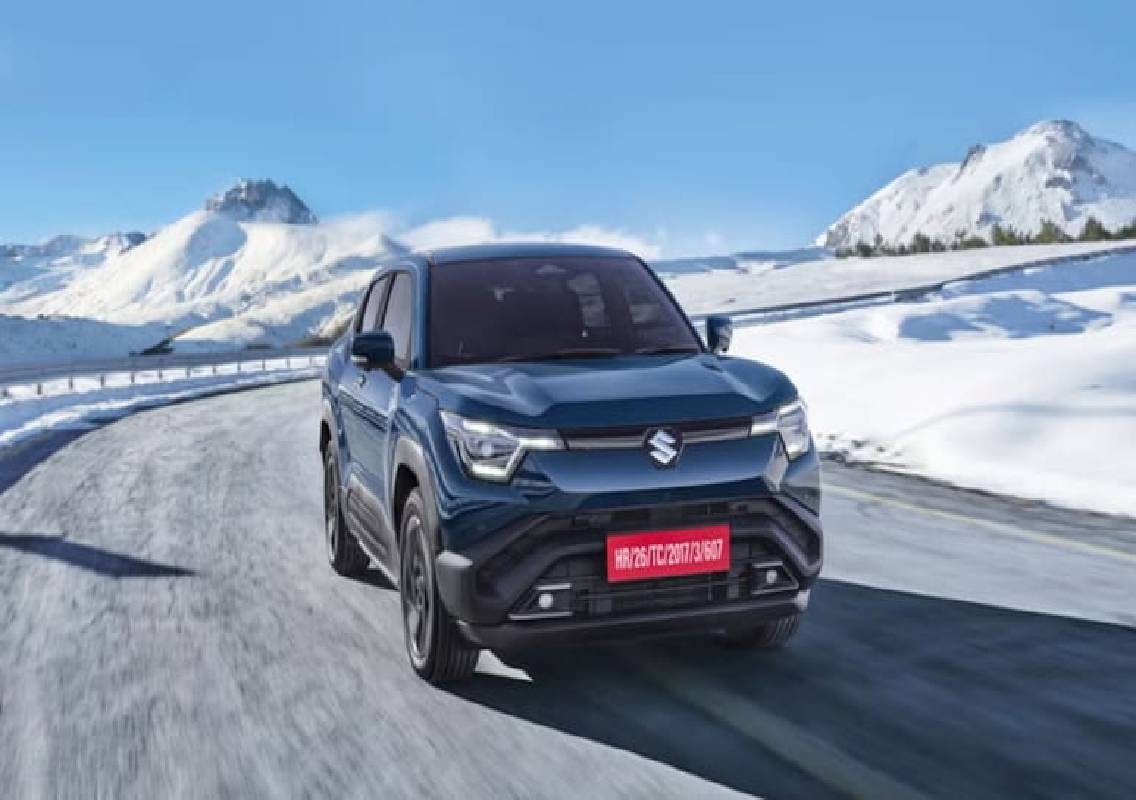


New Delhi: Maruti Suzuki is preparing a major expansion of its passenger vehicle portfolio, with reports indicating plans to introduce seven new SUVs and five electric vehicles by 2031. The strategy is expected to broaden the company’s presence across SUV segments while increasing its focus on electric, hybrid and CNG-powered vehicles.
The reported roadmap comes as India’s largest carmaker works to strengthen its product range beyond its traditional small-car stronghold. Maruti Suzuki is pursuing a multi-powertrain strategy in which petrol, CNG, hybrid and electric vehicles are expected to coexist as the company responds to changing customer preferences and evolving emission requirements.
Maruti Suzuki’s seven-SUV roadmap
Maruti Suzuki has already expanded its SUV portfolio in recent years with models such as the Brezza, Victoris and Grand Vitara. The company now plans to add seven more SUVs over the next five years, according to its reported product strategy.
Maruti Suzuki Managing Director and CEO Hisashi Takeuchi said in the company’s Annual Integrated Report 2025-26 that the company planned to introduce seven SUVs in the next five years to strengthen its SUV portfolio.
The upcoming SUVs are expected to cover different size and price segments. Reports indicate that the programme could include both new models and updates or derivatives of existing products.
However, Maruti Suzuki has not publicly confirmed the names and launch schedules of all seven SUVs. Therefore, model names circulating in reports should not be treated as officially confirmed launch announcements.
Five EVs planned by 2031
Electric vehicles will form another important part of Maruti Suzuki’s future product strategy. NDTV Auto reports that the company is planning a portfolio of five EV models over the next five years.
The company’s first major step into the Indian electric passenger vehicle market is the e Vitara, which is built on a dedicated electric platform and is available with 49kWh and 61kWh battery options. Certain variants are claimed to offer more than 500 km of range.
A three-row electric vehicle is reportedly expected around 2027. An electric MPV, commonly referred to as the YMC, is also understood to be under development, along with other EV derivatives based on the e-HEARTECT architecture.
The exact launch order, specifications and pricing of these future EVs have not yet been officially detailed.
Different reports cite different EV numbers
There is some variation in reporting about Maruti Suzuki’s EV roadmap. In April 2026, a senior company executive said that Maruti Suzuki planned to add four more electric vehicles by 2031, taking its future EV portfolio beyond the e Vitara.
The more recent NDTV report, published on September 16, refers to a roadmap of five EV models over the next five years.
The difference appears to stem from whether the already launched e Vitara is counted within the five-vehicle roadmap. Consequently, the number should be read in the context of the respective reports rather than interpreted as five additional EVs on top of every existing model.
Maruti to continue with CNG and hybrid vehicles
Maruti Suzuki’s future strategy is not limited to electric vehicles. The company plans to maintain a multi-powertrain portfolio, with CNG, hybrids and EVs expected to coexist alongside conventional powertrains.
The carmaker already offers a broad range of CNG vehicles in India. It is also examining the use of biogas sourced from locally available resources as an alternative to imported CNG, according to statements cited in the company’s annual report.
This approach allows Maruti Suzuki to address different customer requirements rather than shifting its entire portfolio to a single powertrain technology.
Focus remains on small cars
While SUVs and EVs are receiving greater attention, Maruti Suzuki is also expecting a revival in India’s small-car segment.
Maruti Suzuki Chairman R.C. Bhargava has estimated that the Indian passenger vehicle market could grow to between 61 lakh and 63 lakh units by FY2030-31. The company also expects the small-car segment to grow faster than it did during the previous five years.
Maruti Suzuki recorded sales of 24.2 lakh vehicles in FY2025-26, while exports reached an all-time high of around 4.47 lakh units, according to the company’s reported figures cited by HT Auto.
The company therefore plans to expand its SUV and EV offerings without abandoning the segments that have historically formed a major part of its business.
Production capacity to increase
The new product strategy is being accompanied by an expansion in manufacturing capacity.
According to the company’s annual report, Maruti Suzuki added 5 lakh units of manufacturing capacity during FY2026-27 as part of its accelerated capacity expansion programme. The company has linked the investment to its expectations of medium-term growth.
The additional capacity will provide room for the company to increase production as new SUVs and electrified models are introduced.
Upcoming SUVs could cover more segments
Maruti Suzuki’s existing SUV range spans compact and midsize categories, with the Brezza, Victoris and Grand Vitara serving different parts of the market. The seven-SUV plan is expected to extend this coverage further.
A Grand Vitara-based seven-seater has been mentioned in current reports, while other future SUVs are expected to target different size and price categories.
The company is also expected to use different powertrain technologies across the SUV range, potentially including petrol, hybrid, CNG and electric options depending on the segment.
Maruti Suzuki’s product strategy through 2031
The planned launches represent a broader change in Maruti Suzuki’s product strategy. The company is attempting to balance its established small-car business with the growing demand for SUVs and the gradual expansion of electric mobility in India.
The roadmap includes seven SUVs, a growing EV portfolio and continued investment in CNG, hybrid and other alternative-fuel technologies. At the same time, Maruti Suzuki is increasing manufacturing capacity and expanding exports.
With several products still under development, details such as names, specifications, prices and exact launch dates are expected to emerge closer to their respective introductions.