







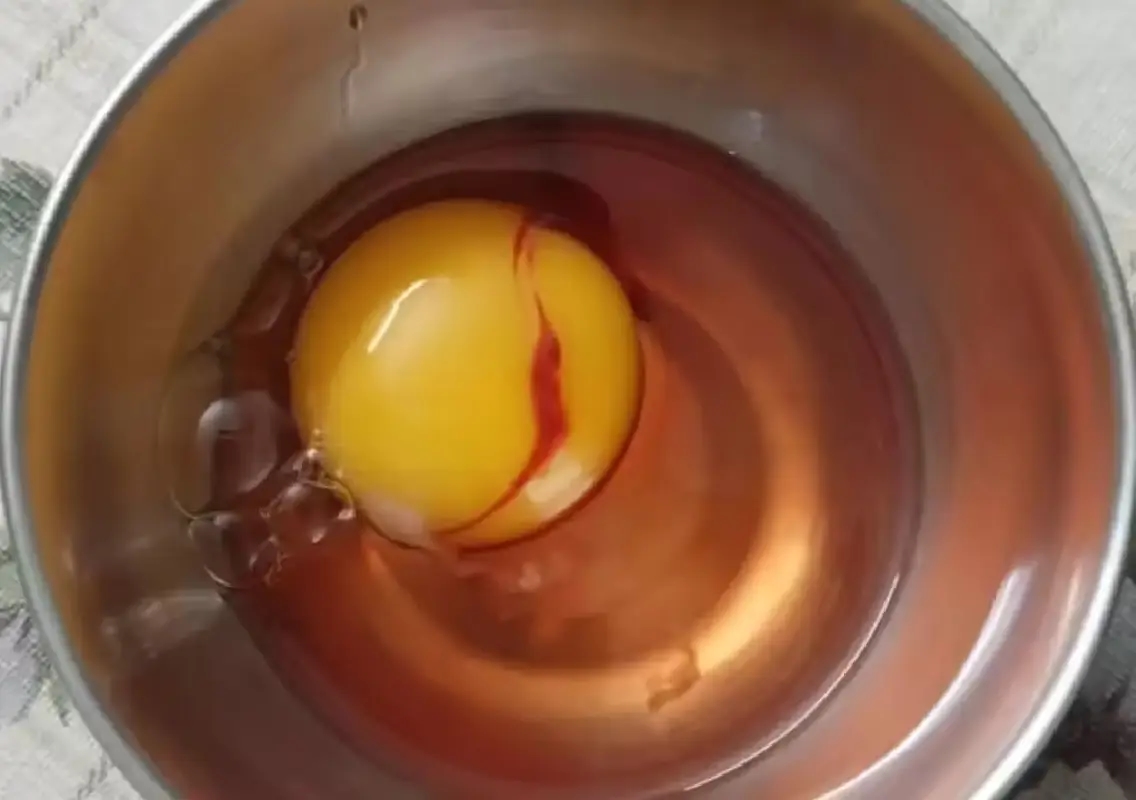


A social media post showing an egg oozing blood-red liquid after being cracked open has triggered widespread alarm online, with many netizens questioning whether so-called “blood eggs” are safe to consume.
The discussion began after a Taiwanese user shared images on Threads, describing the sight as “so scary”. The post quickly went viral, drawing reactions ranging from disgust to fear, with users expressing concern over food poisoning and possible bacterial infections such as salmonella.
What are ‘blood eggs’?
Food safety experts have clarified that such eggs are commonly referred to as “blood-spot eggs”. According to the Ministry of Agriculture, these red or dark spots are a natural anomaly that can occur during a hen’s ovulation process.
Small amounts of blood or epithelial tissue may enter the yolk or egg white and become encapsulated inside the egg. The ministry has emphasised that this phenomenon is relatively rare, does not indicate disease in the hen, and does not pose a food safety risk.
Officials stress that as long as the egg is within its expiry date and shows no signs of spoilage, it is safe for normal consumption.
Eggs you should never eat
Experts warn that the real danger lies not with blood spots, but with moldy or damaged eggs. Cracks in the shell caused during transport or storage can allow microbes to enter, leading to mould growth and contamination. Such eggs should be discarded immediately.
The Centre for Food Safety also advises consumers against eating eggs with cracked shells or unusual odours.
Proper egg handling at home
Food safety authorities note that commercially sold eggs are usually washed or coated with mineral oil to protect the shell. Consumers are advised not to wash eggs unnecessarily, as water can damage the protective cuticle and allow bacteria to enter.
If eggs are visibly soiled with bird droppings, they may be washed, but should be cooked immediately afterwards. The recommended practice is to store eggs unwashed in the refrigerator and ensure shells are intact before use.