







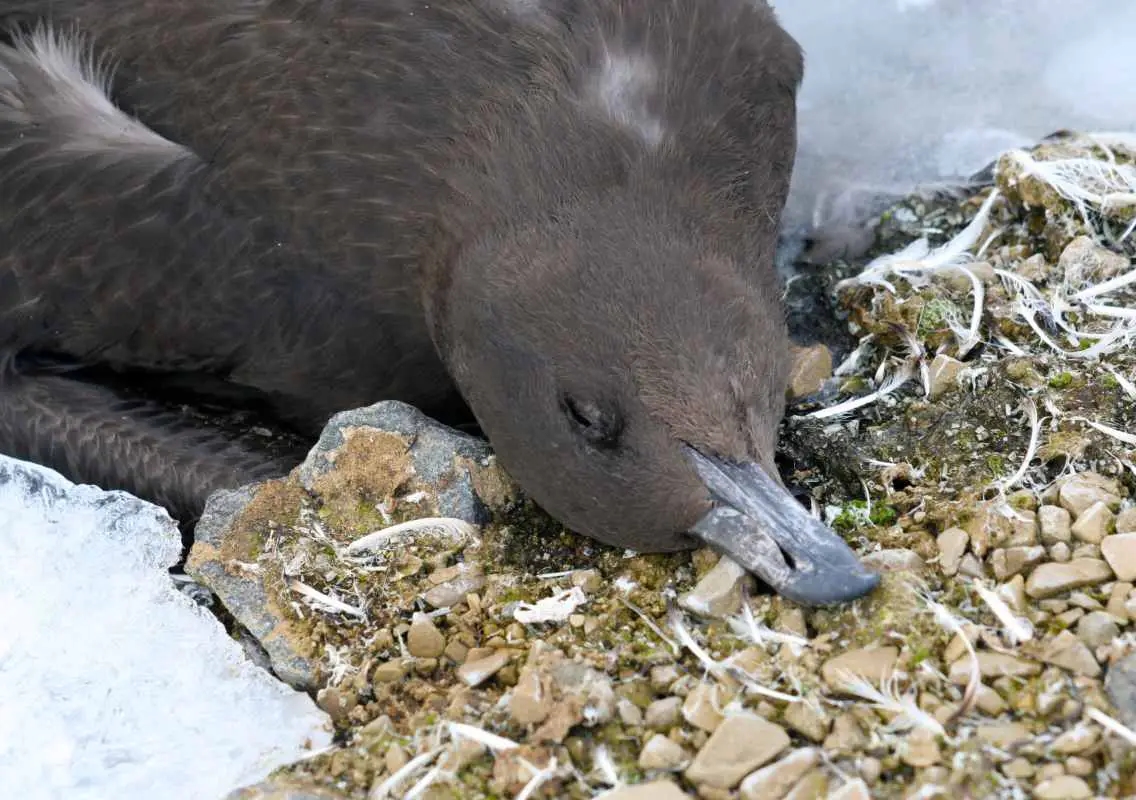


More than 50 skuas, seabirds closely related to gulls, have died from highly pathogenic H5N1 avian influenza in Antarctica, marking the first documented wildlife die-off caused by the virus on the continent, according to a new international study.
The findings, led by researchers from Erasmus University and published in Scientific Reports, detail deaths recorded during the Antarctic summers of 2023 and 2024.
First confirmed wildlife deaths from H5N1
Researchers documented the fatalities at a skua breeding colony on Beak Island, one of ten Antarctic sites surveyed during a scientific expedition in March 2024. While H5N1 has been detected in Antarctica since 2023, this is the first study to conclusively confirm that wildlife deaths on the continent were caused by the virus.
Skuas are scavenging seabirds native to polar and subpolar regions and play a key role in Antarctic ecosystems.
Virus caused rapid organ failure
The research team conducted post-mortem examinations, collected tissue and environmental samples, and surveyed wildlife across the South Shetland Islands, northern Weddell Sea and the Antarctic Peninsula. H5N1 was detected at three sites and identified as the cause of death in nearly all skuas found dead at Beak Island.
The birds died rapidly due to multi-organ necrosis. Notably, the virus did not cause fatalities in other species examined, including penguins and fur seals.
Global strain with growing impact
Scientists confirmed that the same H5N1 strain affecting Antarctic skuas has devastated wildlife elsewhere, killing sea lions in Argentina and Chile and over 400 million poultry worldwide. The virus has also infected humans and several mammal species.
Experts warned that avian influenza adds to existing pressures on Antarctic wildlife, including climate change and rising tourism.
Researchers stressed the urgent need for continuous monitoring, cautioning that without surveillance, further spread and ecological damage may go unnoticed.