







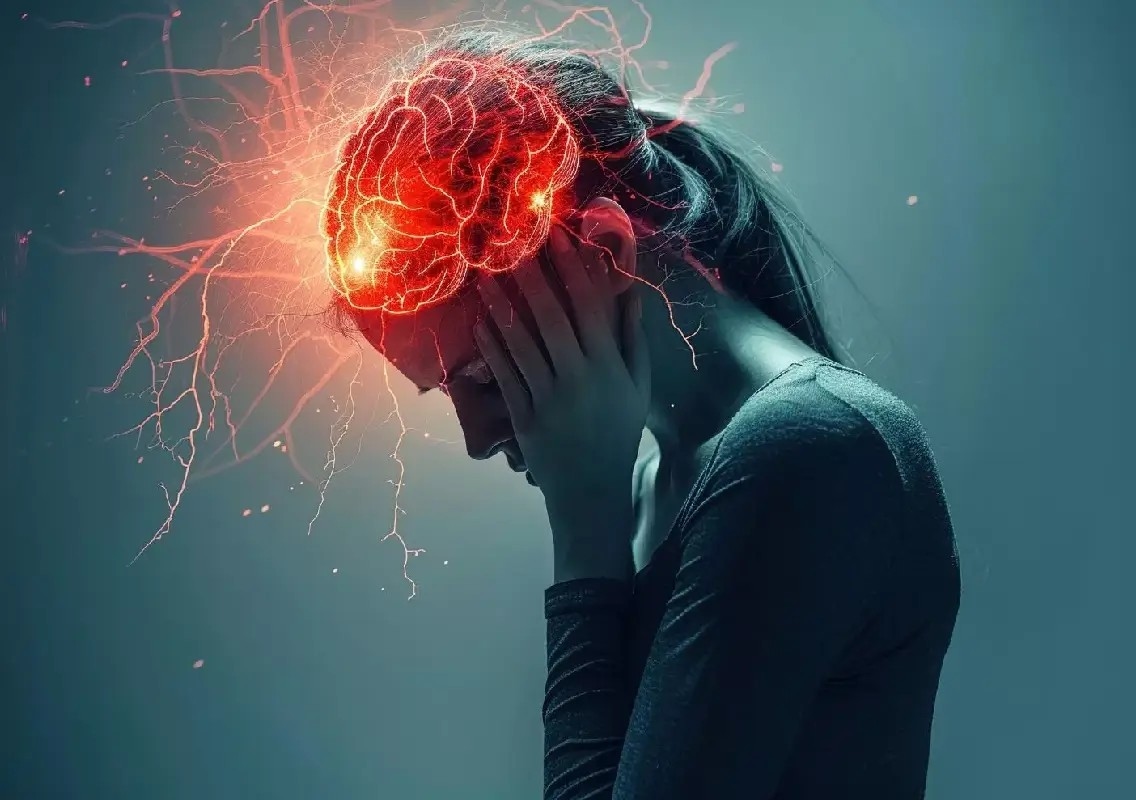


New York: Depression may involve more than changes in mood and neurotransmitters. A major study by researchers at Columbia University has found evidence that the process of producing new neurons in the adult brain may be disrupted in people with major depressive disorder, offering fresh clues about how the condition affects memory, emotional responses and the brain’s ability to adapt to stress.
The research, published in Nature Medicine, examined the molecular and cellular characteristics of the hippocampus in people with major depressive disorder. Scientists found evidence of a stalled neurogenic process in the adult hippocampus, one of the few regions of the human brain where new neurons are believed to continue forming during adulthood.
The researchers also identified widespread molecular changes affecting processes involved in neuronal development, cellular stress, immune activity, metabolism and communication between neurons.
The findings could eventually help scientists develop treatments that target different biological mechanisms underlying depression rather than treating the disorder as a single condition with one common cause.
Study focuses on the hippocampus
The research centred on the hippocampus, a brain region strongly associated with memory and emotional responses to experiences.
The hippocampus also plays an important role in a process known as pattern separation. This allows the brain to distinguish between experiences that are similar but not identical and to separate the emotional associations attached to past events from what is happening in the present.
When this process is impaired, different memories and their emotional associations may become less distinct. Researchers believe this could contribute to the tendency of people with depression to interpret current experiences through the lens of negative memories.
The study therefore provides a possible biological link between changes in hippocampal function and some of the cognitive symptoms associated with major depression.
Rather than suggesting that depression is simply a problem of mood-related chemicals, the findings point towards a more complex picture involving the health and adaptability of brain cells.
New neurons continue to form in adult brains
Most of the approximately 100 billion neurons in the human brain are produced before birth. However, scientists have identified evidence that a small population of new neurons continues to develop in the adult hippocampus.
This process is called adult hippocampal neurogenesis.
The new study examined the cellular stages involved in this process and found evidence that neurogenesis was stalled in adults with major depressive disorder. The researchers were able to identify a neurogenic lineage in the adult human hippocampal subgranular zone and compare its development with that observed in people without major depressive disorder.
The findings are important because adult neurogenesis has long been considered a possible factor in the relationship between the hippocampus, stress, memory and depression.
However, the researchers caution against interpreting the findings as meaning that depression simply causes the brain to stop producing all new neurons. The reported disruption concerns a specific process in a specific brain region and is part of a much broader pattern of biological changes.
Depression appears to involve multiple biological processes
For many years, explanations of depression placed considerable emphasis on neurotransmitters such as serotonin.
The new research adds to growing evidence that major depressive disorder is biologically complex.
The researchers identified changes involving transcriptional regulation, stress-related cellular reprogramming and interferon signalling across different stages of neuronal development. They also found evidence of cellular stress, an imbalance between excitatory and inhibitory neural activity, impaired synaptic plasticity, reduced metabolic capacity and immune activation.
Together, these findings suggest that depression can involve several interconnected processes that influence how brain cells develop, function and respond to their surroundings.
This broader understanding could be important because people diagnosed with depression do not all respond to treatment in the same way.
If different biological pathways contribute to the disorder in different individuals, treatments designed around specific mechanisms could potentially improve outcomes.
Brain plasticity may be central to the findings
One of the important concepts emerging from the study is neuroplasticity, or the brain’s ability to change and adapt.
The brain constantly adjusts its connections and activity in response to experiences, learning and environmental demands. New neurons in the hippocampus may contribute to this adaptability.
Researchers involved in the study suggest that when the production of new neurons is disrupted, the brain may have greater difficulty adapting to changing circumstances.
This could help explain why depression can be associated with persistent negative thought patterns and difficulty responding flexibly to new experiences.
The researchers’ interpretation is that impaired neurogenesis may reduce the brain’s resilience rather than simply producing one specific symptom.
However, more research is needed to determine exactly how the changes observed at the cellular level translate into individual symptoms.
Molecular changes could offer treatment targets
One of the most promising aspects of the study is that researchers did not only observe a reduction or disruption in neurogenesis.
They also investigated the molecular programmes associated with the process.
The study integrated information about gene expression, chromatin accessibility and protein expression, allowing researchers to examine the biological mechanisms operating within different cell types and stages of development.
This detailed molecular information could help researchers identify pathways that might be modified through future treatments.
The findings may ultimately support a move towards more biologically informed approaches to depression, where therapies are selected according to the underlying mechanisms affecting an individual patient.
That possibility remains a future research goal rather than an immediate clinical application.
Findings do not mean depression permanently destroys neurons
The headline that depression may “shut down” the brain’s ability to make new neurons can sound alarming, but the scientific findings are more specific.
The study reports a stalled neurogenic process, not that depression destroys the brain’s entire capacity to produce neurons.
Nor does the research establish that impaired neurogenesis is the sole cause of depression.
Major depressive disorder involves a combination of emotional, cognitive, behavioural and biological factors. The hippocampal changes identified by the Columbia researchers represent one part of this complex picture.
The study also investigated people with major depressive disorder who were not taking medication, helping researchers examine disease-related molecular patterns without the potential confounding effects of current antidepressant treatment.
Further studies will be required to determine whether restoring normal neurogenesis can improve symptoms and whether particular treatments can reverse the biological changes identified.
Memory and depression may be closely connected
The study adds to evidence that memory processing is an important part of depression.
People with depression can experience a tendency to recall or interpret information in a more negative way. The hippocampus is central to organising memories and distinguishing between experiences.
If the brain becomes less capable of separating similar experiences, emotional associations from previous negative events may influence how new situations are perceived.
This does not mean that every negative thought is caused by reduced neurogenesis. Rather, the findings offer a possible biological mechanism through which changes in hippocampal plasticity could contribute to some cognitive features of depression.
Understanding this relationship could eventually help researchers develop therapies aimed not only at mood symptoms but also at the memory and cognitive changes that accompany the disorder.
Research could change how depression is understood
The study challenges an overly simple view of depression as a condition caused by one chemical imbalance.
Researchers involved in the work argue that depression can involve multiple biological changes affecting the ability of neurons to adapt to stress and changing environments.
This does not make existing treatments irrelevant. Instead, it highlights the possibility that depression may require a broader understanding of how different biological systems interact.
The molecular findings could be particularly useful in future research aimed at identifying different biological subtypes of depression.
Such work could eventually contribute to more personalised approaches to psychiatric treatment.
A possible new direction for depression research
The findings from Columbia University provide a new perspective on the biology of major depressive disorder by linking the condition to disrupted adult hippocampal neurogenesis.
The study’s discovery of molecular changes across several stages of neuronal development also suggests that the problem is not confined to a single cellular process. Stress responses, immune signalling, metabolism and the balance of neural activity may all be involved.
Researchers now have a more detailed biological map that can be investigated for possible therapeutic targets.
The next challenge will be determining which of these changes are causes, which are consequences and which might be reversible.
Hope for more targeted treatments
The research does not yet provide a new treatment for depression, and patients should not interpret the findings as evidence that currently available treatments are ineffective.
Instead, it opens another avenue for understanding why depression develops and why its effects can differ from one person to another.
If scientists can establish how disrupted neurogenesis contributes to depression and identify ways of restoring healthy hippocampal plasticity, it could eventually lead to new therapeutic strategies.
The broader lesson is that depression is increasingly understood as a complex disorder involving the interaction of brain cells, molecular pathways, stress responses, immune processes and environmental experiences.
The discovery that adult hippocampal neurogenesis appears to stall in people with major depression provides an important piece of that puzzle. It also reinforces the idea that the brain retains biological processes capable of adaptation well into adulthood — and that understanding how those processes are disrupted could be key to developing better treatments in the future.