







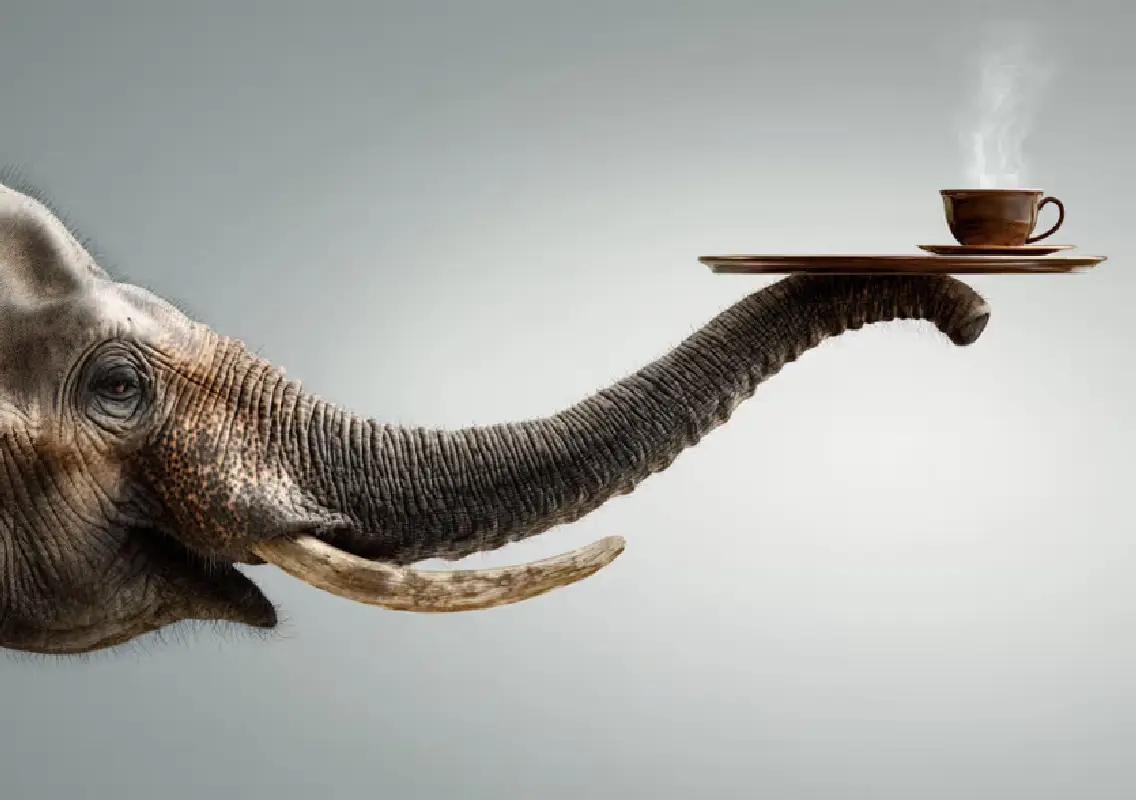


Scientists have uncovered the biological reason behind the unusually smooth taste of Black Ivory coffee, one of the world’s rarest and most expensive brews. A new study by researchers from the Institute of Science Tokyo shows that bacteria in the digestive systems of Asian elephants play a crucial role in reducing bitterness and shaping the coffee’s unique flavour.
Coffee processed by elephants
Black Ivory coffee is produced at a single elephant sanctuary in Thailand. The process involves feeding elephants Arabica coffee cherries. The beans are later collected from the animals’ dung, thoroughly cleaned, and then roasted. The resulting coffee is known for its mild, chocolaty notes and noticeably low bitterness compared to conventional coffee.
What the researchers found
The research team analysed dung samples from elephants that had consumed coffee cherries and compared them with samples from elephants at the same sanctuary that were not part of the process. They discovered that coffee-fed elephants had significantly higher levels of gut bacteria capable of breaking down pectin—a natural compound found in coffee beans.
Pectin usually decomposes during roasting and produces bitter-tasting molecules. However, when gut bacteria reduce pectin levels before roasting, fewer bitter compounds are formed, resulting in a smoother brew.
“Our findings may highlight a potential molecular mechanism by which the gut microbiota of Black Ivory coffee-producing elephants contributes to the flavour,” said Associate Professor Takuji Yamada, one of the study’s authors.
More research ahead
The study also found that elephants fed coffee cherries had a more diverse mix of gut microbes, particularly bacteria associated with pectin digestion. Scientists believe that the coffee cherries themselves may encourage the growth of these microbes.
While the findings are promising, researchers say further biochemical analysis is needed to confirm how bean composition changes before and after digestion.
Broader implications
The study highlights how animal digestion and gut microbiota can influence food flavour, opening new avenues for research into microbial processing of coffee and other fermented foods. The findings were published in the journal Scientific Reports.