







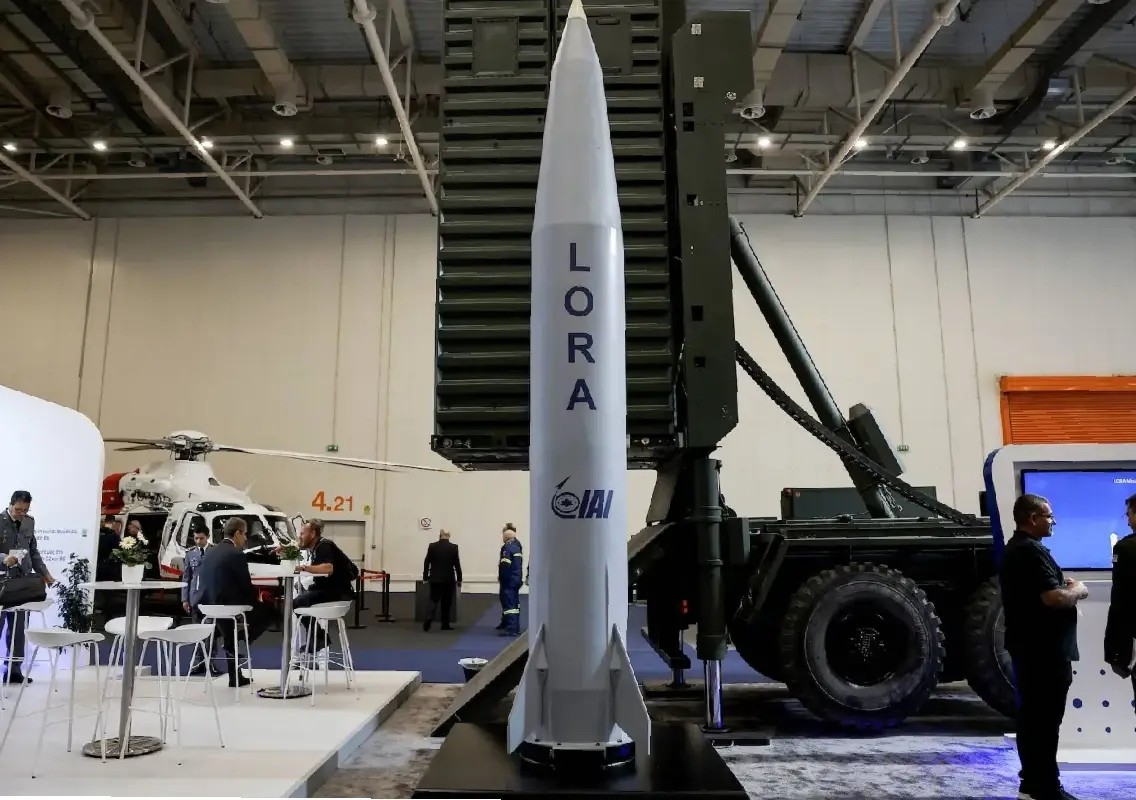


Berlin : Germany has successfully tested an Israeli-made ballistic missile in the North Atlantic, marking a significant development in the country’s efforts to strengthen its long-range military capabilities amid growing security concerns in Europe.
The German military tested the LORA missile, manufactured by Israel Aerospace Industries (IAI), overnight on Wednesday, according to military officials. The system has a range of up to 500 kilometres and would represent Germany’s first ballistic missile capability if Berlin decides to acquire it.
The test comes at a time when Germany and other European countries are reassessing their defence requirements following Russia’s invasion of Ukraine and a series of recent security incidents across Europe.
LORA test marks new chapter for Germany
Germany currently does not possess ballistic missiles. Its existing long-range strike capability includes the Taurus cruise missile, which is launched from fighter aircraft.
Unlike cruise missiles, ballistic missiles travel at much higher speeds and follow a trajectory that can take them high into the atmosphere before descending towards their targets.
The LORA system tested by Germany has a reported range of up to 500 kilometres, or around 310 miles. Its successful demonstration could therefore give Berlin an additional option as it considers ways to strengthen its ability to deter and respond to potential threats.
German Navy Chief Jan Christian Kaack described the test as a success and said it represented a new chapter in deterrence and maritime defence readiness.
The test was conducted in the North Atlantic, with reports indicating that the launch took place from a German naval vessel.
Test conducted amid heightened tensions with Russia
The missile test took place just hours after German authorities publicly accused Russia of responsibility for an attempted drone attack at Leipzig/Halle Airport.
Berlin has taken a tougher position towards Moscow following the incident and announced measures in response. Russia has denied involvement in the alleged attack.
The timing of the missile test has consequently attracted attention, although officials have presented the LORA trial as part of Germany’s broader defence modernisation efforts rather than as an immediate response to a single incident.
Germany and other Western countries have been looking to expand their long-range strike capabilities as concerns about European security have grown since the war in Ukraine began.
Germany considers acquiring long-range weapons
The successful test does not automatically mean that Germany has decided to purchase the Israeli missile.
Berlin is involved in several multinational programmes aimed at developing long-range weapons and is also examining options for acquiring additional systems.
A decision to procure LORA would give the German military a ballistic missile capability that it currently lacks.
The development is part of a broader transformation of Germany’s armed forces, as Berlin seeks to increase defence spending, modernise equipment and strengthen its ability to operate alongside European and NATO allies.
The German military has also been working on an upgraded version of the Taurus cruise missile. Production of the modernised system is expected to begin in 2029, according to Reuters reporting.
Ballistic and cruise missiles serve different roles
Although both ballistic and cruise missiles can be used for long-range precision strikes, they operate differently.
Cruise missiles generally fly through the atmosphere along a controlled path and can manoeuvre during flight. Ballistic missiles travel at significantly higher speeds and follow a trajectory that is largely determined after launch.
The speed and flight characteristics of ballistic missiles can make them more difficult to intercept, while their ability to reach targets rapidly provides military planners with another option for responding to threats.
For Germany, adding such a capability would represent a notable expansion of its existing long-range arsenal.
The LORA system is designed for precision strikes against targets such as command facilities, ammunition and fuel storage sites, airfields and bridges.
Israeli defence technology gains wider European interest
The German test also highlights the growing role of Israeli defence technology in European military planning.
Israel Aerospace Industries developed the LORA system as a long-range precision weapon. The missile has been marketed as a mobile and flexible system capable of engaging targets at considerable distances.
Germany’s interest comes as several European countries examine ways to strengthen their defence industries and military capabilities.
The war in Ukraine has exposed the importance of long-range weapons, air defence systems, ammunition stocks and precision strike capabilities in modern warfare.
European governments are therefore seeking both domestic development programmes and international partnerships to fill gaps in their arsenals.
Germany’s defence modernisation continues
Germany has increased its focus on military readiness in recent years, reversing decades in which defence spending and military investment were comparatively limited.
The government has sought to modernise equipment, improve ammunition supplies and strengthen the Bundeswehr’s ability to respond to potential threats.
The LORA test forms part of this wider effort.
The successful launch could also provide German military planners with practical information about how the system performs under operational conditions. A decision on procurement would nevertheless involve further technical, financial and strategic considerations.
Germany is also participating in European efforts to develop new generations of long-range missiles rather than relying solely on imported systems.
Security environment adds urgency
The missile test comes against a backdrop of increasing concern across Europe about potential threats from Russia.
Germany has recently faced a number of incidents that authorities are investigating as possible acts of sabotage or hostile activity. Berlin has also accused Moscow of involvement in the attempted Leipzig/Halle Airport drone attack, an allegation Russia rejects.
These developments have reinforced calls within Germany and across Europe for stronger deterrence and improved military preparedness.
For Berlin, the challenge is to develop capabilities that can protect German territory while also contributing to the collective defence of NATO allies.
The LORA test therefore carries significance beyond the missile itself. It demonstrates Germany’s willingness to explore capabilities that were previously absent from its military arsenal.
A potential shift in Germany’s military capability
If Germany ultimately purchases the LORA system, it would mark an important change in the Bundeswehr’s long-range strike capabilities.
The country would gain access to a faster ballistic weapon alongside its existing cruise missile systems and ongoing multinational development programmes.
For now, however, the successful test is best viewed as an important step in the evaluation process rather than confirmation of a final procurement decision.
As Europe reassesses its security needs, Germany’s LORA test illustrates how quickly military priorities are changing. The successful demonstration signals Berlin’s determination to strengthen deterrence and prepare its armed forces for a more uncertain security environment.
The coming months will determine whether the test leads to an actual German purchase of the Israeli-made missile or whether Berlin chooses another path to expand its long-ran