




Sriharikota: The Indian Space Research Organisation (ISRO) successfully launched its GSLV-F18 rocket carrying the next-generation navigation satellite NVS-03 from the Satish Dhawan Space Centre in Sriharikota, Andhra Pradesh, at 11.51 pm on October 30, 2026. The mission marks an important step in strengthening India’s independent satellite navigation system, Navigation with Indian Constellation (NavIC).
The 50-metre-tall, three-stage Geosynchronous Satellite Launch Vehicle (GSLV) carried the 2,232-kg NVS-03 satellite into space. The spacecraft was successfully injected into its intended Geosynchronous Transfer Orbit (GTO), approximately 18 minutes after lift-off.
The launch marked the 20th flight of India’s GSLV programme and the third space launch undertaken by ISRO in 2026. NVS-03 is the third satellite in the second-generation navigation satellite series designed to improve the continuity and reliability of NavIC services.
The mission is particularly significant because India’s regional navigation constellation has faced challenges due to a shortage of operational satellites. NVS-03 is expected to strengthen the system’s capabilities once it completes its orbital manoeuvres and is commissioned.
GSLV-F18 completes its 20th flight
The GSLV-F18 rocket lifted off from the Second Launch Pad at the Satish Dhawan Space Centre following a 24-hour countdown.
Standing approximately 50 metres tall and weighing around 420 tonnes at lift-off, the vehicle uses a three-stage propulsion system comprising solid, liquid and cryogenic stages.
The successful launch demonstrated the vehicle’s ability to carry the navigation satellite into its designated transfer orbit. After the rocket completed its flight sequence, NVS-03 separated and entered the planned orbit.
ISRO’s GSLV programme has played an important role in placing communication, meteorological and navigation satellites into space. The 20th flight represents another milestone in the programme’s development.
The GSLV has previously faced technical setbacks, including failures during earlier missions. Its successful performance in the NVS-03 mission is therefore significant for India’s efforts to maintain reliable access to geosynchronous satellite orbits.
What is NVS-03 and why is it important?
NVS-03 is the third satellite in ISRO’s second-generation Navigation with Indian Constellation series. The programme is designed to strengthen the Indian Regional Navigation Satellite System (IRNSS), which is now known as NavIC.
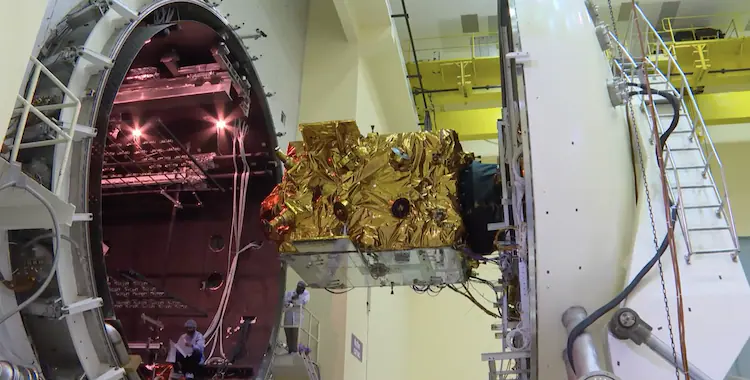
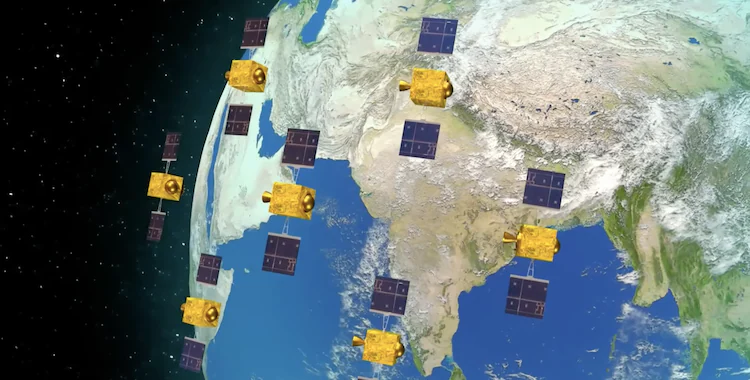
NavIC is India’s independent regional satellite navigation system. It provides positioning, navigation and timing services across the Indian mainland and an area extending approximately 1,500 km beyond the country’s geopolitical boundary.
The system is designed to provide services for several applications, including:
- Road and rail transportation.
- Maritime navigation and fishing operations.
- Emergency and disaster management.
- Location-based services and mapping.
- Surveying and infrastructure development.
- Strategic and security-related applications.
NavIC is India’s regional alternative to global satellite navigation systems such as the United States’ GPS, Russia’s GLONASS and China’s BeiDou.
Having an independent navigation system is important because it reduces reliance on foreign satellite infrastructure for critical positioning and timing requirements.
Indigenous atomic clock strengthens navigation technology
One of the important features of NVS-03 is its atomic clock technology.
The satellite carries an indigenously developed atomic clock alongside procured atomic clocks. Atomic clocks provide highly precise time measurements, which are essential for satellite navigation.
Navigation satellites transmit signals containing timing information. Receivers on the ground calculate their positions by measuring the time taken for signals to travel from satellites to the receiver.
Even a very small timing error can result in a significant positioning error. Accurate timekeeping is therefore fundamental to the reliability of satellite navigation services.
The inclusion of indigenous atomic clock technology is also important for India’s efforts to develop critical space components within the country.
The first satellite in the second-generation NVS series, NVS-01, launched in May 2023, was also notable for carrying an indigenous atomic clock. NVS-03 continues this effort while adding further navigation capabilities.
New L1 signal to expand NavIC compatibility
Another important feature of NVS-03 is the introduction of the L1 navigation signal alongside the existing L5 and S-band signals.
The L1 frequency is widely used by satellite navigation systems and is supported by many consumer navigation receivers, including devices used for everyday location services.
Adding L1 to NavIC is expected to improve compatibility with a wider range of navigation equipment and consumer devices.
This could help expand the potential civilian applications of India’s navigation system. It also provides an additional signal option alongside the existing frequencies.
According to ISRO, the satellite is designed to provide coverage over India’s landmass and a region extending approximately 1,500 km around the country’s geopolitical boundary.
The combination of improved timing technology and additional signal capability is expected to strengthen the overall NavIC service architecture.
NavIC faced a shortage of operational satellites
The launch of NVS-03 comes at an important time for India’s regional navigation system.
NavIC had been facing limitations because of a shortage of operational satellites capable of providing standalone positioning services.
In a written reply to the Lok Sabha on July 29, 2026, Union Minister of State for Space Jitendra Singh stated that only three satellites were providing positioning, navigation and timing services, compared with the minimum of four required for basic standalone positioning services.
The shortage followed technical difficulties involving some earlier satellites, including NVS-02.
Although NVS-02 was successfully launched in January 2025, it could not reach its intended operational orbit because of a problem during its orbit-raising manoeuvre.
An ISRO review committee found that an electrical signal had failed to reach a pyrotechnic valve in the satellite’s oxidiser line. As a result, the propulsion system could not operate as required to complete the manoeuvre.
The setback affected plans to strengthen the navigation constellation and prompted ISRO to examine corrective measures for subsequent missions.
NVS-03 is part of the agency’s continued effort to improve the availability and reliability of NavIC services.
What happens after the successful launch?
Although the satellite has reached its intended transfer orbit, the mission still has important stages to complete before NVS-03 becomes operational.
A Geosynchronous Transfer Orbit is an intermediate orbit. The satellite must perform further manoeuvres using its onboard propulsion system to reach its designated geosynchronous position.
ISRO will monitor the spacecraft through ground-based tracking and telemetry systems. Engineers will assess its orbital position, movement, health and onboard systems before proceeding with commissioning activities.
The satellite will also undergo in-orbit checks to ensure that its navigation payload and other systems are functioning as expected.
Therefore, successful launch and orbital injection represent major milestones, but they do not mean that the satellite has immediately begun providing operational navigation services.
Once the required manoeuvres and checks are completed, NVS-03 is expected to contribute to the NavIC constellation and strengthen the continuity of navigation services.
Five-satellite second-generation NavIC programme
NVS-03 is part of ISRO’s plan to deploy five second-generation navigation satellites, designated NVS-01 to NVS-05.
The series is intended to augment the existing NavIC constellation and improve the reliability and availability of positioning, navigation and timing services.
NVS-01 was launched in May 2023, while NVS-02 followed in January 2025 but encountered the propulsion-related problem that prevented it from reaching its intended operational position.
The successful launch of NVS-03 represents progress in the programme. ISRO is also working on the remaining satellites in the series to strengthen India’s regional navigation infrastructure.
The effort is important not only for civilian applications but also for sectors that require reliable positioning and timing services.
A significant step for India’s independent navigation capability
The successful GSLV-F18/NVS-03 mission marks another milestone in India’s space programme. The satellite’s indigenous atomic clock, additional L1 signal and planned regional coverage are expected to improve the capabilities of NavIC.
The mission also demonstrates ISRO’s continued efforts to address earlier technical challenges and strengthen critical space infrastructure.
With the satellite now placed in its intended transfer orbit, the next priority will be completing its orbit-raising manoeuvres, conducting in-orbit checks and preparing it for operational services.
NVS-03 is therefore an important addition to India’s efforts to build a more reliable and independent satellite navigation system.