







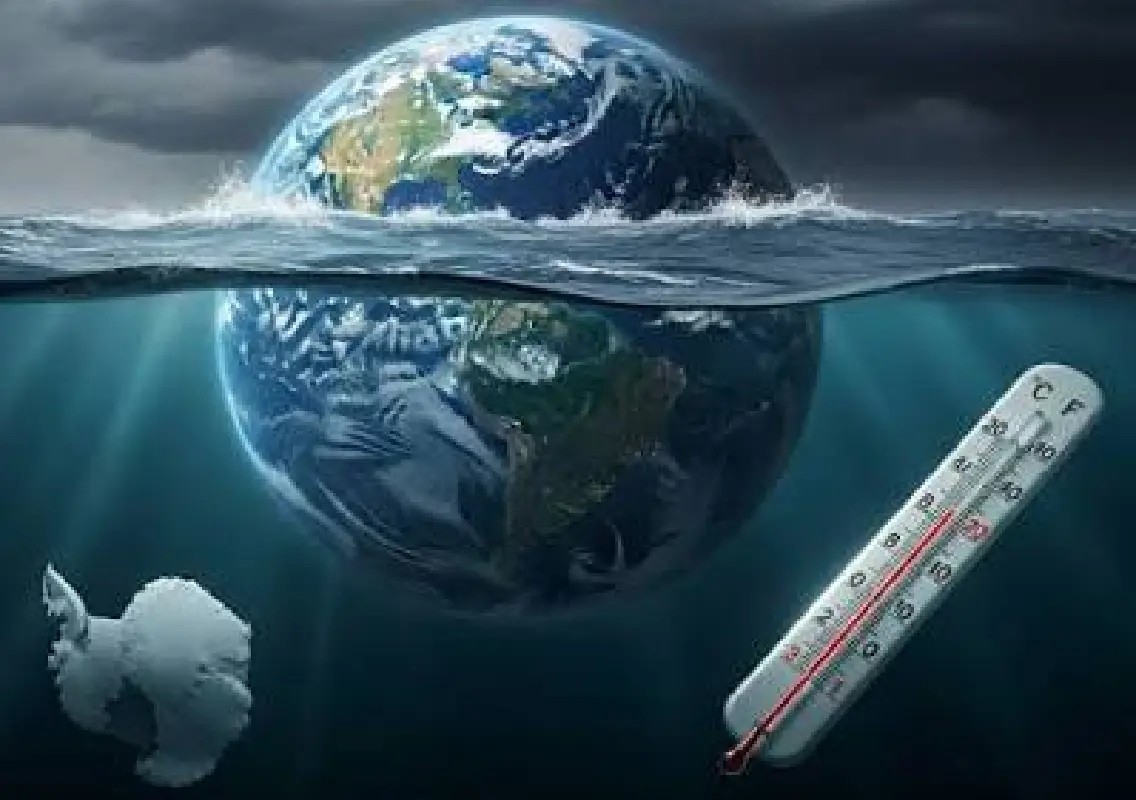


Sea-level rise is no longer a distant warning for future generations. A new United Nations report says rising oceans are already threatening coastal communities, economies and infrastructure, with the pace of change reaching unprecedented levels in human history.
The UN Secretary-General’s Special Report on the challenges linked to sea-level rise was presented on August 31 by UN Deputy Secretary-General Amina J. Mohammed during the 55th Pacific Islands Forum Leaders Meeting in Palau.
Oceans are rising at a worrying pace
According to the report, warming oceans and the melting of glaciers and ice sheets are driving sea levels higher. In 2024, the annual increase reached nearly six millimetres, the highest level recorded.
Around 770 million people, or one in every 10 people worldwide, currently live in coastal areas less than five metres above the high-tide line, leaving them exposed to significant risks.
Europe is already seeing the impact
The effects are also becoming increasingly visible along European coastlines.
Germany has around 70 per cent of its coastline affected by coastal retreat caused by erosion. In France, small sandy beaches along the French Riviera have lost roughly half their surface area since the late 19th century.
The UN report also highlights projections that extreme coastal flooding could increase sharply in several parts of Europe before 2050.
Up to 1.2 billion people could be displaced
The consequences extend beyond flooding and disappearing beaches. Rising seas threaten homes, food security, livelihoods, healthcare, education and cultural heritage.
Without urgent adaptation, up to 1.2 billion people could be displaced by 2050, according to the report. Some Pacific Island communities have already begun relocating as they lose territory.
The economic cost is also severe. Damage to coastal infrastructure is estimated at more than $1.8 trillion, while annual global losses could reach between $1.2 trillion and $4 trillion by the end of the century without adequate adaptation.
UN calls for urgent global action
The report identifies 18 recommendations, including faster reductions in greenhouse gas emissions, stronger early warning systems, greater climate-adaptation financing and improved scientific monitoring.
It also calls for stronger international cooperation to protect vulnerable communities and address complex questions surrounding sovereignty and maritime boundaries.
The message from the UN is clear: rising seas are already changing lives and coastlines, and delaying action could make the human and economic costs far greater.