




New Delhi: A powerful solar storm in May 2024 caused the number of high-energy electrons inside Earth’s inner radiation belt to rise to more than 5,000 times its pre-storm level, challenging scientists’ understanding of the planet’s magnetic environment. The event compressed Earth’s plasmasphere and allowed energetic particles, commonly called ‘killer electrons’, to enter a region that was previously believed to be largely protected from them.
The findings were reported in a study published in the journal Geophysical Research Letters on October 26, 2026. Researchers found that electron levels increased to energies of around three megaelectronvolts (MeV), highlighting how extreme space-weather events can alter the radiation environment surrounding Earth.
The discovery is significant because the inner radiation belt has traditionally been considered a region where highly energetic electrons are largely prevented from entering. The May 2024 event showed that this natural protection can be disrupted under particular space-weather conditions.
The findings also raise concerns about the potential effects of powerful solar storms on satellites, spacecraft and astronauts. High-energy electrons can penetrate spacecraft shielding and damage sensitive electronic systems, potentially affecting the reliability and operational lifespan of equipment in orbit.
May 2024 G5 solar storm triggered the discovery
The discovery is linked to a powerful geomagnetic storm that struck Earth in May 2024. The event reached G5, the highest category on the geomagnetic storm scale, which is used to describe the intensity of disturbances in Earth’s magnetic field.
The storm was triggered by powerful solar flares and coronal mass ejections (CMEs). Solar flares release intense bursts of energy and radiation, while coronal mass ejections send enormous quantities of charged particles and magnetic fields into space.
When these emissions travel towards Earth, they interact with the planet’s magnetic environment and can trigger geomagnetic disturbances.
The May 2024 event delivered a strong stream of charged particles towards Earth, significantly disturbing the surrounding magnetic environment.
Researchers studying the effects of the storm found that the concentration of high-energy electrons inside the inner radiation belt increased dramatically. The rise was not instantaneous. Instead, measurements showed a gradual increase over approximately 24 hours.
The event provided scientists with an opportunity to examine how extreme geomagnetic activity can change the distribution and energy of particles trapped around Earth.
What are Earth’s Van Allen radiation belts?
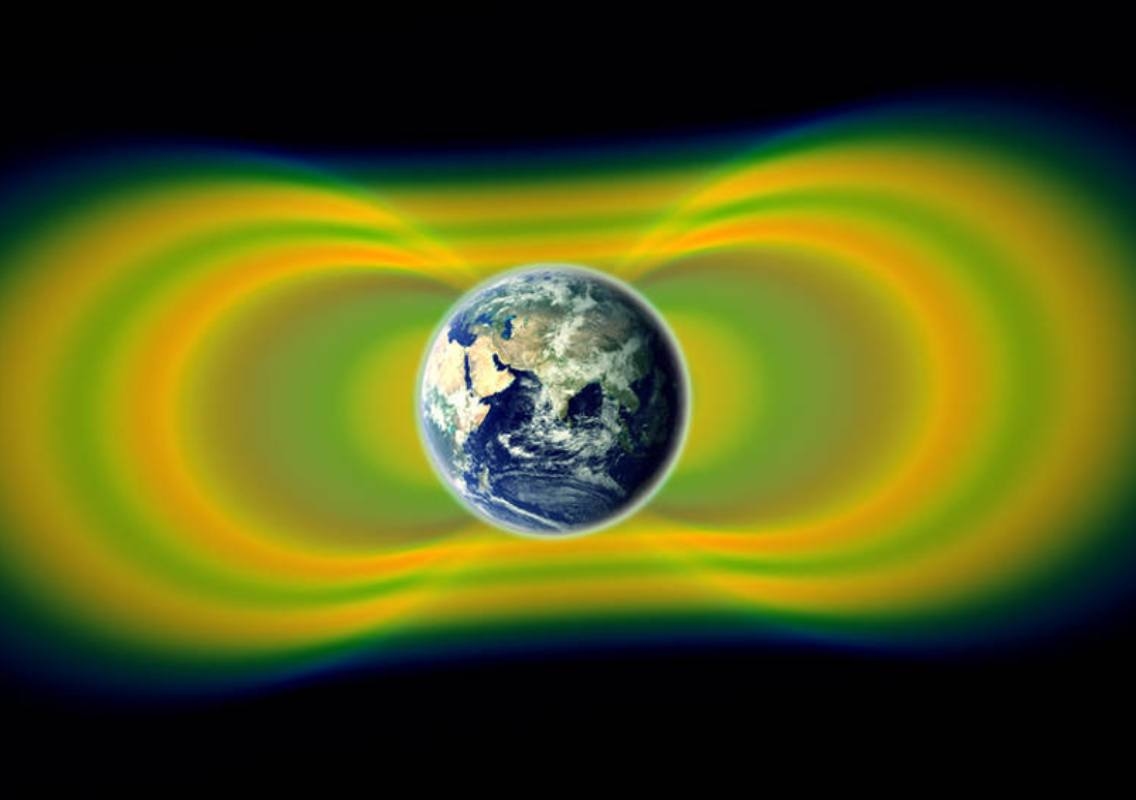
Earth is surrounded by two major regions of energetic charged particles known as the Van Allen radiation belts. These regions are shaped by the planet’s magnetic field, which traps electrically charged particles and confines them around Earth.
The belts are generally described as doughnut-shaped zones surrounding the planet.
The inner radiation belt is located closer to Earth, while the outer radiation belt extends farther into space. Both contain energetic particles, including electrons and protons, that remain trapped by Earth’s magnetic field.
These belts form an important part of the planet’s space environment. They also influence the conditions faced by satellites and spacecraft travelling through or operating near them.
For decades, scientists have studied the movement and behaviour of particles within these regions to understand how solar activity affects Earth’s magnetosphere.
The inner radiation belt has traditionally been considered relatively stable compared with the outer belt. Scientists believed that it acted as an effective barrier against the entry of extremely energetic electrons from other regions.
The May 2024 observations challenge that understanding by showing that the inner belt can experience a dramatic increase in high-energy electron levels during extreme geomagnetic conditions.
How did ‘killer electrons’ enter the inner radiation belt?
The study found that the May 2024 storm compressed Earth’s plasmasphere, changing the conditions in the region surrounding the planet.
The plasmasphere is a region filled with relatively cold plasma, consisting of electrically charged particles. It forms part of Earth’s inner magnetospheric environment and plays an important role in influencing the movement of electromagnetic waves.
During the solar storm, the amount of cold plasma in the plasmasphere decreased. This change created conditions that allowed electromagnetic waves known as chorus waves to become more effective at accelerating electrons.
Chorus waves are naturally occurring electromagnetic waves found in Earth’s magnetosphere. They can interact with energetic electrons and transfer energy to them.
According to the researchers’ findings, this process helped accelerate electrons within the inner radiation belt to extremely high energies.
The increase in electron levels occurred in stages. Lower-energy particles were detected first, followed by electrons with progressively higher energies.
This gradual pattern suggested that the electrons were being accelerated locally within the inner radiation belt rather than simply moving inwards from the outer radiation belt.
The observation is important because it provides evidence of how changes in the plasmasphere and electromagnetic wave activity can influence the energy levels of trapped particles.
Arase satellite recorded the unusual electron activity
The observations were made using Japan’s Arase satellite, which has been monitoring Earth’s radiation belts since 2017.
The spacecraft is designed to study the behaviour of energetic particles and electromagnetic waves in Earth’s magnetosphere. Its long-term observations provide scientists with information about how the radiation belts change under different space-weather conditions.
During the May 2024 geomagnetic storm, Arase detected the unusual increase in high-energy electrons within the inner radiation belt.
The measurements showed that electron levels rose to more than 5,000 times their pre-storm levels, with energies reaching around three megaelectronvolts.
The increase over approximately 24 hours also helped researchers examine the sequence of events behind the acceleration process.
The satellite’s observations were particularly valuable because they allowed scientists to track changes in the radiation environment during an extreme geomagnetic disturbance.
Long-term monitoring is important in this field because radiation belts are dynamic regions. Their particle populations can change in response to solar activity, magnetic disturbances and interactions between particles and electromagnetic waves.
The Arase observations therefore offered new evidence about the conditions under which the inner radiation belt can be disturbed.
Why are high-energy electrons called ‘killer electrons’?
High-energy electrons are sometimes described as ‘killer electrons’ because of the damage they can cause to spacecraft systems.
These particles can travel at speeds approaching that of light and possess enough energy to penetrate certain forms of satellite shielding.
When they interact with electronic components, they can cause electrical charging, disrupt circuits and damage sensitive equipment. Such effects can lead to system malfunctions or reduce the operational lifespan of spacecraft.
The risk is particularly important for satellites that operate in or pass through regions exposed to energetic radiation.
Spacecraft designers use shielding and other protective measures to reduce radiation-related damage. However, high-energy particles can still create challenges, especially during periods of intense solar activity.
The effects are not limited to electronic equipment. Astronauts travelling beyond the protection offered by Earth’s lower atmosphere and magnetic environment can also face increased radiation exposure.
The May 2024 discovery therefore highlights the importance of understanding how radiation levels change during major geomagnetic storms.
What does the discovery mean for satellites and astronauts?
The findings could have implications for satellite operators, spacecraft manufacturers and space agencies.
Satellites rely on electronic systems to manage communications, navigation, power supply and onboard operations. Unexpected increases in radiation can interfere with these systems and create additional risks for spacecraft operating in affected regions.
High-energy electrons can also contribute to the gradual degradation of satellite components. Depending on the intensity and duration of exposure, radiation-related damage may affect the reliability of equipment and shorten its useful life.
For astronauts, increased energetic particle activity is another concern. Space missions must account for radiation exposure when planning operations, particularly during periods of heightened solar activity.
The findings do not mean that every solar storm will produce the same increase in radiation levels. The May 2024 event was an extreme G5 geomagnetic storm, and the observed effects were linked to the particular conditions created during that event.
However, the study suggests that scientists and space-weather monitoring agencies may need to pay closer attention to changes within the inner radiation belt during powerful solar disturbances.
Why the findings matter for future space-weather research
The discovery challenges the assumption that Earth’s inner radiation belt remains largely protected from extremely energetic electrons.
It also demonstrates how changes in the plasmasphere can influence particle acceleration through interactions with electromagnetic waves.
The role of chorus waves is particularly important because these waves can transfer energy to electrons and alter the radiation environment around Earth.
Further research into these processes could improve scientific understanding of how the Van Allen belts respond to extreme solar activity.
Better knowledge of radiation belt behaviour may also help improve space-weather forecasting and the design of protective measures for satellites and crewed missions.
As human activity in space expands, understanding the effects of solar storms is becoming increasingly important. Satellites support communications, navigation, weather forecasting and other essential services, while space agencies are preparing increasingly complex missions.
The May 2024 storm has provided researchers with important evidence that Earth’s natural radiation barriers can change dramatically under extreme conditions.
The study’s central finding is that the inner radiation belt is not as resistant to high-energy electron activity as previously believed. Monitoring these changes will be important for protecting spacecraft and improving preparedness for future severe space-weather events.