







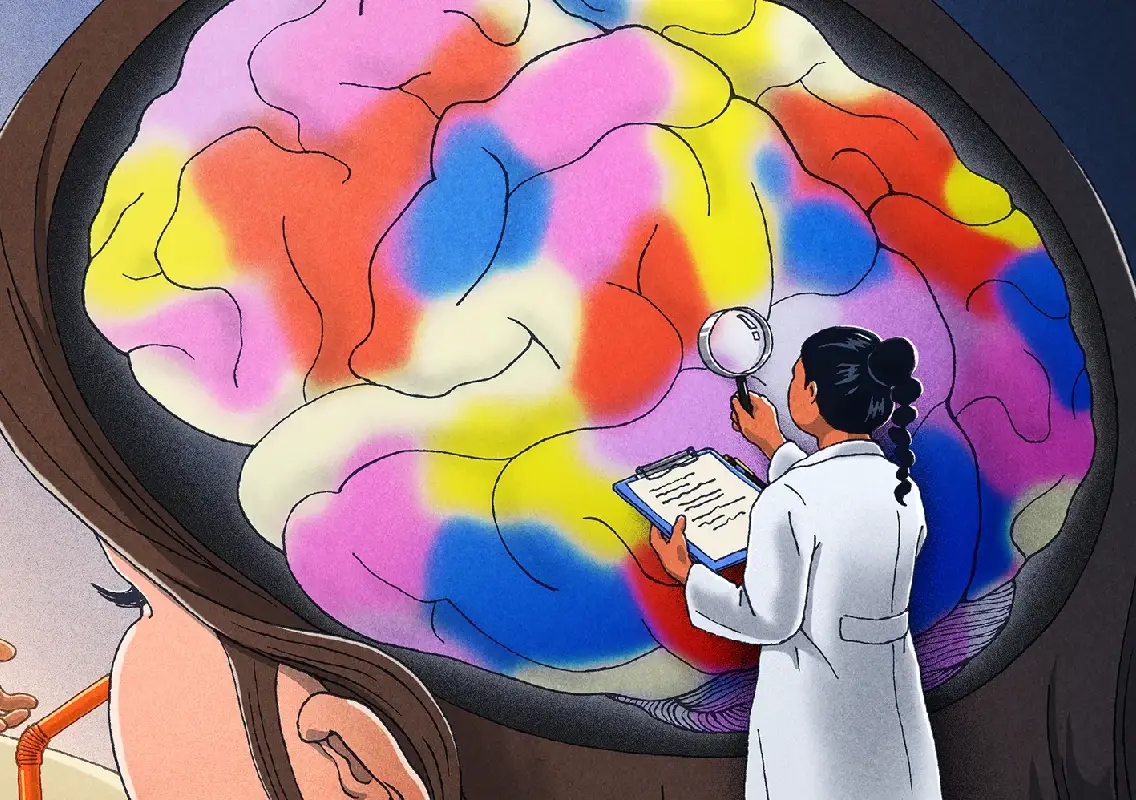


New research has challenged a long-standing belief about how the brain develops during adolescence, revealing that the teenage brain actively builds new clusters of synapses, rather than only pruning existing ones.
Rethinking adolescent brain development
For decades, scientists believed that synapse numbers rise in childhood and sharply decline during adolescence through a process called synaptic pruning. This theory has often been linked to neuropsychiatric conditions such as Schizophrenia. However, a new study suggests the picture is far more complex.
Researchers from Kyushu University have found that the adolescent brain also creates dense, highly localised clusters of new synapses, which may be crucial for higher-level thinking.
A hidden synapse ‘hotspot’
The study, published in Science Advances on January 14, focused on neurons in Layer 5 of the cerebral cortex — a key region that integrates information and sends outputs to other brain areas.
Using a tissue-clearing technique called SeeDB2 and super-resolution microscopy, the team mapped dendritic spines across entire neurons in mice. They discovered a previously unknown “hotspot” — a region with an unusually high density of synapses — that emerges only during adolescence.
“We were surprised to find this structure,” said Takeshi Imai, Professor at Kyushu University’s Faculty of Medical Sciences. “It suggests adolescent brain development involves active construction, not just elimination.”
Implications for schizophrenia
The findings may reshape how scientists understand schizophrenia. When researchers studied mice with gene mutations linked to the disorder, they found that while early development appeared normal, synapse formation during adolescence was impaired, preventing the hotspot from forming.
This suggests schizophrenia may involve failures in building new connections, not only excessive synapse loss — a significant shift from traditional thinking.
What comes next
While the research was conducted in mice, scientists say identifying whether similar processes occur in humans could transform understanding of brain development and mental illness.
Understanding how the adolescent brain builds its networks, researchers say, may be key to unlocking new approaches to neuropsychiatric disorders.