







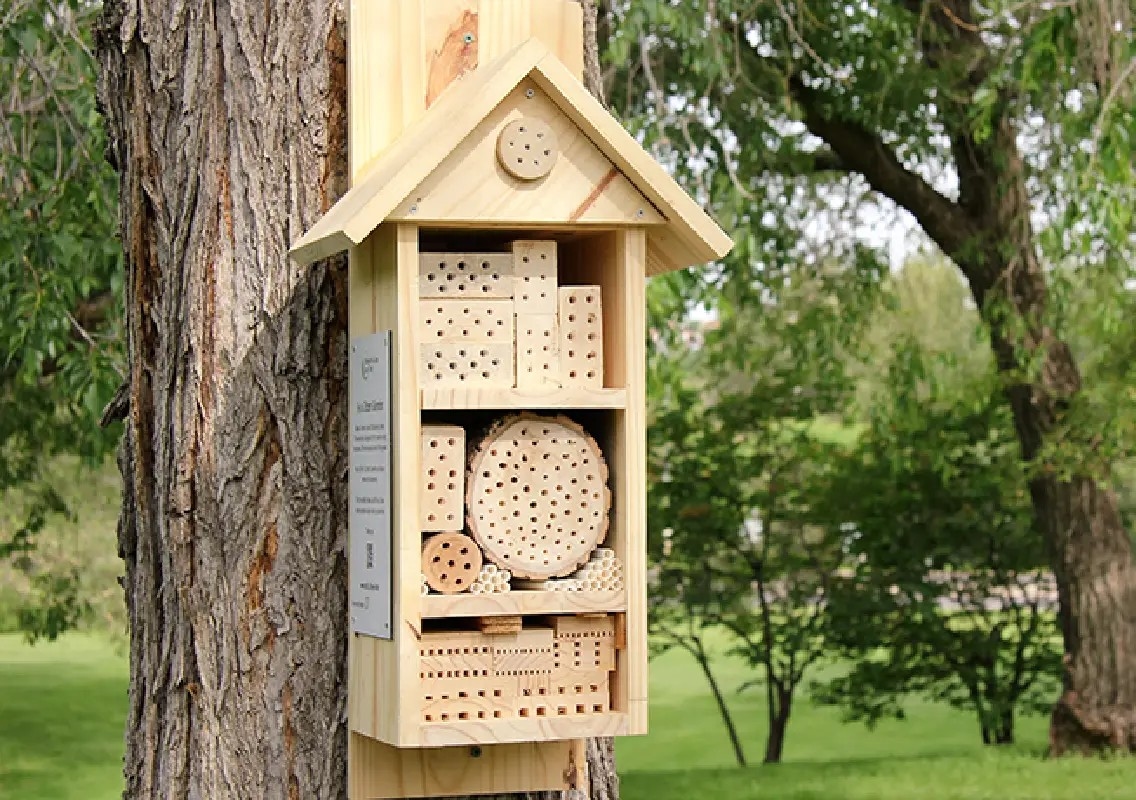


They may be no bigger than a shoebox, but bee hotels are emerging as an innovative tool in the fight to protect wild pollinators. Designed to provide nesting spaces for solitary bees, these miniature structures are helping scientists better understand how urban environments can support biodiversity.
Canadian researcher J. Scott MacIvor installed 200 bee hotels across a city and monitored them over three years. What began as a conservation project soon revealed a thriving community of insects, offering valuable insights into how artificial nesting sites influence pollinator populations.
Why bee hotels matter
While honey bees are the most familiar species, they represent only a small share of the world’s bee population. Nearly 90 per cent of the approximately 20,000 known bee species are solitary bees, with each female building and caring for her own nest without the support of a hive.
These bees typically lay their eggs inside hollow plant stems, dead wood or abandoned beetle burrows. However, rapid urbanisation, intensive landscaping and the removal of natural vegetation have drastically reduced suitable nesting sites.
Bee hotels aim to recreate these natural cavities by offering narrow tunnels where species such as mason bees and leafcutter bees can safely lay their eggs.
A simple design with a big impact
Unlike traditional beehives, bee hotels do not house colonies. Instead, each tunnel serves as an individual nesting chamber occupied by a single female bee and her developing offspring.
Most bee hotels are made using untreated hardwood blocks drilled with holes of varying sizes or bundles of replaceable paper or cardboard tubes placed inside weatherproof wooden frames.
Researchers say that when properly designed and regularly maintained, these structures can support healthy populations of native pollinators while encouraging greater public awareness about the importance of conserving insects.
Supporting urban biodiversity
Scientists caution that bee hotels are not a complete solution to pollinator decline. They work best when combined with pollinator-friendly gardens, native flowering plants, reduced pesticide use and the preservation of natural habitats.
As cities continue to expand, researchers believe thoughtfully managed bee hotels could become an important part of broader conservation efforts, helping safeguard wild bee species that play a vital role in pollinating crops, flowers and native plants.