







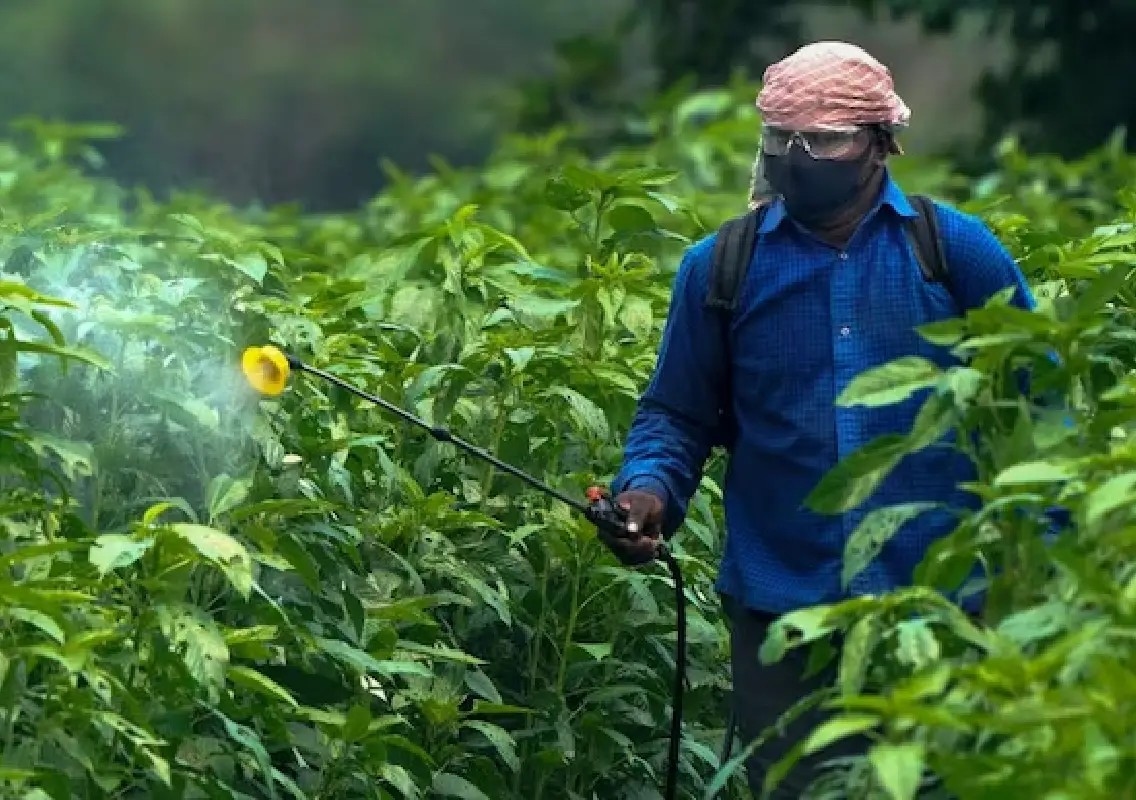


A growing debate over food safety and agricultural practices has put the spotlight on several pesticides and herbicides that continue to be used in India despite restrictions, bans or health concerns in many other countries.
The discussion has gained fresh attention after reports highlighted repeated rejections of Indian food exports by European authorities due to pesticide residues and contamination concerns.
Chemicals under scrutiny
Among the chemicals attracting attention are paraquat, glyphosate, 2,4-D, dimethoate and acephate.
Paraquat, a widely used herbicide, has been banned in more than 70 countries because of concerns over its extreme toxicity. Exposure has been linked to severe health complications, including lung damage, kidney failure and neurological disorders. Despite this, it remains legal for use in India.
Glyphosate, one of the world’s most widely used weedkillers, was classified as a “probable carcinogen” by the World Health Organization’s International Agency for Research on Cancer (IARC) in 2015. However, regulatory authorities in several countries continue to permit its use, citing differing scientific assessments.
Another controversial herbicide, 2,4-D, gained notoriety as a component of Agent Orange, the defoliant used during the Vietnam War. While it remains approved in several countries, including India, the IARC has classified it as “possibly carcinogenic to humans”.
Concerns beyond human health
Experts have also raised concerns about acephate, an insecticide widely used on vegetables, cotton and pulses. Environmental groups warn that it may harm bees and other pollinators that are essential for food production and biodiversity.
The decline of pollinator populations has become a growing concern globally, with scientists linking pesticide exposure to reduced bee survival and reproductive success.
Balancing farm productivity and safety
Supporters of these chemicals argue that they help farmers control pests efficiently, improve yields and keep production costs manageable. Critics, however, question whether developing countries should continue relying on substances that face increasing restrictions elsewhere.
The debate ultimately centres on how regulators balance scientific evidence, agricultural needs, environmental protection and public health.
As India seeks to strengthen food safety standards and expand agricultural exports, policymakers face increasing pressure to review older pesticides and explore safer alternatives without disrupting farmers’ livelihoods