







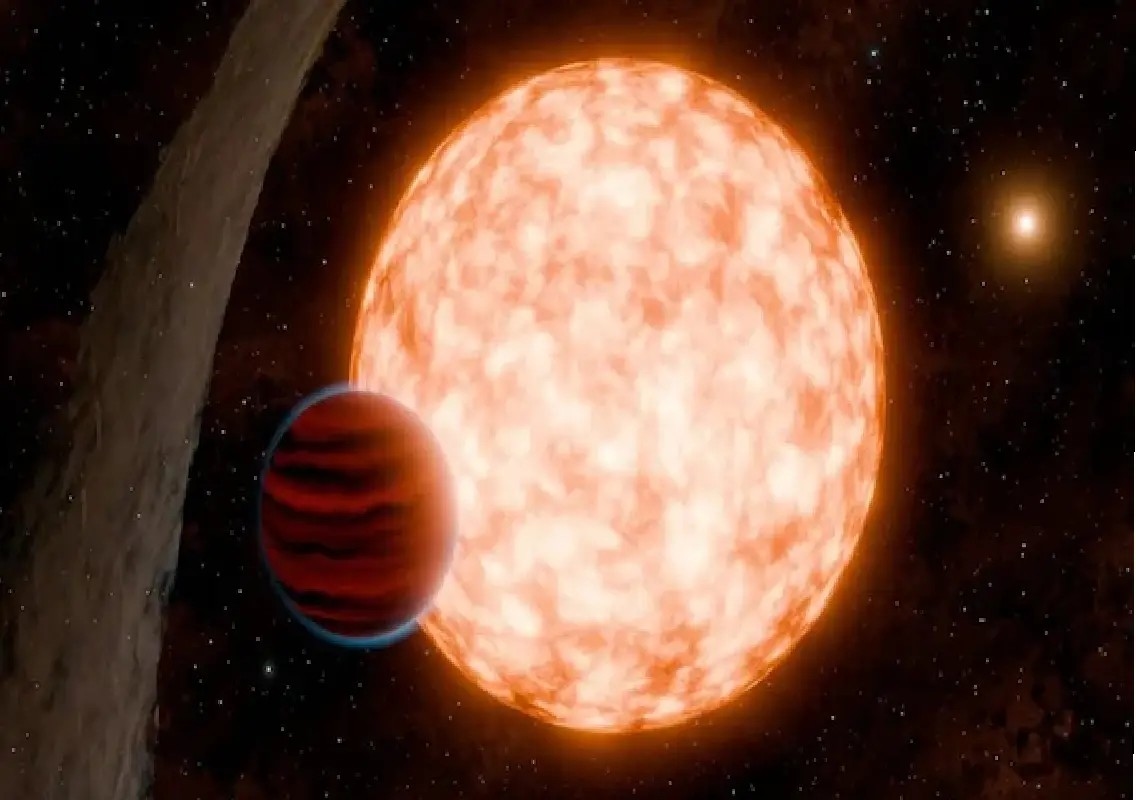


Astronomers have confirmed the youngest known planet ever identified, a remarkable world less than one million years old that is still forming inside the disc of gas and dust surrounding its young star.
Named Elias 2-24 b, the newly confirmed planet offers scientists a rare opportunity to study a world during the earliest stage of planetary formation. NASA said the discovery was made using data preserved in NASA-funded astronomical archives.
A planet still taking shape
Elias 2-24 b is located around a young star known as Elias 2-24. Unlike older exoplanets that have long since settled into mature planetary systems, this newly identified world remains embedded in its star’s natal disc — the rotating cloud of gas and dust from which planets are formed.
Scientists believe the planet is still undergoing significant changes as material from the surrounding disc interacts with it.
Its extremely young age is particularly important because it gives researchers a chance to examine planetary formation almost as it happens.
Discovery challenges existing theories
The finding could also force scientists to reconsider how quickly planets can form.
Before Elias 2-24 b, the youngest known planets were more than five million years old. Those worlds had already presented challenges for existing planet-formation models.
The discovery of a planet less than one million years old adds another puzzle. Researchers say current models may be missing important processes involved in the rapid formation of planets.
“This baby planet” therefore represents more than a record. It provides astronomers with a rare laboratory for understanding how planets emerge from the material surrounding newborn stars.
As researchers continue studying Elias 2-24 b, the young world could help answer one of astronomy’s enduring questions: how quickly can a planet actually be born?