







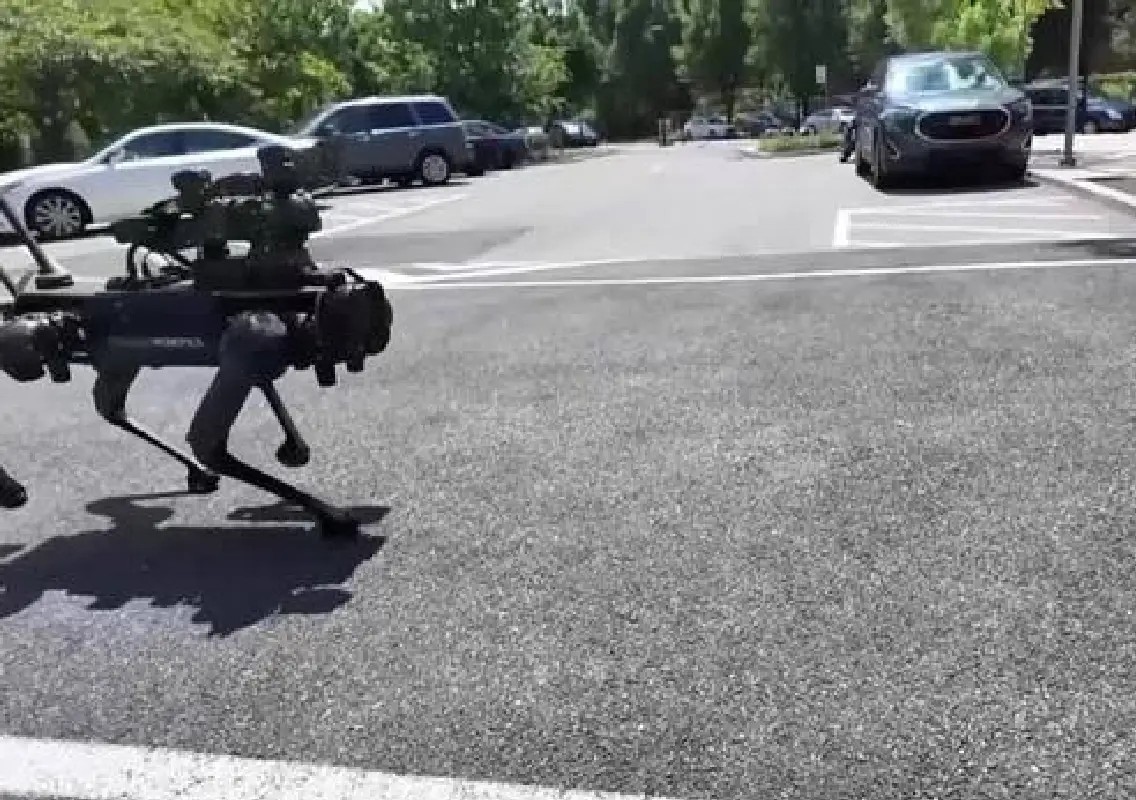


China’s Unitree Robotics, one of the world’s leading producers of humanoid and quadruped robots, has built some of its most successful robot dogs using innovations that emerged from US military-funded research, according to researchers involved in the programme and a former US defence technology official.
Unitree’s Go2, launched in 2023 at about $1,600, helped the company rapidly expand its presence in the global quadruped robot market. The company is now valued at around $9 billion ahead of its stock market debut.
US research helped shape robot dog technology
The US Army’s DEVCOM Army Research Laboratory (ARL) funded robotics research between 2010 and 2020 through the Robotics Collaborative Technology Alliance.
The programme brought together researchers from institutions including the University of Pennsylvania, Massachusetts Institute of Technology (MIT), Boston Dynamics and NASA’s Jet Propulsion Laboratory.
Researchers said Unitree’s Go series closely resembles technologies developed through the programme. Former University of Pennsylvania researcher Gavin Kenneally said the Army-funded work effectively became the foundation for the first Unitree robot produced at scale.
MIT researcher Ben Katz also said the dimensions of Unitree’s popular Go series were almost identical to the Mini Cheetah robot he helped develop.
China turns research into mass production
The development has highlighted a wider challenge for the US: converting publicly funded technological breakthroughs into commercially successful products.
Unitree sold more than 18,000 quadruped robots and 5,500 humanoid robots last year, according to company filings. By comparison, US companies have struggled to produce comparable robots at similar scale and prices.
Researchers told Reuters that the issue was not that US research should have been kept secret. Instead, they argued that stronger industrial capacity, investment, supply chains and manufacturing support are needed to commercialise such breakthroughs.
China’s large manufacturing ecosystem, including suppliers of motors, gears and actuators, has helped companies such as Unitree move rapidly from research to affordable commercial products.
Robot dogs raise security concerns
The technology has also attracted military attention. Chinese state television has shown Unitree robots accompanying PLA troops, while a modified quadruped has been shown carrying a mounted assault rifle.
In June, the Pentagon added Unitree to a list of Chinese military companies, describing it as a contributor to China’s defence industrial base. Unitree has maintained that its robots are intended for civilian use.
The US has also introduced restrictions affecting future imports of foreign-made humanoid and quadruped robots.
The debate now extends beyond robotics itself, raising questions about how nations can turn research breakthroughs into manufacturing strength and strategic technological advantage.