







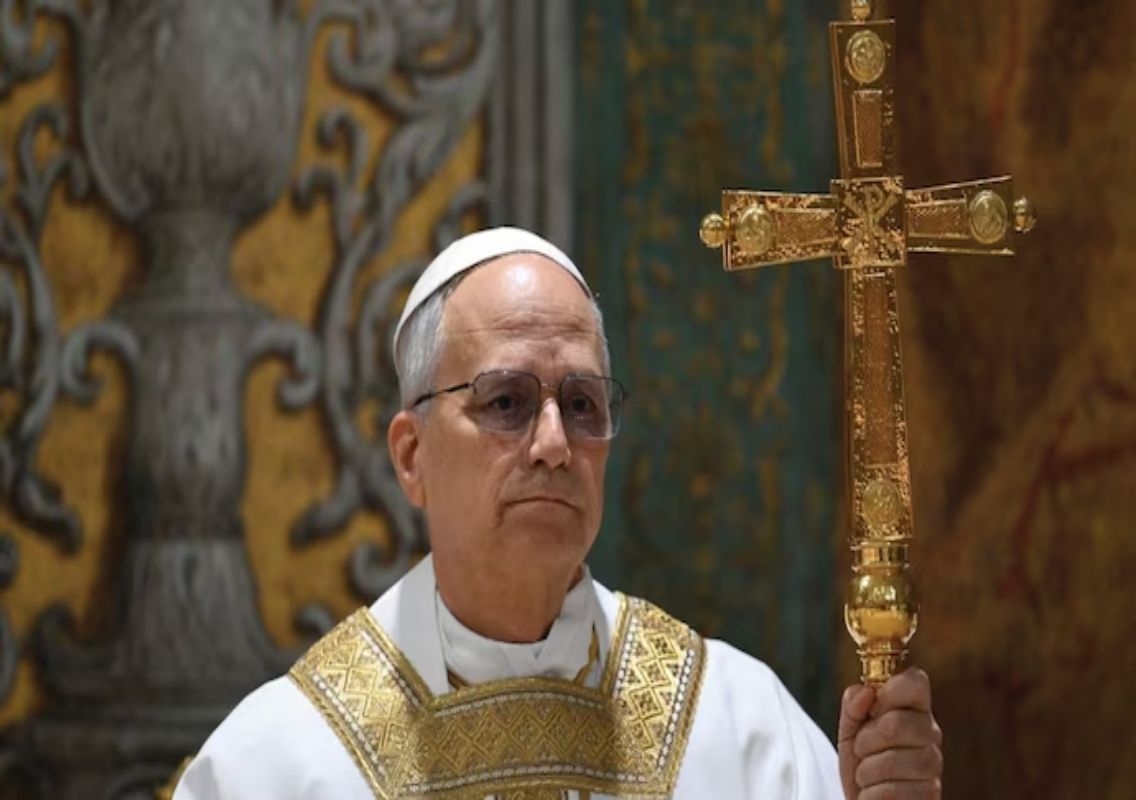


Vatican City: A recent Vatican event on artificial intelligence unexpectedly triggered a wave of online humour and speculation, with social media users joking that Pope Leo XIV had “joined” AI company Anthropic. The viral moment emerged after the pontiff shared the stage with Christopher Olah, co-founder of Anthropic, during the presentation of a major Church document addressing the future of AI.
The event, held at a packed Vatican auditorium, centred on the unveiling of Magnifica Humanitas, an encyclical focusing on safeguarding humanity in an era of rapid technological transformation. While the gathering aimed to foster dialogue between faith leaders and technology experts, it quickly gained attention for an entirely different reason — internet memes.
Social media turns moment into viral joke
Images and clips of Pope Leo XIV standing alongside Olah spread rapidly across platforms such as X, where users began humorously suggesting that the Pope had been recruited by the AI startup. Some posts jokingly described him as a “safety consultant” at Anthropic, while others shared edited images depicting the pontiff working alongside prominent AI researchers.
One viral post quipped that Anthropic had managed to recruit the Pope before the release of highly anticipated video games, highlighting the absurdity of the speculation. Another meme featured the Pope seated at a computer, with well-known AI figures standing nearby, fuelling the online narrative.
The humour reflects the growing cultural visibility of the AI industry, where talent acquisition and high-profile hires frequently make headlines. In this context, the unlikely pairing of a religious leader and a Silicon Valley entrepreneur provided fertile ground for internet satire.
The real purpose of the Vatican gathering
Despite the online frenzy, the event itself carried a serious and timely message. Magnifica Humanitas outlines the Vatican’s concerns about the ethical implications of artificial intelligence and the need to prioritise human dignity amid technological advancement.
During his address, Pope Leo XIV emphasised the importance of collaboration across disciplines. He thanked Olah for attending and stated that the Church seeks to work with technology leaders to “find a way for humanity in this time of artificial intelligence.” His remarks underscored the Vatican’s intention to actively engage in global discussions on AI governance.
The encyclical also raised concerns about the concentration of digital power in the hands of a few corporations and called for stronger regulatory oversight by governments. It highlighted risks such as job displacement, societal inequality and the potential misuse of AI technologies.
Why AI leaders are engaging with the Church
Christopher Olah, speaking before members of the Roman Curia, acknowledged that the challenges posed by AI cannot be addressed by the technology sector alone. He identified several areas where institutions like the Vatican could play a critical role.
One key concern is the potential for large-scale job displacement due to automation. Olah stressed the need for societal support systems to help individuals adapt to changing economic realities. He also pointed to the psychological and developmental impact of AI tools, particularly on children, as an area requiring careful consideration.
Additionally, Olah highlighted the importance of understanding how advanced AI systems function internally. He suggested that some emerging technologies may exhibit behaviours that are not yet fully understood, raising questions about transparency and control.
Crucially, he called for independent and morally grounded voices to hold AI developers accountable. According to Olah, external critics who are not influenced by commercial pressures are essential to ensuring responsible innovation.
A broader dialogue on ethics and technology
The interaction between Pope Leo XIV and Olah symbolised a broader effort to bridge the gap between technology and ethics. While their backgrounds and worldviews differ significantly, both sides expressed a willingness to engage in meaningful dialogue.
The Pope described the exchange as “a great sign of hope,” noting that constructive conversations can take place despite ideological differences. This sentiment reflects a growing recognition that the challenges posed by AI are not purely technical but also philosophical and ethical.
As artificial intelligence continues to reshape industries and societies, collaborations between diverse stakeholders — including religious institutions, governments and private companies — are likely to become increasingly important.
Conclusion
While the internet may have briefly entertained the idea of the Pope joining an AI startup, the reality behind the viral moment is far more significant. The Vatican’s engagement with AI leaders signals a proactive approach to addressing the ethical dimensions of emerging technologies.
The event highlights the need for inclusive dialogue as humanity navigates the complexities of artificial intelligence. Beyond the memes, it serves as a reminder that shaping the future of AI will require input from not just engineers and corporations, but also moral and philosophical voices from across society.