







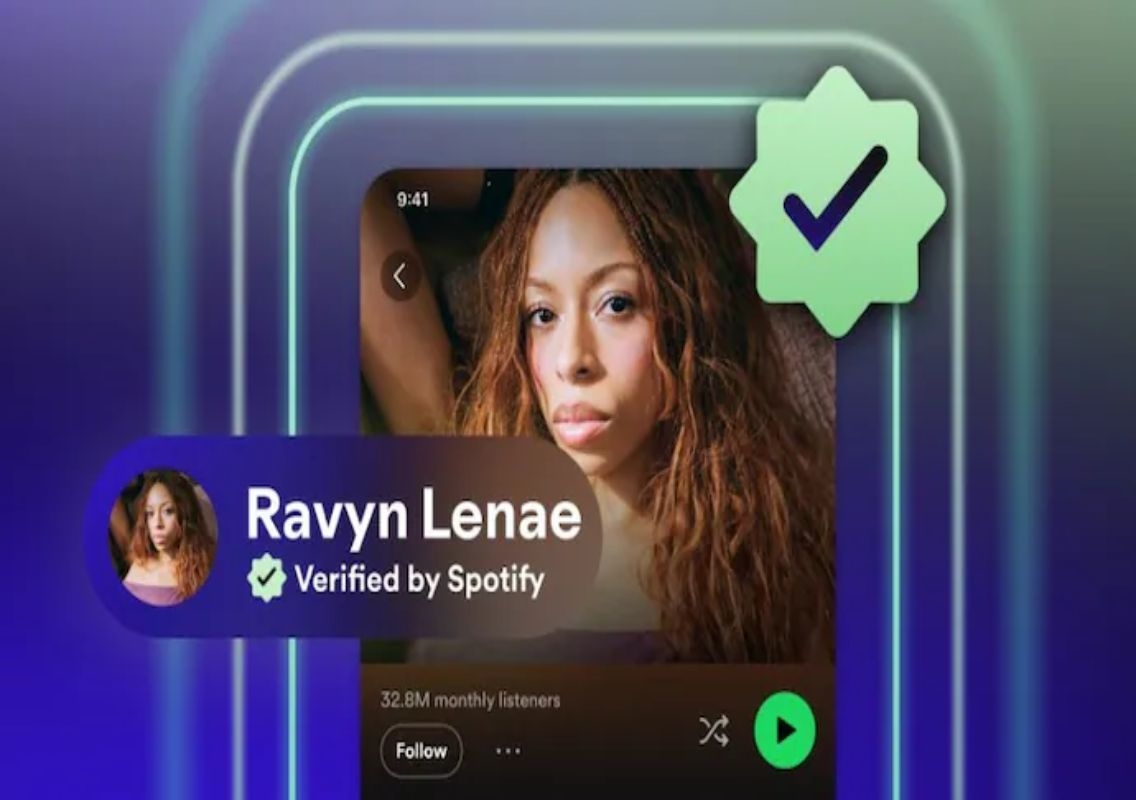


Stockholm: Spotify has announced a new “Verified by Spotify” badge aimed at identifying authentic human artists, as artificial intelligence-generated music continues to surge across streaming platforms. The move is part of the company’s broader effort to improve transparency and maintain trust in an increasingly AI-driven music ecosystem.
The initiative comes at a time when distinguishing between human-created and AI-generated content has become more challenging. Over the past year, several AI-generated artists have gained significant traction, including instances where such content has amassed millions of streams within a short span.
Why Spotify is introducing verification
Spotify’s latest step reflects growing concerns within the music industry about authenticity. The rapid advancement of AI tools has enabled the creation of music that closely mimics human artists, often making it difficult for listeners to identify the origin of the content.
One notable example includes the track “Celebrate Me” by IngaRose, which reportedly topped global charts despite the artist not being a real individual. The project has been linked to producer Dallas Little, highlighting how AI personas can achieve mainstream success.
Such developments have raised questions about transparency, copyright, and the future of artistic identity. Spotify’s verification system aims to address these concerns by clearly marking artists who meet its standards for authenticity.
How the ‘Verified by Spotify’ badge works
Under the new system, artist profiles that have been reviewed and meet Spotify’s criteria will receive a “Verified by Spotify” badge. This badge will appear on artist pages and in search results, marked by a light green checkmark.
To qualify for verification, artists must demonstrate consistent listener engagement, adhere to platform policies, and provide clear signals of authenticity. These signals may include evidence of live performances, merchandise presence, or linked social media accounts.
Importantly, profiles that primarily represent AI-generated content or virtual personas will not be eligible for verification at launch. This distinction is expected to help users make more informed choices while browsing and streaming music.
Additional tools for artist protection
Alongside the verification badge, Spotify is also rolling out a feature called “Artist Profile Protection,” currently in beta. This tool is designed to give creators greater control over their profiles, helping prevent unauthorised uploads or misattributed content.
The platform is also testing a new artist details section, which provides a snapshot of key information such as career milestones, release history, and touring activity. Spotify describes this feature as similar to “nutrition facts” for artists, offering users quick insights into an artist’s credibility and activity.
Rollout and reach
Spotify has confirmed that the verification badge will begin rolling out globally over the coming weeks. At launch, the company expects more than 99 per cent of artists that users actively search for to be verified, covering hundreds of thousands of creators across genres and regions.
This broad rollout suggests that the majority of established and actively followed artists will carry the badge, making it a prominent feature across the platform.
AI reshaping the music industry
The rise of AI-generated music is rapidly transforming the industry. From synthetic voices to fully automated compositions, AI tools are lowering the barriers to music creation while also raising ethical and regulatory challenges.
Streaming platforms are now under pressure to balance innovation with accountability. While AI opens up new creative possibilities, it also introduces risks related to misinformation, identity misuse, and unfair competition.
Spotify’s verification initiative signals a shift towards greater accountability in the digital music space. By clearly distinguishing human artists from AI-generated entities, the company aims to preserve user trust while adapting to technological change.
A step towards transparency
As AI continues to blur the lines between human and machine-generated content, measures like verification badges may become standard across platforms. For listeners, this could mean greater clarity about who — or what — is behind the music they enjoy.
For artists, especially independent creators, such systems may help reinforce credibility and protect their work in an increasingly complex digital environment.
While the long-term impact of AI on music remains uncertain, Spotify’s move highlights a key priority for the industry: ensuring that authenticity remains visible, even as technology evolves.