


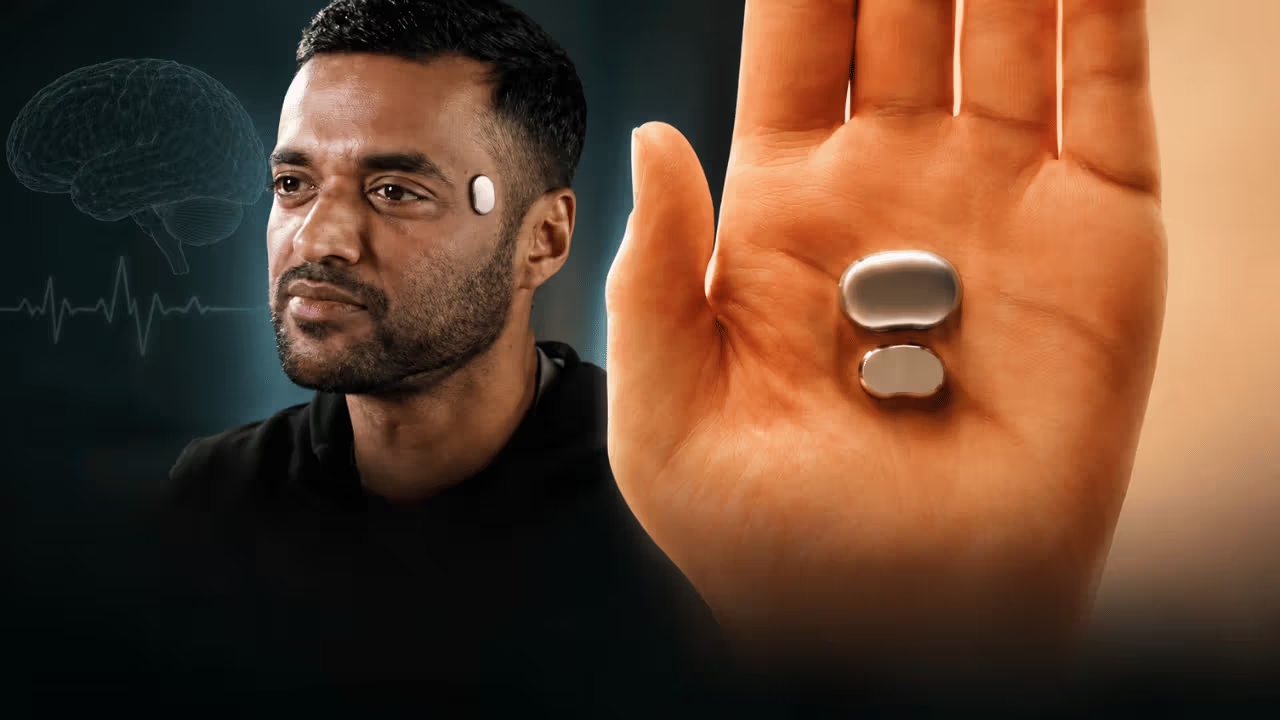


New Delhi: Temple, a new brain-focused wearable developed by Zomato co-founder Deepinder Goyal, is preparing for its public launch, with pre-orders scheduled to open on November 1, 2026. The device takes a different approach to health tracking by monitoring signals associated with cerebral blood flow, oxygenation and cognitive load rather than focusing primarily on conventional fitness measurements.
The pill-shaped wearable attracted attention after Goyal was seen wearing it during an appearance on Raj Shamani’s podcast. It is now moving closer to its first public sales, although availability will initially be limited.
The launch edition will come in six colour options, with early-access invitations indicating a price of around Rs 85,000. The final public price should be confirmed by the company. Buyers will also need to account for the delivery timeline, as each device is reportedly made to order and may take up to three months to arrive after purchase.
What is Temple and what does it do?
Temple is a compact wearable designed to sit on the side of the head, between the forehead and the ear. Unlike a smartwatch, which typically measures indicators such as heart rate, steps, sleep and activity, Temple aims to provide information about physiological signals associated with brain function.
Its central technology is called BrainFlow. According to the company, the system uses optical sensors to monitor changes in cerebral blood flow — the movement of blood through the brain. It also tracks signals associated with oxygenation and cognitive load.
The broader objective is to help users understand how their bodies respond to different conditions, including exercise, stress, fatigue and recovery.
For athletes and people interested in performance tracking, such measurements could potentially offer another way to study physical strain and recovery. Researchers may also find the technology useful for investigating physiological changes during demanding activities.
However, Temple should not be confused with a device that directly reads thoughts. Its stated purpose is to monitor physiological signals and derive information from them, rather than provide a direct interpretation of a person’s thoughts.
The company positions Temple as a wellness and research device, not a medical diagnostic tool. Its measurements should therefore not be treated as a substitute for professional medical assessment.
What is the Entropy score?
One of Temple’s features is an Entropy score ranging from 1 to 250. The score is designed to indicate physiological strain, giving users a numerical measure that can be tracked over time.
According to the information shared by Goyal, factors such as sleep, exercise, stress and caffeine can influence the score.
The idea is to provide users with a way to observe how their physiological state changes in response to everyday activities and lifestyle choices. For example, users may be able to compare readings across periods of exercise, rest or poor sleep to identify patterns in their own data.
However, the score should be understood within the limits of the device’s stated purpose. A numerical measurement is not, by itself, a clinical assessment of health or cognitive performance.
Temple’s usefulness will depend on how consistently its measurements work in real-world conditions, how clearly the company explains its metrics and how effectively users can interpret the information.
How do you wear Temple?
Temple is attached to the skin using single-use adhesive tapes called Grips. These are designed to hold the device securely in place during everyday activities and workouts.
The company says the wearable is intended to remain in place during activities such as running, swimming, showering and sauna use. Scuba diving is not recommended, according to the information shared by Goyal.
Each Grip can last around seven days, although the company recommends replacing it every two to three days, particularly for users who sweat heavily or spend time in dusty environments. The adhesive tapes should not be reused.
The attachment system is intended to make the wearable practical for regular use without requiring a conventional wrist strap. Its compact shape is also designed to sit discreetly on the side of the head.
The device is slim enough to be worn under glasses, while its smooth edges are intended to reduce the likelihood of clothing catching on it.
For a wearable that relies on contact with the skin, comfort and secure attachment will be important factors. Users will also need to consider the recurring cost and availability of replacement Grips when assessing the overall expense of owning Temple.
Temple price in India
Temple’s expected price is one of the biggest considerations for prospective buyers.
Early-access invitations have indicated a price of approximately Rs 85,000. However, this should be treated as an indicative figure until the company confirms the final public launch price and any applicable taxes, shipping charges or other costs.
At that price, Temple would sit well above the cost of many mainstream fitness bands and smartwatches available in India.
Its value proposition is different, however. Rather than competing solely on conventional fitness tracking, Temple is positioned around its brain-related physiological measurements and its potential applications in wellness, performance and research.
Prospective buyers should consider whether these additional measurements meet their needs and whether the information provided by the device is useful enough to justify the premium.
The recurring expense of replacement Grips may also be relevant when calculating the long-term cost of ownership.
Six colour options for the launch edition
Temple’s launch edition is expected to be available in six colours:
- True Gold
- Rose Gold
- Black Mirror
- Real Jade
- Deep Blue
- Purple Funk
The company has identified Real Jade, Deep Blue and Purple Funk as limited-edition options.
The range gives buyers a choice between metallic-inspired finishes, darker colours and brighter shades. Since Temple is worn on the side of the head, its appearance and how discreetly it sits alongside glasses or other accessories may also influence purchasing decisions.
Availability of individual colours could depend on the number of units allocated to the first production batch.
When do Temple pre-orders open?
Pre-orders for Temple are scheduled to open on November 1, 2026.
The first batch is expected to be limited, although the company has not announced the exact number of devices that will be available.
People interested in purchasing the wearable should check the company’s official ordering channels for the final price, colour availability, payment terms and any conditions attached to the pre-order.
The November 1 date marks the beginning of the ordering process, not the date on which buyers will necessarily receive the device.
When will Temple ship to buyers?
Temple will reportedly be manufactured on a made-to-order basis. Goyal has said that delivery may take up to three months after a purchase.
This means buyers placing orders when pre-orders open in November could have to wait until early 2027, depending on their individual order dates and the company’s production schedule.
Goyal has explained that the approach is intended to support quality control and ensure that customers receive their devices properly.
Made-to-order production can help a company manage an initial rollout, but it also means buyers should not expect immediate delivery. The actual waiting period may depend on production capacity, order volume and the availability of components.
The company has yet to disclose the size of the first batch or provide a detailed, customer-specific shipping schedule.
Could Temple be used for sports and research?
Temple’s focus on physiological signals associated with cerebral blood flow and cognitive load could make it relevant to people interested in understanding performance, fatigue and recovery.
Athletes, for example, may be interested in how their physiological responses change during training and rest. Researchers could also explore the use of such measurements in studies of workload, fatigue and human performance.
Goyal has discussed possible future applications in fields such as aviation, where monitoring fatigue and cognitive workload can be important. He has also spoken about longer-term research into converting brain-related signals into text.
However, these potential applications should be distinguished from the capabilities being offered at launch. A future use case does not establish that the device can already perform that function reliably.
Any practical application will depend on validation, the quality of the underlying measurements and the development of suitable software and interpretation methods.
What buyers should consider before ordering
Temple is an unusual entry into the wearable market, but its specialised focus also means buyers should evaluate it differently from a conventional smartwatch.
The expected price of around Rs 85,000 makes it a significant purchase. Prospective customers should look for clear information about the final price, the measurements available at launch, the meaning of the Entropy score and how the device presents its data.
They should also understand the limitations of wellness-oriented measurements and avoid treating the wearable as a diagnostic device.
Comfort, adhesive sensitivity, replacement Grip costs, charging and battery details, data privacy and long-term software support are other practical considerations. Buyers should check the company’s official product information for confirmed specifications before placing an order.
Temple moves closer to its public launch
Temple is scheduled to open pre-orders on November 1, 2026, with six colour options and an expected price of approximately Rs 85,000 based on early-access invitations. The device’s made-to-order production model means delivery could take up to three months after purchase.
Its main distinction is its focus on physiological signals associated with cerebral blood flow, oxygenation and cognitive load. The Entropy score is intended to help users monitor changes in physiological strain, while the company is positioning the wearable for wellness and research rather than medical diagnosis.
For now, Temple represents an experimental direction in consumer wearables. Its long-term appeal will depend on the reliability of its measurements, the usefulness of the information it provides and whether buyers consider its specialised features worth the premium price.