


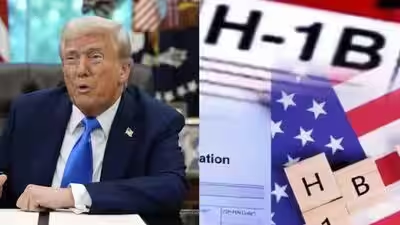


Washington: The US midterm elections have changed the political balance in Congress, raising questions about whether Democrats can reverse immigration restrictions introduced by President Donald Trump‘s administration. For H-1B visa holders, skilled foreign workers and people seeking employment-based permanent residency, however, a change in congressional leadership does not automatically translate into immediate relief.
Democratic gains in the House and Senate could create opportunities for greater scrutiny of the administration’s immigration policies. Lawmakers may question officials, investigate the implementation of visa rules and push for changes to employment-based immigration laws. But the powers of Congress, the White House and federal agencies are different, and reversing existing restrictions will require specific legal and administrative steps.
The distinction is particularly important for Indian professionals working in the United States. Many rely on the H-1B programme to remain employed, while others are waiting for employment-based green cards or navigating lengthy immigration procedures.
Although the election results may increase pressure on the administration, existing rules will remain applicable unless they are formally changed, withdrawn or struck down by a court.
How US immigration policies are implemented
The Immigration and Nationality Act (INA) provides the statutory foundation for the US immigration system. Congress establishes the broad legal framework, including employment-based immigration categories, visa limits and eligibility requirements.
However, the implementation of these laws is largely handled by federal agencies. The Department of Homeland Security (DHS), US Citizenship and Immigration Services (USCIS), Department of State and Department of Labor play important roles in administering immigration programmes.
These agencies issue regulations, policy guidance and administrative procedures that determine how visa applications are processed, how employers meet their obligations and how foreign workers qualify for different immigration benefits.
Consequently, not every change to immigration policy requires a new law passed by Congress.
The Trump administration has used executive authority and administrative rule-making to introduce changes affecting employment-based immigration. One example is the Department of Homeland Security’s final rule introducing a weighted selection system for H-1B registrations.
Published in December 2025 and effective from February 2026, the system gives greater weight to registrations for higher-paid positions. The change affects how registrations are selected and has implications for employers and applicants competing for the limited number of H-1B visas.
The administration has also introduced additional restrictions and costs through presidential proclamations and other administrative measures.
These changes do not automatically expire when the political composition of Congress changes. Their continuation depends on the legal authority under which they were introduced and the procedures required to amend or withdraw them.
What a Democratic majority can do
A Democratic majority in one or both chambers of Congress could make immigration policy a more prominent subject of political debate.
Congress has significant oversight powers. Lawmakers can organise hearings, summon government officials to provide explanations, request information and investigate how federal agencies are implementing immigration rules.
Democrats could use these powers to examine the impact of H-1B restrictions on employers, foreign professionals, technology companies and other sectors that depend on skilled international workers.
Congressional committees could also question officials about visa processing, employment-based immigration backlogs and the consequences of changes to registration and selection procedures.
Another important avenue is legislation. Democratic lawmakers could introduce bills seeking to amend immigration laws, revise employment-based visa provisions or create new pathways for foreign workers.
They could also use their influence over government funding to scrutinise how immigration agencies allocate resources and implement programmes.
However, a congressional majority does not give lawmakers the power to immediately cancel every immigration policy introduced by the executive branch.
Existing regulations generally remain in effect unless the responsible agency changes them, a court invalidates them or Congress passes legislation that supersedes them.
Why Democrats cannot immediately repeal Trump’s rules
The process of reversing an immigration policy depends on how the original measure was introduced.
Some presidential executive orders can be rescinded or modified through a subsequent executive order. A new administration or president may therefore change certain executive actions without waiting for Congress to pass legislation.
Formal federal regulations follow a different process.
When an agency introduces a final rule, it generally cannot simply discard it without following the applicable administrative procedures. Under the Administrative Procedure Act, agencies are normally required to provide notice of proposed rule changes, invite public comments and issue a final decision explaining the action.
This process can take months or longer, depending on the complexity of the policy and the legal requirements involved.
Any attempt to reverse an existing rule may also face legal challenges. Employers, industry groups or other affected parties could approach courts if they believe an agency has exceeded its statutory authority or failed to follow the required procedures.
Therefore, even if lawmakers secure a political majority and push for changes, the legal process could delay the implementation of any proposed relief.
The distinction between political intent and legally effective policy is crucial for H-1B applicants. A public statement supporting immigration reform does not change the rules governing an application until the relevant legal and administrative steps are completed.
What the midterm results mean for H-1B workers
For current H-1B visa holders and prospective applicants, the immediate impact of the election results is likely to be limited.
Several operational aspects of the H-1B programme are governed by federal regulations and administrative procedures. These include registration and selection methods, employer compliance requirements, petition processing and certain employment-related rules.
The relevant federal agencies have the authority to modify some of these procedures, subject to applicable legal requirements.
A Democratic-controlled Congress could increase pressure on the administration to reconsider policies that affect skilled foreign workers. It could also encourage discussions about whether the existing system meets the needs of American employers and the wider economy.
However, broader changes to employment-based immigration would require more than congressional oversight.
The statutory visa caps, the overall structure of employment-based immigration categories and the legal framework governing permanent residency are matters in which Congress has a central role.
This is particularly significant for workers waiting for employment-based green cards. Changes to processing procedures may improve certain administrative aspects, but addressing statutory limits and long-standing backlogs would require legislative intervention.
For Indian professionals, who may face lengthy waits in some employment-based green card categories, the distinction between administrative relief and changes to immigration law is especially important.
A change in congressional leadership does not automatically alter the eligibility requirements, visa availability or procedures applied by USCIS.
Immigration reform will require negotiations
Meaningful and lasting relief for employment-based immigrants may ultimately depend on a broader agreement between the White House and Congress.
Potential areas for reform include employment-based immigration backlogs, H-1B programme rules, visa availability, processing delays and pathways to permanent residency.
Such changes would require negotiations between the Trump administration and congressional Democrats.
Although Democrats may seek to revise restrictive policies, Republicans and the White House would have to agree to any legislative proposal that requires presidential approval.
Both sides would need to identify areas of common ground and accept compromises. Employers seeking access to skilled workers, foreign professionals facing uncertainty and immigrant families waiting for permanent residency could all become part of the wider policy discussion.
However, immigration reform has often been politically difficult in the United States. Differences over border security, enforcement, employment opportunities and the treatment of undocumented immigrants can complicate negotiations over employment-based visa programmes.
A Democratic majority could create greater pressure for discussions, but it cannot guarantee that a comprehensive agreement will emerge.
Even if lawmakers introduce a reform Bill, it would have to clear the necessary stages in Congress and receive the President’s approval. If Trump vetoes the legislation, Congress would need the required support to override it.
What employers and applicants should watch
For companies sponsoring foreign workers, the key developments will be decisions taken by DHS, USCIS and other federal agencies, alongside any legislative proposals introduced in Congress.
Employers will need to continue complying with the immigration rules currently in force. A change in political leadership does not suspend existing obligations or automatically alter the requirements for sponsoring H-1B employees.
Applicants should also distinguish between proposals for reform and changes that have actually taken legal effect.
Announcements about possible policy reversals, congressional hearings and proposed legislation may indicate a shift in political priorities. However, they should not be treated as confirmation that visa eligibility, selection procedures or processing requirements have changed.
The most important developments will be formal agency announcements, published regulations, court decisions and legislation that has completed the required approval process.
Midterms create an opportunity, not an automatic reversal
The US midterm elections could reshape the political debate over immigration and give Democrats greater opportunities to challenge the Trump administration’s policies.
For H-1B workers and other employment-based immigrants, however, the election results do not offer an immediate change to the existing immigration framework.
Congress can investigate, debate and legislate, while federal agencies can amend certain administrative rules through established procedures. Courts can also review the legality of government actions.
But lasting relief will depend on legally effective administrative changes or a negotiated legislative agreement involving the White House and Congress.
Until those steps are completed, existing immigration rules will continue to apply to foreign workers, employers and applicants seeking permanent residency in the United States. For Indian professionals hoping for a more predictable visa system, the midterm results may offer a reason to watch developments in Washington, but not a guarantee of immediate relief.