







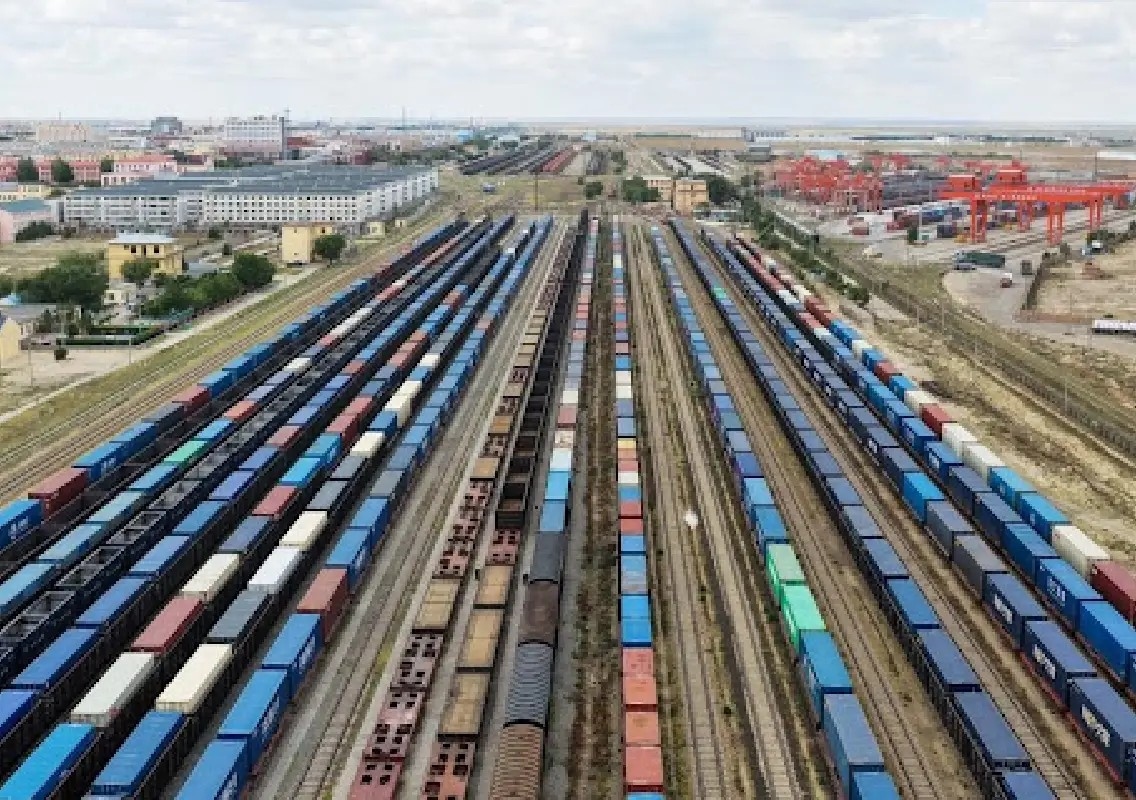


Beijing: China’s national railway network handled 2.015 billion tonnes of freight during the first half of 2026, registering a 1.8% increase from the same period last year, according to China State Railway Group.
Export vehicles drive stronger growth
While overall freight volumes grew at a modest pace, international trade and automotive traffic emerged as important drivers.
During the first five months of the year, China’s railways transported 824,000 export vehicles, marking a significant 55.5% year-on-year rise. The increase highlights the expanding role of rail in connecting inland manufacturing centres with ports and international markets.
Rail freight has traditionally been closely associated with bulk commodities. However, the latest figures point towards growing demand for higher-value and containerised cargo.
Cross-border rail services expand
China-Europe and China-Central Asia freight services operated 15,506 trains during the first half of the year, representing a 12.6% increase year on year.
China-Europe services accounted for 9,331 trains, recording a particularly strong 21% increase. The figures indicate continued demand for rail-based international logistics despite broader changes in global trade.
Rail takes bigger role in vehicle exports
The growth in vehicle transportation reflects the changing needs of China’s export supply chains. Rail can provide predictable block-train capacity between inland factories, coastal ports and border gateways.
For railway operators, the shift towards vehicles and international container traffic is also commercially significant, as these segments can generate greater value than traditional bulk freight.
The latest figures therefore suggest that China’s railway network is not only carrying more cargo but is increasingly becoming an important link in the country’s international trade and automotive export chains.