


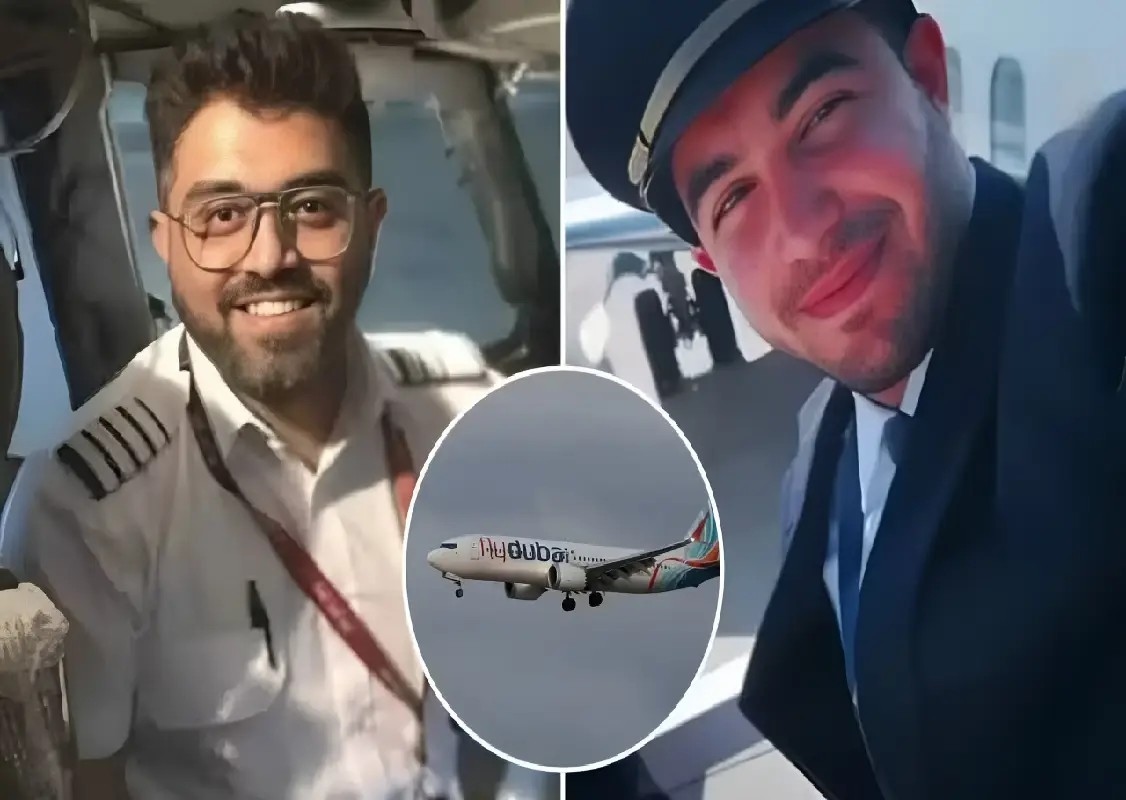


Dubai: Deleted social media posts attributed to Hamam al-Hammami, the Omani co-pilot accused of attacking Indian pilot Captain Smit Machchhar aboard a Flydubai flight, have come under scrutiny as investigators examine his background, ideology and possible motive.
According to a CNN investigation cited by multiple media outlets, al-Hammami’s deleted posts from 2021 and 2022 included views about women, religious practices and mixed-gender workplaces. The posts were among nearly 3,000 deleted tweets that CNN analysed using an AI-powered semantic search model.
The revelations have emerged after the September 30 incident aboard a Flydubai flight travelling from Dubai to Tel Aviv. Al-Hammami is accused of attacking Captain Machchhar inside the cockpit, triggering a sharp descent before the suspect was overpowered and the aircraft was diverted to Saudi Arabia. Authorities are investigating the circumstances of the incident, including whether it had any terrorist connection.
Deleted posts focused on women and marriage
One of the posts reportedly examined by CNN, from February 2022, concerned al-Hammami’s search for a prospective wife.
According to the report, he wrote about his mother’s efforts to find him a woman who would agree to his conditions, including wearing a niqab and giving up employment after marriage. The post reportedly described several prospective families rejecting those conditions before his mother informed them that her son was a pilot, after which their response allegedly changed.
Another post from January 2022 reportedly questioned the effect of mixed-gender workplaces on women. CNN described the deleted account as containing deeply religious and misogynistic views, although the posts represent past online statements and do not by themselves establish what motivated the September 30 cockpit incident.
The social media material is being examined alongside other information about al-Hammami’s employment history and online activity as authorities attempt to determine whether the attack was planned and whether it was connected to an extremist ideology.
Posts linked to extremist figures also under scrutiny
The investigation has also focused on posts that appeared on a LinkedIn account bearing al-Hammami’s name around nine hours after the September 30 incident.
CNN reported that it was unclear whether the posts were uploaded by al-Hammami himself or had been scheduled in advance. One post reportedly contained cockpit footage of Boeing 737 Max aircraft and images of Israeli airline aircraft.
The video reportedly ended with photographs of former al-Qaeda leader Ayman al-Zawahiri and Humam Khalil Abu-Mulal al-Balawi, who carried out a 2009 suicide bombing that killed nine people, including seven CIA personnel.
A second post reportedly contained an AI-generated image depicting the three holy sites in Mecca, Medina and Jerusalem, accompanied by a poem referring to humiliation, death and defending one’s dignity.
Authorities are examining the posts as part of a wider effort to establish whether the alleged attack was influenced by extremist ideology or had a specific target or objective.
Claims about posts targeting Jews
An Israeli official cited in reports has also alleged that al-Hammami had posted material about killing Jews. The official told the Times of Israel that his social media activity suggested he had been radicalised into a jihadist ideology.
Israeli outlet i24 has separately reported that he allegedly possessed anti-Israeli literature.
These claims have not, however, been presented as a definitive finding about the motive behind the September 30 incident. Investigators are continuing to examine the suspect’s digital activity, employment history and other evidence before reaching conclusions about the attack.
Israeli Prime Minister Benjamin Netanyahu has described al-Hammami as appearing to have undergone what he called “Islamist radical indoctrination”. The assertion has been reported in connection with the investigation, but authorities have not publicly established a definitive motive.
Earlier concerns were reportedly raised at Oman Air
Al-Hammami’s previous employment has emerged as another major part of the investigation.
According to two sources cited by CNN, al-Hammami had worked for Oman Air for around seven years but was removed from flight-related duties after concerns were raised about his alleged extremist views. He was reportedly moved to another role at the airline.
Other reports have said that concerns emerged while he was undergoing pilot training. CNN reported that a LinkedIn profile bearing his name stated that he left Oman Air in February 2025.
The profile subsequently listed employment with Royal Air Maroc from June 2025 until January 2026. A source confirmed to CNN that the profile belonged to the pilot involved in the Flydubai incident, although the LinkedIn page has since been deleted.
Separate reports have claimed that Omani authorities had identified concerns over his online activity or extremist material during his training. Reports differ on the precise circumstances and extent of the restrictions placed on him, and these details remain part of the investigation.
Questions over how he returned to flying
The revelations have raised questions about how al-Hammami was subsequently able to obtain employment in commercial aviation.
CNN reported that al-Hammami had worked for Flydubai for around eight months before the September 30 incident. His previous employment history and the concerns reportedly raised at Oman Air have prompted scrutiny of background checks and information-sharing between aviation employers.
The issue has also drawn attention because the incident occurred aboard a flight bound for Tel Aviv, a destination subject to heightened security considerations.
Flydubai has said it cannot provide details while the investigation is under way, according to reports. Oman Air and other organisations connected with al-Hammami’s previous employment have also come under scrutiny over the circumstances surrounding his career.
What happened aboard the Flydubai flight?
The incident occurred on September 30 aboard a Flydubai flight travelling from Dubai to Tel Aviv.
Al-Hammami is accused of attacking Captain Machchhar inside the cockpit. The incident caused the aircraft to enter a steep descent, while passengers and crew intervened and the flight crew worked to regain control of the aircraft.
The aircraft was eventually diverted to Tabuk in Saudi Arabia, where it landed safely. Reports have said that other pilots on board assisted the crew after the incident.
The United Arab Emirates and Israeli authorities are investigating the incident, including the possibility of terrorist activity, prior planning or links to other individuals or organisations.
Investigation continues into motive
The deleted posts provide investigators with additional material about al-Hammami’s past online activity, but they do not on their own establish why the cockpit attack allegedly took place.
Authorities are expected to examine the digital material alongside evidence from the aircraft, employment records, security assessments and the suspect’s movements and communications.
The case has also raised broader questions about aviation security, particularly the way potentially significant information about individuals with access to commercial aircraft is assessed and shared between employers and authorities.
As the investigation continues, the claims concerning al-Hammami’s ideology and past social media activity remain subject to verification. A definitive finding on his motive or whether the incident was connected to a wider extremist network has not yet been publicly established.
Conclusion
The emergence of deleted social media posts attributed to Hamam al-Hammami has added a new dimension to the investigation into the Flydubai cockpit incident. The posts reportedly expressed restrictive views about women and mixed-gender workplaces, while other online material is being examined for possible extremist or anti-Israeli content.
At the same time, reports that al-Hammami had previously faced concerns at Oman Air have intensified questions about his subsequent return to commercial flying. Investigators will now have to establish the authenticity and significance of the digital material and determine whether it provides evidence of a motive for the September 30 attack.