


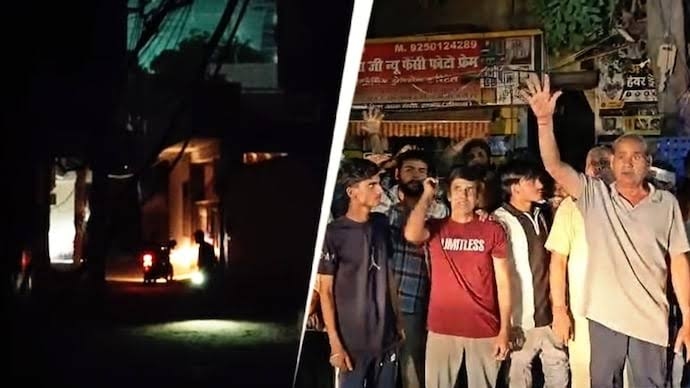


Gurgaon: Thousands of households across Gurgaon faced prolonged power cuts and water shortages on Thursday, while nearly 1,800 manufacturing units reported disruptions as a three-day strike by Haryana electricity department employees severely affected power supply. The outage, which began impacting areas on Wednesday night, also triggered street protests as residents struggled with exhausted inverters, dry taps and uncertainty over when electricity would be restored.
The strike has affected residential colonies, industrial clusters and rural areas across Gurgaon, with disruptions also reported in Faridabad and Nuh. Gurgaon, which has around 8.5 lakh electricity consumers, was among the worst-hit areas, particularly in Old Gurgaon, where residents said more than 50,000 households were affected.
The agitation was called by electricity employees opposing the Haryana Electricity Regulatory Commission’s (HERC) decision to grant a parallel electricity distribution licence to Eleven Power Private Limited for Gurgaon and Nuh. While the state government has said it will challenge the regulatory decision, the immediate impact has fallen on households and businesses dependent on uninterrupted electricity.
Households struggle with prolonged outages and dry taps
The power cuts disrupted daily life across several neighbourhoods, with electricity-dependent water boosting stations and household motors unable to function. Residents who initially relied on stored water said their supplies were running low, leaving families struggling to manage cooking, cleaning and other essential activities.
In Sector 9A, around 6,000 families were affected after electricity supply stopped at approximately 3.30 am on Thursday. The outage also disrupted the boosting station supplying water to the area.
Suraj Bhola, general secretary of the Sector 9A residents’ welfare association (RWA), said power had not been restored even after more than 16 hours.
“I have called the officials nearly 50 times, but nobody is responding. There is no electricity at our homes. Inverters have run out, and now there is no water either because the boosting station is affected. How are people supposed to manage their daily needs?” Bhola said.
He alleged that the junior engineer was not answering calls, while the sub-divisional officer had cited the strike. He added that the helpline number provided by the district administration had failed to secure assistance and that water tankers were difficult to find.
Hari Nagar was another badly affected locality. Residents said electricity went off around 10 pm on Wednesday and remained unavailable for more than 16 hours, affecting over 7,000 families.
Sumit Gujjar, president of the Hari Nagar RWA, said residents were struggling to manage without electricity and water.
“People are suffering in their homes, children are struggling to study, and nobody is listening to us. Junior engineer (JE) and SDO are not answering calls. The office has been locked, and there is nobody available to address the complaints,” he said.
While acknowledging employees’ right to protest, Gujjar questioned the impact of the strike on ordinary residents. He argued that employees should take their grievances to the government without leaving households without essential services.
Housing societies face mounting difficulties
The disruption also affected residential societies where backup arrangements could not provide electricity to every household.
At Zara Aavaas, an affordable housing society, residents said the power supply had been unavailable since 5.30 am. Backup systems continued to support essential services such as lifts but did not supply electricity to individual flats.
Resident Hemant Sharma said the outage had created additional difficulties amid rising pollution levels and the implementation of restrictions under the Graded Response Action Plan (GRAP).
He questioned the reliance on diesel generator sets during prolonged outages, given the pollution-control restrictions in force across the National Capital Region.
Sharma also highlighted the difficulties faced by people working from home and residents who may depend on electrical equipment for medical needs.
At Lotus Homz, resident Anu Gulati said the outage had continued since 5 am, leaving households struggling with basic chores. She said her inverter battery had run out and she had to prepare dinner using the light from her mobile phone.
The society management had asked residents to move to the community hall, she said, but uncertainty over the duration of the outage made it difficult to plan for the following day.
The experiences reported by residents highlighted the limitations of backup systems during extended power cuts, particularly when electricity is needed for water supply, household appliances and essential services.
Residents protest in Gurgaon and Faridabad
Frustration over the prolonged outages spilled onto the streets on Thursday evening.
Residents of Rajendra Park, Bhimgarh Kheri and areas near Gurgaon railway station, who said they had been without electricity since around 10 am, staged a protest near the railway station road bridge.
By approximately 8 pm, the outage had lasted nearly 10 hours in these areas. A large number of men and women gathered on the road and raised slogans against the electricity department.
Police personnel reached the spot to pacify the protesters, but residents refused to disperse until power was restored. They said the outage had disrupted household work and water supply.
“There is no electricity, and there is no water in our homes. How are we supposed to run the water motor without power?” said a resident, Rupa.
Protests were also reported in Faridabad’s New Industrial Township-2 area, where residents demanded the restoration of electricity. Police intervened after receiving information about a road blockade and dispersed the protesters after pacifying them.
In Nuh, several areas, including Punhana, Nagina and Firozpur Jhirka, reported disruptions.
The protests reflected growing anger over the lack of reliable information about restoration and the difficulty of reaching officials responsible for resolving faults.
Nearly 1,800 manufacturing units affected
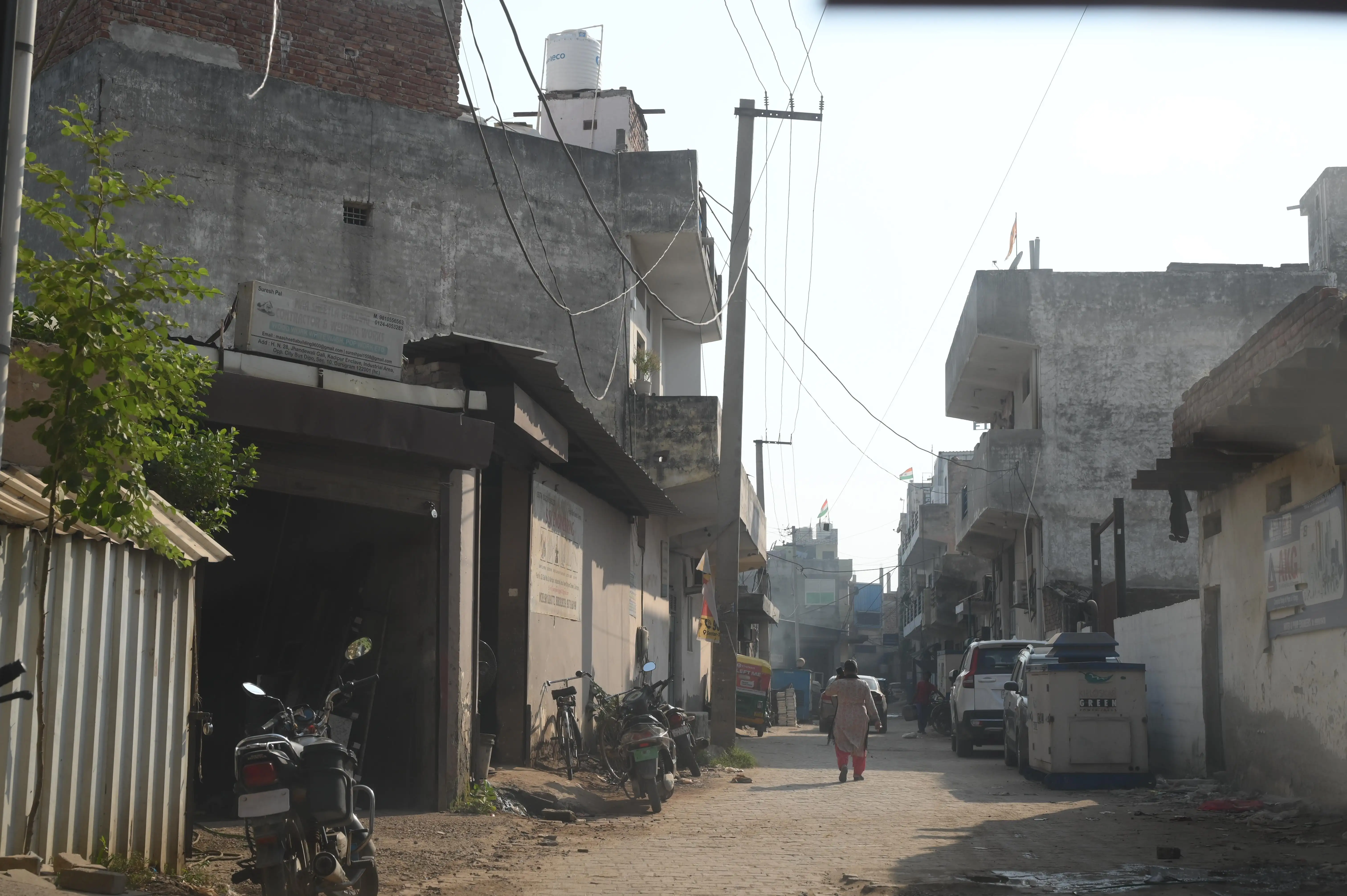
The power crisis extended to Gurgaon’s industrial belt, where nearly 1,800 manufacturing units in the Sector 37 and Kadipur industrial areas reported disruptions after outages began around 10 pm on Wednesday. Industrial units in Basai were also affected.
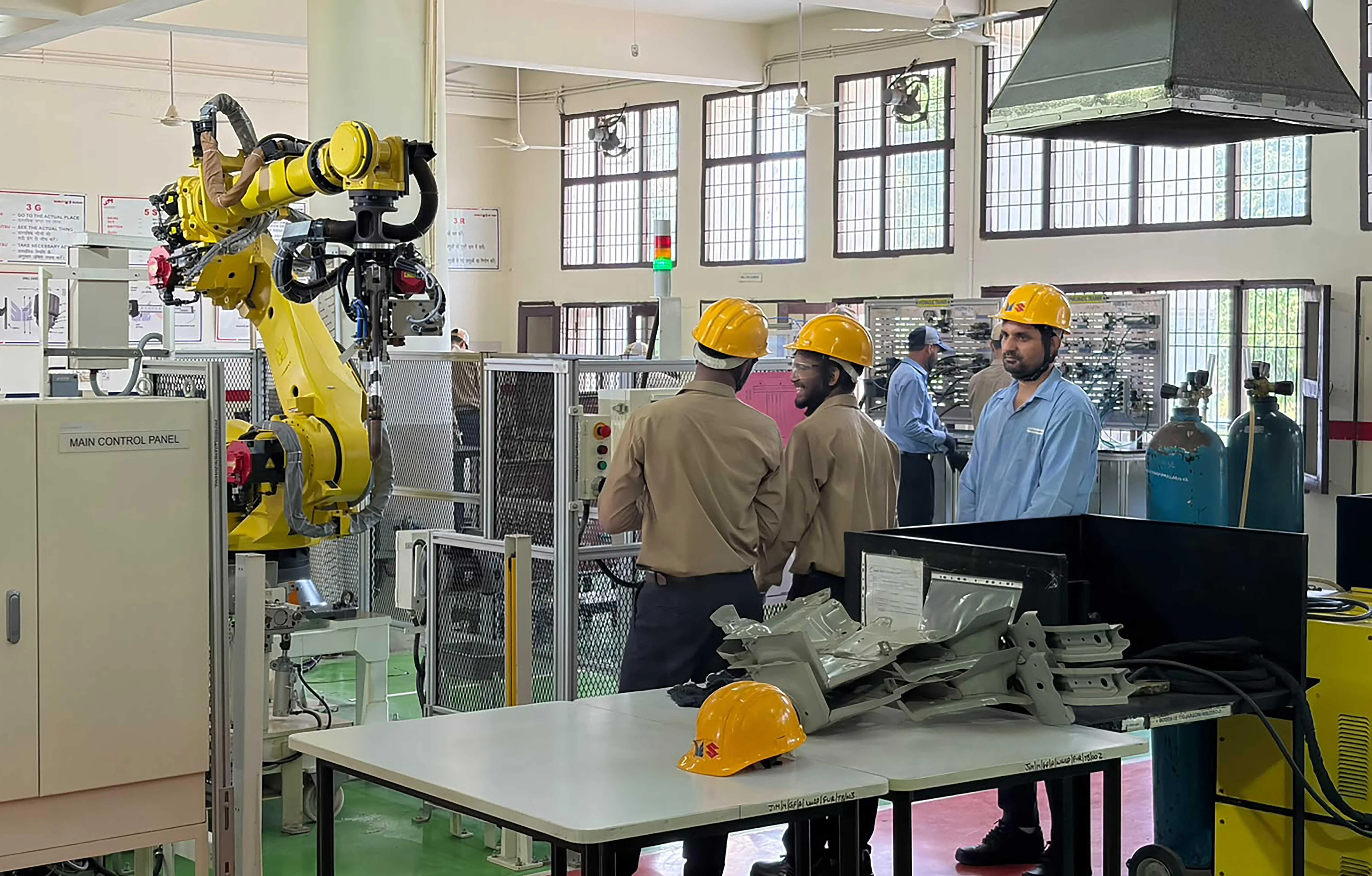
The disrupted businesses included textile manufacturers, export houses, auto component makers and suppliers of food to corporate and commercial establishments.
Industrialists warned that prolonged outages could cause losses running into crores of rupees, disrupt production schedules and delay deliveries.
Deepak Maini, chairman of the Progressive Federation of Trade and Industry (PFTI), said Sector 37 had been without electricity since 10 pm on Wednesday.
He said the outages had brought machinery and production lines to a halt, affecting operations across hundreds of units.
Manufacturers attempted to use diesel generator sets as backup, but industrialists said these could not sustain continuous operations. Generators require cooling breaks after running for several hours, interrupting production.
“A generator is meant for backup, not regular power supply. After running for several hours, it heats up and needs to be switched off to cool down,” industrialist Vikrant Gupta said.
The implementation of GRAP from Wednesday added another complication. Restrictions on generator sets intended to curb air pollution meant industrialists had to balance the need to keep production running against applicable pollution-control requirements.
Industrialists said non-compliant generator sets could face action under the relevant norms, leaving businesses with limited alternatives when grid electricity was unavailable.
Maini also said the shortage of regular electricity department staff had made it difficult to repair faults. According to him, DHBVN officials had expressed their inability to resolve some problems, while private vendors could not be engaged to work on high-tension lines and feeders.
He argued that uninterrupted supply should be the priority, regardless of whether the service was provided by a government-owned or private distributor.
Other industrialists stressed that ensuring electricity supply remained the government’s responsibility and urged authorities to consider invoking the Essential Services Maintenance Act (ESMA), if legally warranted, to restore services.
Old Gurgaon bears the brunt of the disruption
The outage was more widespread in Dakshin Haryana Bijli Vitran Nigam’s (DHBVN) Circle 1, which covers Old Gurgaon, sectors 9 and 10, and Kadipur, than in Circle 2, which includes parts of South City, Sohna and sectors along Golf Course Road.
In Circle 1, 12 of the 530 11-kilovolt (kV) feeders were out of service on Thursday. In Circle 2, 14 of the 750 feeders were shut down.
Power supply was disrupted in nearly 50 localities, including Palam Vihar, New Palam Vihar, Sai Kunj, Chandan Vihar, Ashok Vihar, sectors 3, 4, 5, 6, 7 and 7 Extension, Hari Nagar, Gandhi Nagar, Rajendra Park, Vishnu Garden, Surat Nagar, Dhanwapur, Sushant Lok 2 and 3, Manesar, Sohna and Taoru.
Sector 9A remained among the worst-affected areas, with residents reporting that electricity had not returned even after several hours.
In Sushant Lok 2, around 500 families in B Block were without power from approximately 6 am. Electricity was restored in Sushant Lok around 2.30 pm, while Sector 9A continued to face an outage at the time the report was filed.
The situation also deteriorated around the Sohna and Nimauth power houses. Four feeders were out of service by 8 am, and the number rose to 12 by 3 pm, affecting around 30 villages. Two urban feeders were also disrupted, affecting City-4, Gehlot Bihar and the MVN and Aekam residential societies.
Officials said five of the 15 feeders serving rural areas and seven of the 39 urban feeders had been shut down by 3 pm.
Parts of Circle 2 experienced relatively fewer disruptions because line maintenance in selected localities had been outsourced to a private company whose workers continued attending to faults during the strike. The arrangement covers areas such as Badshapur, Tikli, Bhondsi, Rithoj, parts of South City and sectors 14, 17, 18 and 23.
However, outsourced maintenance does not cover the entire city, and substations and power houses continue to depend on DHBVN employees.
DHBVN deployed around 100 workers hired through a contractor to repair faults, but the arrangement brought limited relief, with workers reportedly struggling to identify problems.
Around 98% of DHBVN workforce on strike
DHBVN chief engineer P K Chauhan said the overwhelming participation of employees had made it difficult to respond to complaints.
“About 98% of DHBVN’s officers and employees are on strike. Even executive engineers and superintending engineers have joined it. The absence of staff is making it difficult to address electricity complaints. Senior officials have been informed about the situation,” he said.
In Circle 1, 816 of 826 employees joined the strike. In Circle 2, 540 of 557 employees stayed away from work. Outsourced staff and workers recruited through Haryana Kaushal Rozgar Nigam also joined the agitation.
Superintending engineers Shyambir Saini and Manoj Yadav supported the protest.
Subhash Kumar, sub-divisional officer of Sohna DHBVN, said updates on outages were being shared with senior officials every hour.
The scale of employee participation left the department with a significantly reduced workforce to handle breakdowns across a network serving around 8.5 lakh electricity consumers in Gurgaon alone.
Helplines fail to provide timely relief
As complaints mounted, residents criticised the district administration and electricity department over the lack of effective assistance.
Deputy Commissioner Uttam Singh issued a press release on Wednesday evening listing contact numbers for consumers affected by outages. These included toll-free numbers 1912 and 180010804354, along with WhatsApp numbers 8813999708 and 9540954768.
Residents alleged that complaints through these channels did not result in timely relief.
The absence of employees at complaint centres, substations and offices at the sub-divisional, divisional and circle levels further complicated the situation. The striking employees’ joint front said many of these facilities had been largely deserted, leaving faults affecting 33kV and 11kV feeders unattended.
The state government said arrangements were being made to maintain electricity supply during the strike. The deputy commissioner directed officials to prioritise essential services, including hospitals, water supply systems and the metro.
However, residents said the lack of clear information about restoration made the situation harder to manage. In areas where electricity remained unavailable for much of the day, exhausted inverter batteries and depleted water storage left families with few alternatives.
Why are Haryana electricity employees on strike?
The immediate trigger for the agitation was HERC’s October 19 order granting Eleven Power Private Limited a parallel electricity distribution licence for Gurgaon and Nuh for 25 years under Section 14 of the Electricity Act, 2003.
The licence allows the company to distribute electricity in the two revenue districts alongside the existing state-owned distribution companies.
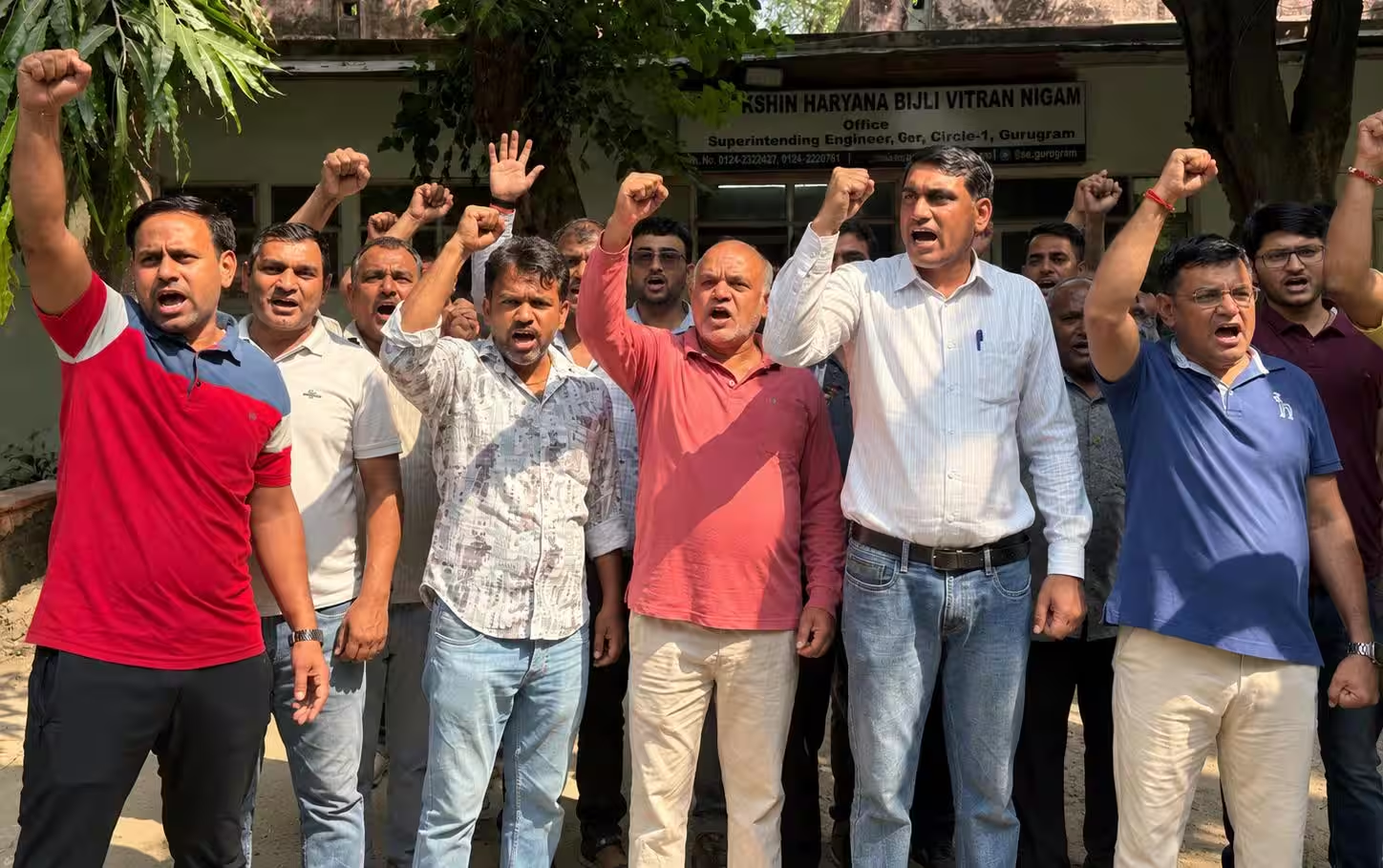
The Haryana Bijli Karamchari and Engineers Joint Sangharsh Morcha called the three-day strike to oppose the decision, arguing that the entry of a private distributor threatened the existing public distribution system.
According to the unions, around 40,000 electricity department employees across Haryana joined the strike. They said the agitation was not about salaries or allowances but about protecting public electricity infrastructure, employees’ jobs and consumers’ interests.
Devender Singh Hooda, a senior leader of the joint front, said the movement was aimed at preventing the privatisation of electricity distribution and safeguarding farmers and ordinary consumers.
The unions argue that a parallel distribution licence could weaken the revenue base of public utilities in an agriculture-dominated state. They fear that this could affect the ability of state-owned distribution companies to provide affordable and reliable electricity, particularly to farmers and economically weaker sections in rural and urban areas.
The unions have also questioned the transparency of the regulatory process. They have sought details of Eleven Power’s experience, technical capabilities, capital investment, financial strength and eligibility, as well as disclosure of the criteria used to assess its application.
They have also demanded an impartial inquiry into the roles of the regulator and the company.
Amarjeet Jakhar and Mukesh Bhayana said the agitation would continue until the decision was withdrawn. Jakhar said employees would decide whether to extend the strike beyond October 24 if their demands were not accepted.
Several workers’ and farmers’ organisations have supported the movement. Most constituent organisations of the Samyukt Kisan Morcha, along with Sarv Karamchari Sangh Haryana and trade unions such as CITU, AITUC and INTUC, extended support and organised demonstrations at various locations.
Subhash Lamba, vice-president of the Electricity Employees Federation of India (EEFI), and Shailendra Dubey, chairman of the All India Power Engineers Federation (AIPEF), also opposed the parallel licence.
Lamba alleged that the Haryana government was attempting to weaken the agitation by bringing technical employees and supervisors from neighbouring states, including Punjab and Himachal Pradesh.
Haryana government promises legal challenge
The Haryana government has opposed the licensing decision and said it would challenge HERC’s order before the Appellate Tribunal for Electricity (APTEL), seeking an immediate stay on its implementation.
Chief Minister Nayab Singh Saini said on Wednesday that the government would represent the employees’ case before the tribunal. He also assured unions that lawyers trusted by the employees could be engaged to pursue the challenge.
Saini held a review meeting with administrative secretaries and district officials through video conferencing to assess preparations for the three-day strike. He appealed to the unions to call off the agitation, saying the government remained open to dialogue.
Energy Minister Anil Vij described the strike as unnecessary, arguing that the licence had been granted by an independent regulator rather than the state government.
Vij said the government had opposed the proposal before HERC and would now challenge it before APTEL. He also said he opposed privatisation because substantial public money had been invested in existing electricity infrastructure and employees’ jobs were at stake.
He urged employees to return to work and participate in the legal challenge. Vij offered to involve union representatives in preparing the government’s case, including allowing them to advise its lawyer, appoint their own counsel or recommend another lawyer.
The government has maintained that it did not invite applications to privatise electricity distribution. However, Vij said the central law allows eligible individuals or companies to apply for a distribution licence, with the decision resting with the regulator.
This distinction has become central to the dispute. While the state government says it opposes the licence and intends to challenge it legally, the unions want the decision withdrawn and a clear policy ruling out parallel distribution licences anywhere in Haryana.
Engineers demand policy against parallel licences
The dispute escalated further on Thursday, when electricity engineers and employee representatives urged the state government to go beyond its proposed legal challenge.
AIPEF chairman Shailendra Dubey, along with Haryana Power Engineers Association leaders Puneet Kundu and Ravinder Singh Ghanghas, called on Saini to convene a Cabinet meeting and announce a policy ruling out parallel distribution licences anywhere in the state.
Dubey said the government should use its statutory powers under the Electricity Act, 2003, to revoke the licence.
The employee leaders questioned HERC’s decision and called for greater transparency about the private company’s qualifications. They also demanded an impartial inquiry into the circumstances under which the licence was granted.
The unions maintain that their concerns extend beyond jobs. They argue that parallel distribution could undermine the financial position of state-owned utilities and eventually affect electricity affordability and reliability for consumers.
The government, however, has maintained that the appropriate course is to challenge the regulator’s decision through the legal process. Vij has urged employees to end the strike and join that effort, while Saini has assured them that the state will pursue the matter before APTEL.
Residents and businesses caught in the dispute
The prolonged outages have exposed the dependence of Gurgaon’s households and industries on uninterrupted electricity. Families have faced exhausted inverters, dry taps and disrupted routines, while manufacturers have reported idle machinery, delayed production and concerns about pollution rules governing generator use.
The dispute centres on the future structure of electricity distribution in Haryana, but its immediate effects have been felt by consumers who have little control over the regulatory and industrial relations issues behind the strike.
The unions have indicated that they could consider extending the agitation beyond October 24 if their demands are not met. The state government is preparing a legal challenge to HERC’s order, but there is no assurance in the available information that normal electricity services will be restored immediately.
Until the dispute is resolved and the workforce returns to normal operations, residents and businesses remain exposed to further disruption. The immediate priority for affected communities is the restoration of reliable electricity and water supply, while the government, regulator and employee unions continue to contest the future of electricity distribution in the state.