







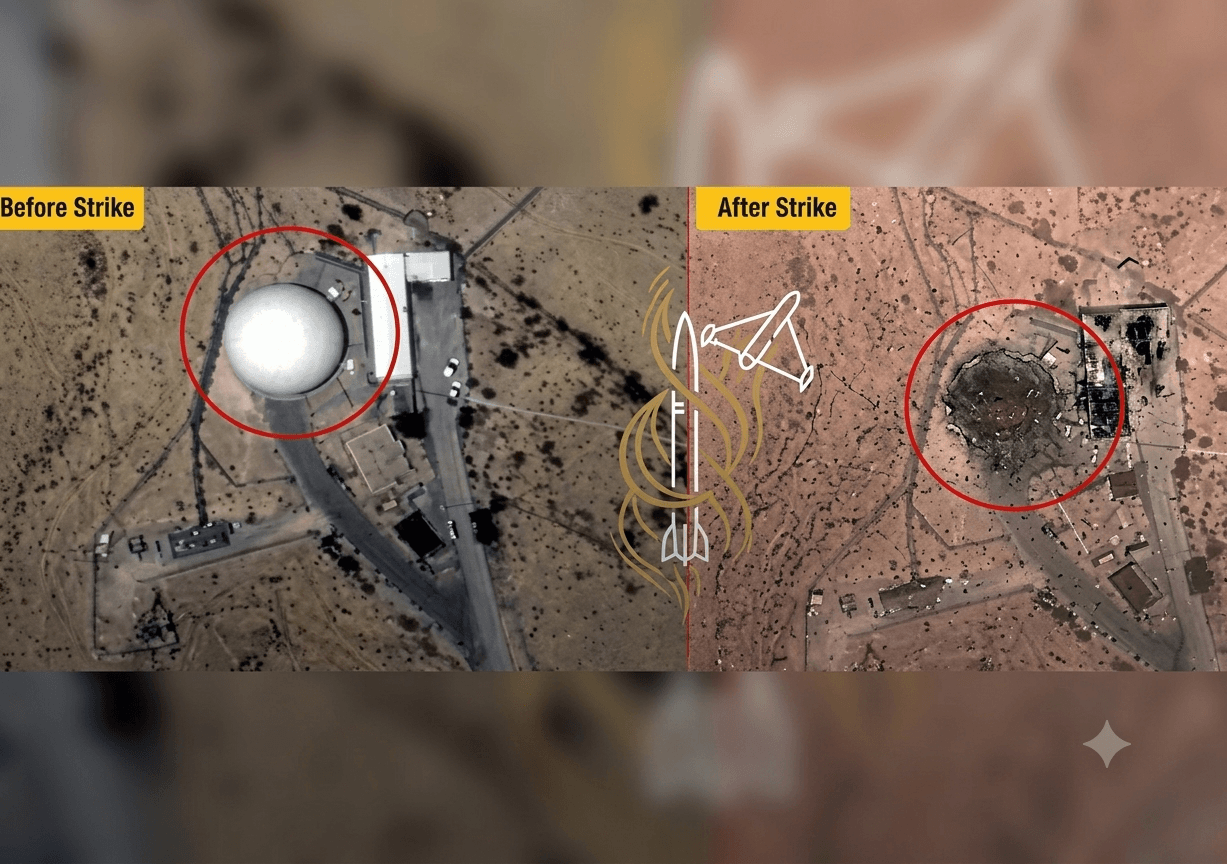


Manama: Iran’s Revolutionary Guards said on Sunday that six drones belonging to the IRGC Aerospace Force had been sent towards a US air defence radar system at the Al-Riffa helicopter base in Bahrain.
In a statement carried by Iran’s state broadcaster, the Guards said the facility had been targeted in retaliation for what they described as “hostile US actions”.
Bahrain’s military, meanwhile, said it had intercepted and destroyed several incoming threats before they could reach their targets. The country’s Interior Ministry issued two alerts asking residents to seek shelter as the situation unfolded.
However, neither Bahrain nor the United States immediately confirmed that the radar facility had been hit. The extent of any damage at the base also remained unclear.
Bahrain is an important strategic location for the United States in the Gulf, as it hosts the US Navy’s Fifth Fleet. The kingdom has faced repeated Iranian attacks during the ongoing conflict, making the latest claim particularly significant for regional security.
The shelter alerts also marked Bahrain’s first such warnings since September, underlining the renewed security concerns following the latest developments.
Iran and US trade claims over military targets
The latest drone claim came two days after the Revolutionary Guards said they had struck a US early-warning radar facility in Bahrain.
The US military said it had intercepted two Iranian drones in connection with that incident and reported no damage.
The latest developments have added to uncertainty over the security of American military installations in the Gulf. While Iran has repeatedly claimed attacks against US-linked facilities, confirmation of damage has not always followed immediately.
The competing statements from Tehran, Manama and Washington have also made it difficult to establish the full extent of the reported attacks.
Bahrain’s position is particularly sensitive because of its hosting of the US Navy’s Fifth Fleet, which plays a significant role in American maritime operations across the Gulf and surrounding waters.
The latest shelter alerts indicate that authorities are continuing to treat incoming threats as a serious security concern, even as diplomatic efforts to end the conflict remain unresolved.
Iran-US peace talks remain deadlocked
The reported attack comes at a time when negotiations between the United States and Iran are facing major obstacles.
Washington continues to maintain its naval blockade, while Tehran has restricted shipping through the Strait of Hormuz. The waterway is one of the world’s most important energy corridors, carrying a significant share of global oil and gas shipments from Gulf producers.
In its statement on Sunday, the Revolutionary Guards issued a fresh warning over the strait.
“The Strait of Hormuz is closed, and any aggression by the American enemy will be met with an even harsher and more forceful response,” the statement said.
The warning signals that Iran is not prepared to ease its position on the strategically important waterway while the conflict continues.
US President Donald Trump has threatened further military action against Iran but has so far held back from returning to major combat operations.
According to a Reuters report on Saturday, Trump told advisers that he might refrain from launching further attacks if Tehran and the Iran-backed Houthi movement in Yemen avoided new provocations.
His comments suggest that Washington is weighing the risks of renewed military action even as tensions remain high across the region.
Trump shifts focus away from Iran negotiations
Trump has also indicated that the United States no longer needs an agreement with Tehran.
On Friday, he said Washington did not require a deal with Iran and directed Vice President JD Vance to shift his attention towards alleged crime and corruption in Democratic-run cities and states.
Vance had previously led the US negotiating effort with Tehran. Trump instructed him to devote his “complete and total attention” to the domestic political issue.
Iran, however, has maintained that Washington must first agree to its ceasefire conditions before discussions on its nuclear programme can move forward.
The difference in positions has left the negotiations at an impasse. While the United States is seeking conditions that would address its security concerns, Tehran is insisting that the ceasefire terms must be settled before the nuclear issue is discussed.
The absence of progress has raised fears that the conflict could continue, particularly as military activity and threats involving shipping routes remain ongoing.
Yemen developments put another Gulf oil route under pressure
While the Strait of Hormuz remains disrupted, developments in Yemen have created fresh concerns over another major maritime route used by Gulf oil producers.
Saudi-backed Yemeni government forces said on Sunday that they were withdrawing from territory overlooking the Bab el-Mandeb Strait. The move could give the Houthi rebels greater leverage over the southern entrance to the Red Sea.
The Bab el-Mandeb is a strategically important passage connecting the Red Sea with the Gulf of Aden. It is a key route for commercial shipping travelling between the Indian Ocean, the Suez Canal and markets in Europe and beyond.
Any disruption to traffic through the strait could force shipping companies to consider longer alternative routes, adding to costs and delays in global trade.
The withdrawal of Saudi-backed forces has therefore raised concerns about the security of another important maritime corridor at a time when shipping through Hormuz is already under pressure.
Saudi-led coalition reports Houthi missile and drone attacks
Hours after the reported withdrawal, the Saudi-led coalition said it had intercepted two Houthi ballistic missiles heading towards Riyadh.
The coalition also reported intercepting three drones in Saudi Arabia’s oil-rich Eastern Province.
The developments have added to the security concerns facing Saudi Arabia, particularly because the Eastern Province is central to the kingdom’s energy production infrastructure.
The latest reported attacks also underline the expanding geographical reach of the conflict, with tensions involving Iran, the United States and their regional allies affecting multiple countries and strategic locations.
The Houthis have been involved in the wider conflict through attacks on Saudi Arabia and threats to maritime security. Their growing influence around the Bab el-Mandeb could create additional pressure on regional shipping.
Conflict that began in February continues to spread
The war began on February 28 with US and Israeli strikes on Iran. Tehran responded with attacks on American military bases and civilian and energy infrastructure across the Gulf.
The conflict subsequently spread beyond Iran and the Gulf, involving other regional actors. In Lebanon, Iran-backed Hezbollah launched attacks against Israel, while the Houthis in Yemen targeted Saudi Arabia.
The latest developments in Bahrain and Yemen show how the conflict continues to affect military installations, energy infrastructure and international shipping routes.
With the Strait of Hormuz disrupted, the Bab el-Mandeb facing renewed security concerns and peace talks stalled, the risks to regional stability remain significant. Iran’s warning of a harsher response has added to fears that further military incidents could deepen the crisis and prolong uncertainty across the Gulf.