







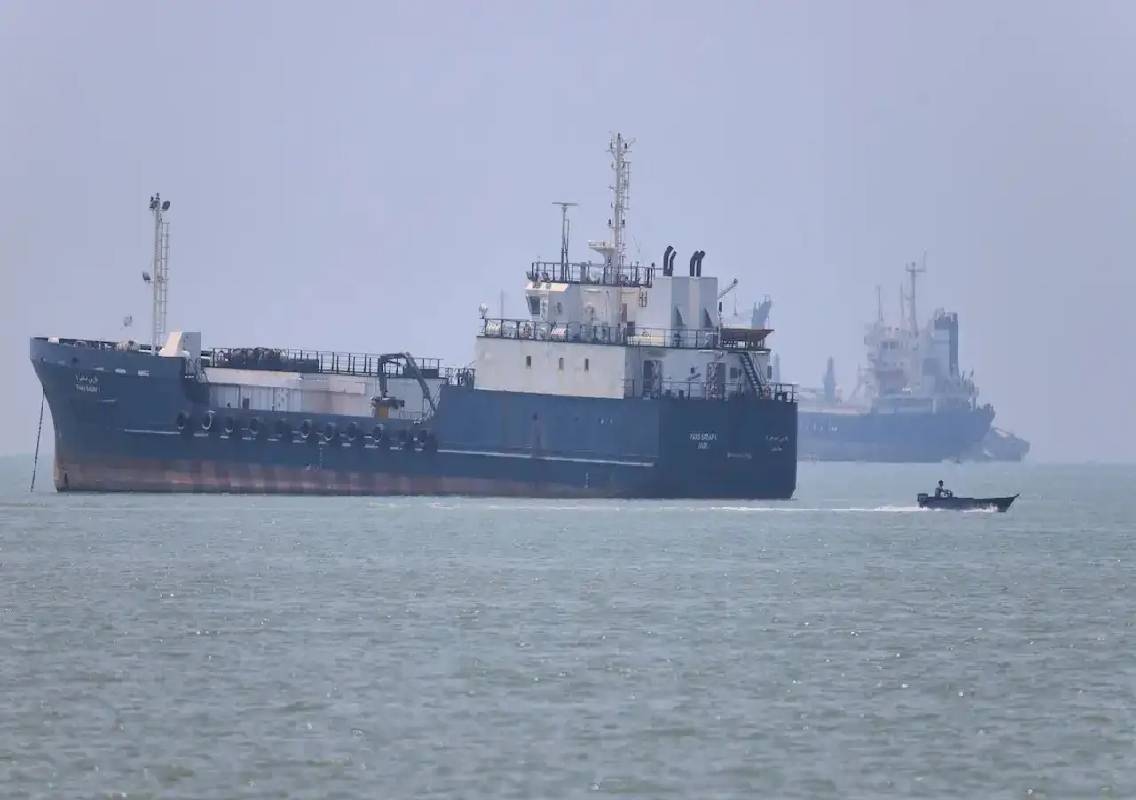


Tehran: Fresh uncertainty emerged in the Middle East on Saturday after Iranian authorities reportedly announced the closure of the Strait of Hormuz, citing continued Israeli military actions in Lebanon and alleged failures by the United States to uphold commitments under a recent interim agreement. However, the claim was quickly challenged by US Vice President JD Vance, who stated that Washington had seen no evidence that the strategic waterway had actually been shut down.
The conflicting statements have raised questions about the status of one of the world’s most critical maritime routes and renewed concerns about regional stability, global energy supplies and ongoing diplomatic efforts between Iran and the United States.
Iran announces closure of strategic waterway
According to reports carried by the Associated Press, Iran’s joint military command announced on state television that the Strait of Hormuz had been closed. Iranian officials reportedly linked the move to what they described as continued Israeli attacks in Lebanon despite a ceasefire agreement.
Iran’s Khatam al-Anbiya Central Headquarters also issued a statement saying the closure of the strait was a response to alleged violations of commitments by both Israel and the United States.
The military headquarters accused Israel of continuing operations in southern Lebanon and failing to withdraw from Lebanese territory. It also claimed that the United States had failed to implement the initial provisions of an agreement aimed at ending the conflict.
Officials described the closure as the “first step” in Iran’s response and warned that additional measures could follow if the situation continued unchanged.
US rejects reports of closure
Shortly after the reports emerged, US Vice President JD Vance offered a different assessment of the situation.
Speaking in an interview with Fox News, Vance said the United States was not seeing any evidence that Iran had actually shut down the Strait of Hormuz.
His comments introduced further uncertainty regarding the status of shipping operations in the region. While Iranian state media reported a closure, Washington’s position suggested that maritime traffic may not have been significantly affected.
The conflicting accounts highlight the challenges of verifying developments in a region where geopolitical tensions remain high and information often emerges through competing official narratives.
Why the Strait of Hormuz matters
The Strait of Hormuz is one of the world’s most strategically important shipping corridors. Located between Iran and Oman, it serves as a key route for global oil and gas exports from the Gulf region.
A significant portion of the world’s energy supplies passes through the narrow waterway each day. Any disruption to shipping activity in the strait has the potential to affect international energy markets, increase transportation costs and raise concerns about supply security.
Analysts have long warned that instability in the Strait of Hormuz can trigger volatility in global oil prices and impact economies far beyond the Middle East.
Concerns over regional stability
The reported announcement comes only days after an interim understanding between Iran and the United States was said to have eased tensions and allowed shipping activity to resume normally.
According to reports, vessels had begun moving through the waterway again following the agreement, raising hopes of greater regional stability.
The latest claims, however, have reignited fears that tensions linked to the broader Middle East conflict could undermine diplomatic progress and create fresh uncertainty for international markets.
Observers note that even reports of potential disruptions can influence investor sentiment and commodity prices, regardless of whether an actual blockade is implemented.
Switzerland talks proceed amid tensions
Amid the escalating rhetoric, Iranian officials confirmed that members of the country’s negotiating team were travelling to Switzerland for diplomatic discussions.
The visit had reportedly been planned earlier but was postponed before being rescheduled. However, Iranian officials indicated that expectations for major breakthroughs remain limited.
Foreign Ministry spokesperson Esmail Bagahei stated that Iran’s primary objective was to demand that other parties fulfil their obligations under previous understandings.
He warned that failure to implement agreed commitments could jeopardise the broader framework of negotiations and undermine efforts to reach a more comprehensive agreement.
Diplomatic future remains uncertain
The latest developments underscore the fragile nature of diplomacy in the region. While negotiations continue, disagreements over ceasefire implementation, military actions and mutual commitments continue to complicate efforts to achieve lasting stability.
With Iran issuing warnings of further responses and the United States disputing claims of a closure, attention is likely to remain focused on both maritime activity in the Strait of Hormuz and the outcome of upcoming diplomatic engagements.
Conclusion
Conflicting reports over the status of the Strait of Hormuz have added a new layer of uncertainty to an already volatile regional situation. While Iran claims it has closed the crucial waterway in response to developments in Lebanon and alleged breaches of commitments, the United States says there is no evidence supporting those claims. As diplomatic talks continue in Switzerland, global markets and international observers will closely monitor whether tensions escalate further or give way to renewed negotiations.