







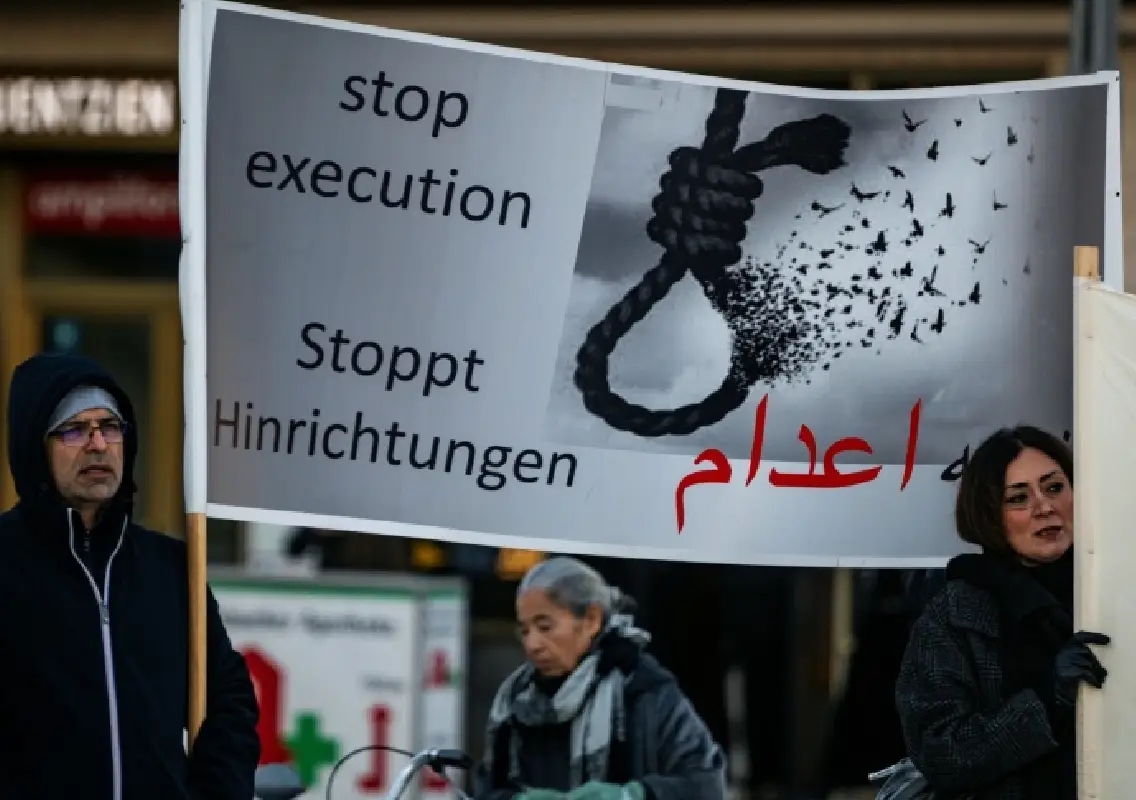


Iran has executed three men accused of killing police officers during anti-government protests earlier this year, marking the first reported executions linked directly to the unrest.
According to reports from Tasnim News Agency, the executions were carried out in Qom province after the country’s Supreme Court upheld their death sentences.
Executions linked to protest violence
The men—identified as Saleh Mohammadi, Mehdi Ghasemi, and Saeed Davoudi—were convicted of killing two police officers in separate incidents during protests that escalated in January. Authorities also charged them with “moharebeh,” a term used in Iran for “waging war against God,” which can carry the death penalty.
One of those executed, Saleh Mohammadi, was reportedly a teenager and a member of Iran’s national wrestling team, according to international media reports.
Rights groups raise concerns
Human rights organisations have strongly criticised the executions, alleging that the accused were denied fair trials and that confessions may have been obtained under torture.
The executions have intensified scrutiny of Iran’s handling of dissent, especially following a widespread crackdown on protests.
Background of nationwide protests
The protests, which began in December and spread across multiple cities, were initially driven by economic grievances, including rising living costs and currency instability. They later evolved into broader calls for political change.
According to Human Rights Activists News Agency, thousands of people were killed during the crackdown, including civilians and children.
International reactions and rising tensions
The developments come amid heightened geopolitical tensions involving United States and Israel. Global reactions have included calls for restraint and adherence to legal standards in handling detainees.
The executions, along with ongoing regional conflict, have further deepened concerns over human rights and stability in the region.