







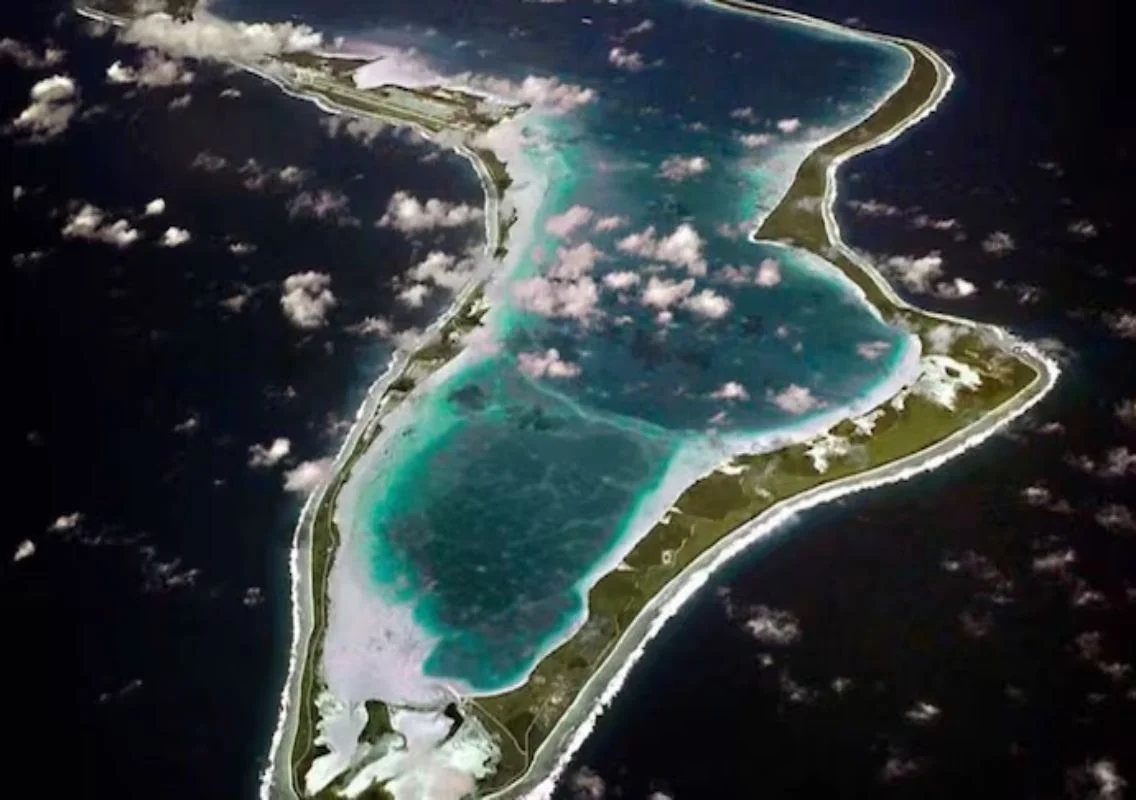


Mangaluru: Iran’s reported attempt to strike a key US-UK military base in the Indian Ocean has triggered fresh concerns over its missile capabilities and the evolving security dynamics in the region. The incident, involving two intermediate-range ballistic missiles aimed at Diego Garcia, marks a significant moment in assessing Tehran’s strategic reach.
According to Iran’s semi-official Mehr News Agency, the missiles were launched on Saturday, targeting the base located approximately 4,000 kilometres from Iranian territory. While neither missile hit the intended target, the attempt itself is being viewed as a potential escalation.
US officials, cited in international media reports, stated that one missile failed mid-flight, while another was engaged by a missile defence system, possibly intercepted by an SM-3 interceptor fired from a US warship. However, there is no official confirmation regarding the success of the interception.
Uncertainty over Iran’s missile range
The attempted strike has raised questions about Iran’s actual missile capabilities. Previously, Abbas Araqchi had indicated that the country’s missile range extended up to 2,000 kilometres.
The reported targeting of a location nearly double that distance has led analysts to reassess these claims. Even if the missiles failed to reach their destination, the attempt suggests that Iran may be testing or signalling capabilities beyond its publicly acknowledged limits.
Experts note that such actions are not solely about successful strikes but also about demonstrating reach and intent. By attempting to hit a base at this distance, Iran has sent a message that strategic assets located far from its borders may no longer be entirely secure.
Strategic importance of Diego Garcia
Diego Garcia is considered one of the most critical US military installations outside the mainland. Jointly operated with the United Kingdom, the base serves as a hub for long-range bombers, surveillance missions, and logistical operations across the Indo-Pacific and Middle East regions.
The attempted strike has highlighted the vulnerability of even remote military assets and may compel the US and its allies to strengthen missile defence systems in the Indian Ocean.
Defence analysts suggest that forcing the deployment of advanced missile defence systems to such locations could itself be a strategic objective, increasing operational costs and stretching military resources.
Wider geopolitical implications
The incident comes amid heightened tensions in the Strait of Hormuz, a crucial global oil transit route where Iran has previously been involved in confrontations with Western forces and commercial vessels.
The United Kingdom has condemned the reported missile attempt, describing it as “reckless” and warning that such actions risk further destabilising an already volatile region.
Meanwhile, Donald Trump criticised what he described as a delayed response from the UK regarding military coordination, underlining strains in allied decision-making during rapidly evolving crises.
The Pentagon is reportedly responding by deploying additional naval assets and thousands of Marines to reinforce security in the Middle East and safeguard key maritime routes.
Expanding the theatre of conflict
Military experts believe the attempted strike signals a potential shift in the geographical scope of tensions, extending from the Middle East into the wider Indian Ocean region.
By targeting Diego Garcia, Iran may be indicating that it can project power beyond its immediate neighbourhood. This has implications not only for regional security but also for global trade routes and military logistics.
The move could also point to the development of more advanced intermediate-range ballistic missile systems, potentially capable of reaching parts of southern Europe or deeper into maritime zones critical for international commerce.
Strategic signalling over battlefield success
Analysts emphasise that the significance of the incident lies less in the outcome and more in the message it conveys. Even without a successful strike, Iran has demonstrated a willingness to challenge established defence perimeters and test response mechanisms.
Such actions introduce uncertainty into military planning for the US and its allies, requiring reassessment of defence deployments and preparedness levels.
Conclusion
While the reported missile attempt did not result in direct damage, it has underscored the evolving nature of modern warfare, where signalling capability can be as impactful as operational success. The incident highlights the need for heightened vigilance and strategic recalibration in an increasingly complex geopolitical landscape.