









Early Christian artwork unearthed in underground tomb
Archaeologists in Turkey have uncovered a rare and significant fresco depicting Jesus as the “Good Shepherd”, offering new insight into Anatolia’s early Christian era. The discovery was made in August inside an underground tomb near Iznik, a historic town in northwestern Turkey known for its central role in Christian theology.
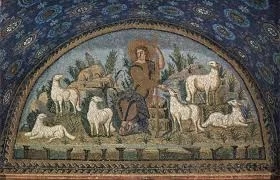
The tomb, located in the village of Hisardere, is believed to date back to the 3rd century AD, a period when Christianity was still persecuted under Roman rule. The fresco portrays a youthful, clean-shaven Jesus dressed in a Roman toga, carrying a goat across his shoulders — a striking visual departure from later Christian iconography.
Possibly unique in Anatolia
Experts say the fresco may be one of a kind in Anatolia, as Jesus is depicted with distinctly Roman features, reflecting the cultural environment in which early Christians lived.
Before the cross became Christianity’s dominant symbol, the Good Shepherd motif was widely used to express themes of protection, salvation and divine guidance. However, such depictions are extremely rare in Anatolia, and the Hisardere fresco is considered the best-preserved example found in the region so far.
Lead archaeologist Gülsen Kutbay described it as possibly “the only example of its kind in Anatolia”. Alongside the central image, the tomb’s walls and ceiling are decorated with birds, plants, and portraits of noble men and women, accompanied by slave attendants.
Window into a religious transition
According to Eren Erten Ertem of the Iznik Museum, the frescoes illustrate a transition from late pagan traditions to early Christianity, portraying death as a peaceful passage to the afterlife rather than a moment of fear.
The excavation also revealed five skeletons, including two young adults and a six-month-old infant. Due to poor preservation, two of the remains could not be identified.
Papal visit adds global attention
The discovery gained international attention following a recent visit to Iznik by Pope Leo XIV, who travelled there to mark the 1,700th anniversary of the Council of Nicaea, where the Nicene Creed was adopted in AD 325. The creed remains central to Christian belief worldwide.
During the visit, Turkish President Recep Tayyip Erdoğan presented the Pope with a tile painting inspired by the Good Shepherd fresco.
Anatolia’s deep Christian roots
Anatolia holds a pivotal place in Christian history. St Paul was born in Tarsus, St John spent his final years in Ephesus, and tradition holds that the Virgin Mary may have lived her last days nearby. The newly discovered fresco adds another powerful chapter to this rich religious heritage.