







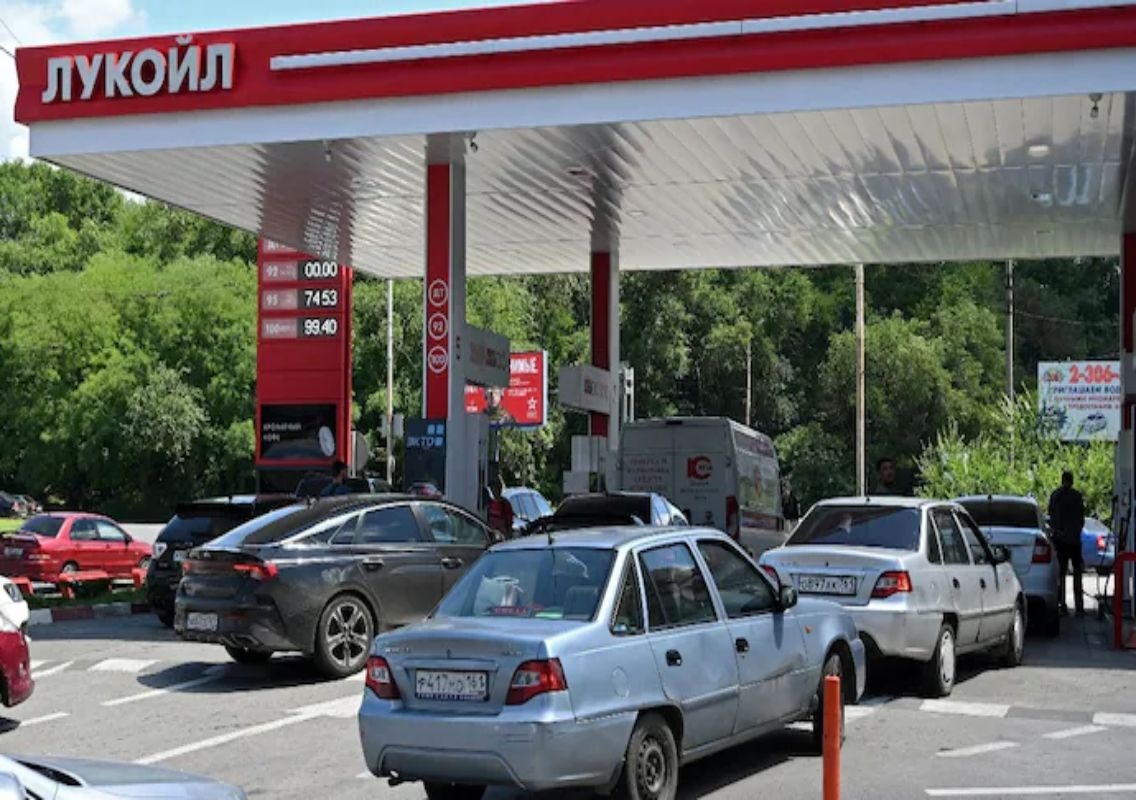


New Delhi: Russia, one of the world’s largest crude oil producers and exporters, has begun importing petrol from India in an unusual reversal of the traditional energy trade between the two countries. The development comes as repeated Ukrainian drone attacks have disrupted Russia’s refining infrastructure, leaving parts of the country facing fuel shortages even as Moscow continues to produce and export crude oil.
According to a report by Bloomberg cited by India Today, Russia received a shipment of around 42,000 barrels of petrol from India’s Nayara Energy on August 5, marking the first reported shipment of petrol from India to Russia. The cargo originated at Vadinar in Gujarat before being transferred between vessels and eventually reaching Russia.
The development is particularly striking because the broader energy relationship between India and Russia has traditionally moved in the opposite direction. India is heavily dependent on imported crude oil, while Russia is a major exporter of both crude and refined petroleum products. Yet damage to Russian refineries has created a situation in which Moscow is looking abroad for supplies of finished fuel.
How Russia ended up needing Indian petrol
The immediate reason behind the shift is the intensification of Ukrainian attacks on Russia’s oil-refining infrastructure.
Ukraine has been using long-range drones to target Russian energy facilities since 2024, but the pace of attacks has increased significantly in 2026. According to figures cited by India Today from Reuters, at least 16 Russian refineries were hit between January and May. Another 15 refineries and major refining facilities were targeted between June and August, including a refinery in Moscow located only around 15 kilometres from the Kremlin.
These attacks have created a major problem for Russia. Having large crude reserves does not automatically guarantee sufficient petrol supplies. Crude oil has to be processed in refineries before it can be converted into petrol, diesel and other usable fuels.
With several refining facilities damaged or operating below capacity, Russia’s ability to turn crude into finished petroleum products has been affected.
Data from Energy Aspects cited by Bloomberg showed that Russian refineries processed an average of about 3.91 million barrels of crude per day in early July. That was more than 1.4 million barrels per day below the average recorded a year earlier and represented Russia’s lowest refining rate since March 2005.
Petrol shortages put pressure on Moscow
The disruption has been particularly serious because domestic petrol consumption rises sharply during the summer months.
Russia has therefore introduced measures aimed at protecting its domestic fuel supply. Moscow has extended its petrol export restrictions through the end of 2026 and has also imposed restrictions on diesel exports. Despite these measures, shortages and rationing have reportedly emerged in some parts of Russia and in Crimea.
Russian President Vladimir Putin also acknowledged in June that Ukrainian strikes on oil refineries had contributed to fuel shortages in some regions, although he maintained that the country was managing the situation.
Reuters has reported that Russia’s petrol consumption can reach at least 110,000 tonnes a day during the summer peak. That makes prolonged refinery disruptions particularly challenging for Moscow, as domestic demand is rising at precisely the time when refining capacity is under pressure.
Why India has become an unexpected supplier
India’s role in the new supply chain is closely connected to its enormous refining capacity and its growing energy relationship with Russia.
The petrol shipped to Russia was supplied by Nayara Energy, which operates the Vadinar refinery in Gujarat. The refinery is one of India’s major refining facilities, while Russian energy giant Rosneft holds a 49.13% stake in Nayara Energy.
The first reported cargo involved a Russian-flagged tanker, Cyclone, formerly known as Agni. It loaded the petrol at Vadinar on June 18. The fuel was later transferred to another tanker at Damietta Port off Egypt before reaching Russia in early August.
The shipment does not appear to be an isolated event. At least two additional vessels reportedly loaded fuel at Vadinar in July before transferring their cargoes at Egyptian ports. Reuters had also reported in July that Russia had started receiving seaborne petrol supplies, including shipments from India.
The emergence of Indian petrol shipments illustrates just how dramatically the war has altered established energy flows.
India is simultaneously buying more Russian crude
There is another striking element to the development: while Russia is importing petrol from India, Indian refiners have been buying record amounts of Russian crude.
According to Kpler data cited by Bloomberg, Indian refiners imported around 2.8 million barrels of Russian crude per day in July, representing approximately 55.5% of India’s total crude imports.
This creates an unusual two-way energy relationship.
India imports crude oil from Russia, processes crude at its large refineries and, in this case, sends some refined petrol back to Russia. The arrangement highlights India’s position as both one of the world’s largest crude importers and a major refining hub.
It also demonstrates the importance of refinery capacity during periods of geopolitical disruption. A country can possess substantial oil reserves and still face fuel shortages if its refining network is damaged or constrained.
Russia looks beyond India for fuel supplies
India is not the only country helping Russia bridge its petrol shortage.
Reuters reported that Russia began importing petrol from at least three countries in July. Supplies from Belarus and Kazakhstan were complemented by seaborne shipments from India. Moscow is reportedly looking to import around 400,000 tonnes of petrol a month from various countries to ease the domestic supply situation.
Belarus has also increased its fuel shipments to Russia. According to Reuters calculations and sources cited in the report, Belarusian petrol shipments to Russia by rail almost tripled, reaching more than 70,000 tonnes in the first half of June compared with the first half of May.
For Russia, these imports provide a temporary way to compensate for reduced domestic refining output. However, the longer the attacks continue, the greater the pressure on the country’s fuel system could become.
What this means for India
For India, the development underlines the country’s growing importance in global energy markets.
India has invested heavily in refining capacity and has increasingly emerged as a major supplier of refined petroleum products to international markets. The ability to source crude internationally, refine it efficiently and then export finished products gives Indian refiners flexibility that becomes especially valuable when global supply chains are disrupted.
The Russia-bound petrol shipments also demonstrate how sanctions, war-related disruptions and attacks on infrastructure can reshape established trade routes. Energy that once moved in one direction can suddenly begin moving in the opposite direction because of changing regional shortages.
At the same time, the situation involving Nayara Energy has a direct Russia connection because of Rosneft’s substantial ownership stake. That makes the company’s role in supplying petrol to Russia particularly notable.
A major reversal in the Russia-India energy story
The latest development is more than just another petrol shipment. It is a visible example of how the Russia-Ukraine war is changing the global energy map.
Russia remains a major crude oil producer and exporter, but attacks on its refining infrastructure have created a shortage of finished fuel. India, meanwhile, imports most of the crude it consumes but has extensive refining capacity. The result is an unusual situation in which India can supply Russia with petrol while simultaneously importing large quantities of Russian crude.
For Moscow, importing petrol is a sign of the pressure its refining sector is facing. For India, it highlights the strategic value of its refining industry and its expanding role in international petroleum trade.
The situation will ultimately depend on the duration and intensity of attacks on Russian energy infrastructure. If refinery disruptions continue, Russia may need to rely on imported fuel for longer. If domestic refining capacity is restored, the unusual flow of Indian petrol to Russia could eventually diminish.
For now, however, the sight of an oil-exporting giant turning to an Indian refinery for petrol is one of the clearest illustrations yet of how profoundly the war has disrupted traditional energy trade routes.