







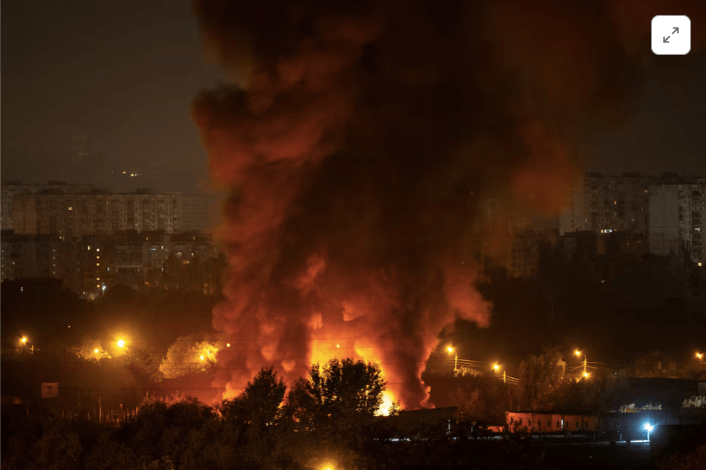


Kyiv: Russia launched waves of missiles and drones across Ukraine, killing at least 32 people, including five children, and damaging residential, industrial and energy infrastructure, Ukrainian officials said. President Volodymyr Zelenskiy described the October 7 attack as one of Russia’s most “vile strikes”.
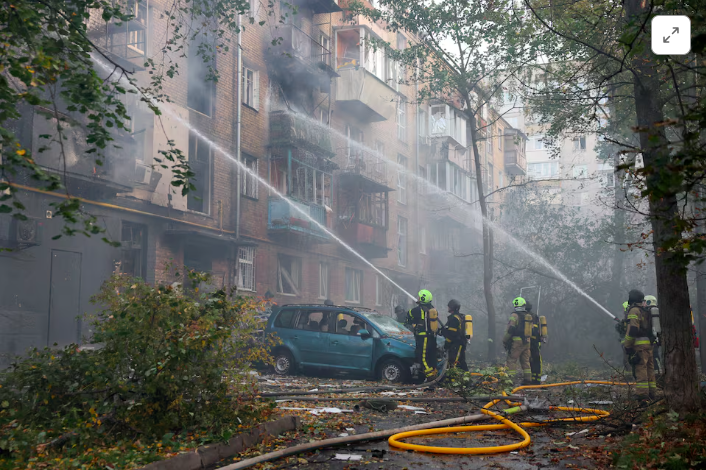
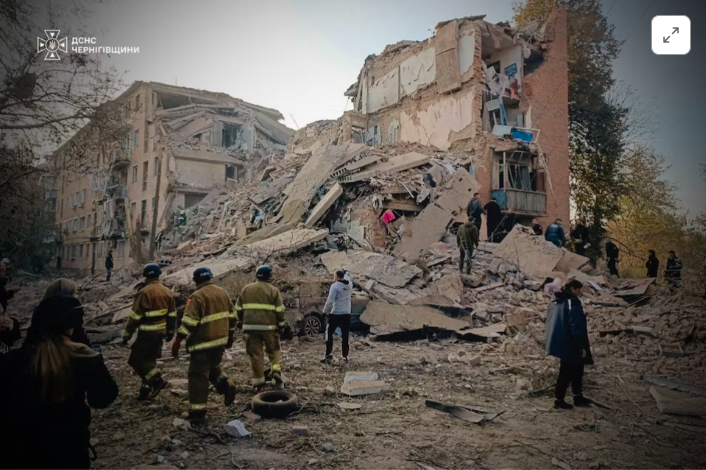
The heaviest losses were reported in Pryluky in the northern Chernihiv region, where a Russian missile struck a five-storey residential building. Ukraine’s State Emergency Service said the death toll there had risen to 22 by Thursday morning, including five children.
Two more bodies were also recovered from a damaged apartment building in Kyiv, taking the reported death toll in the capital to four. The latest figures brought the nationwide toll to at least 32.
Zelenskiy said about 100 people had been injured across the country.
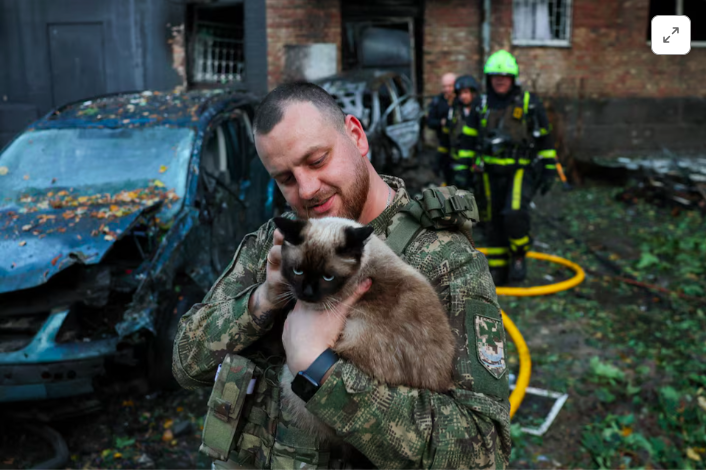
Pryluky bears the heaviest losses
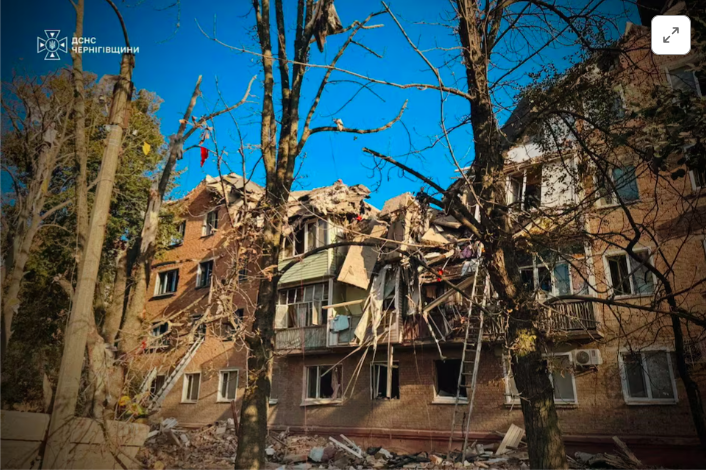
The attack on Pryluky caused several sections of a residential building to collapse, trapping residents beneath the rubble.
Emergency workers used excavators, ladders and hand tools to search the damaged structure. Rescuers brought 15 survivors out of the building as they worked through the rubble.
Regional officials said around 55 people were wounded in the town.
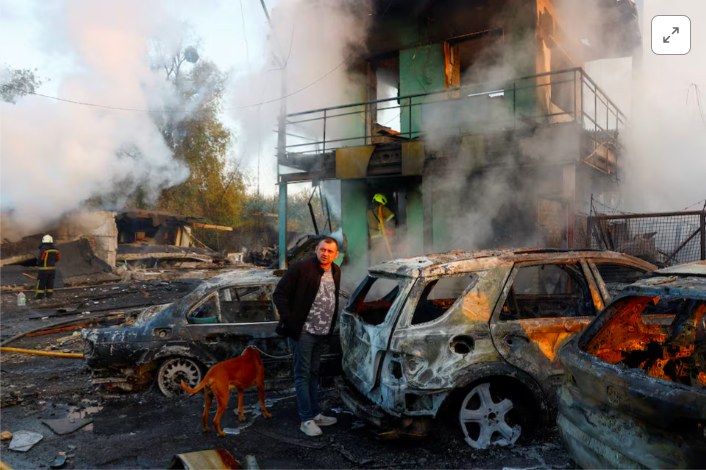
The destruction extended beyond the residential building, with damage reported in the surrounding area. The scale of the attack left emergency crews working for hours to locate people who might still have been trapped.
Pryluky Deputy Mayor Danylo Savenko told Reuters that there was extensive destruction, particularly in the town centre. He said he and his wife had rushed to an air-raid shelter after hearing incoming missiles.
The attack made Pryluky the deadliest location in the latest wave of Russian strikes.
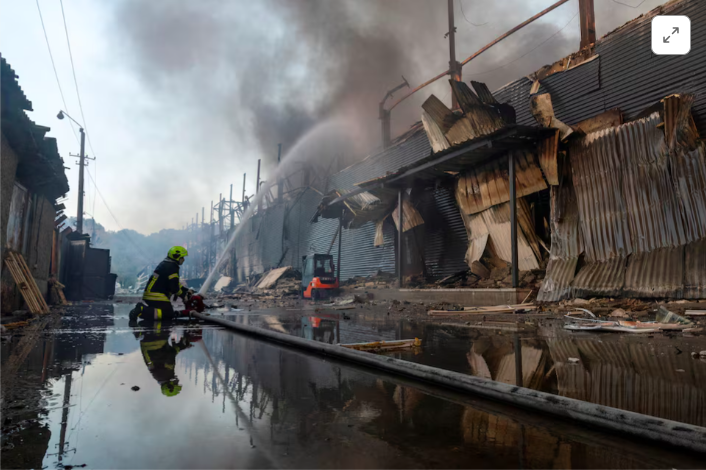
Kyiv also hit by missiles and drones
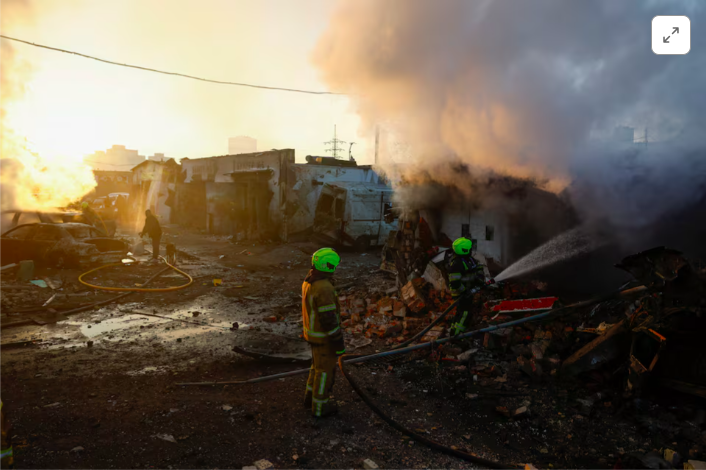
The Ukrainian capital was among the other areas affected by the overnight strikes.
Ukraine’s emergency authorities said two additional bodies were found on Thursday morning inside a damaged apartment building in Kyiv. That raised the reported death toll from the latest attacks in the capital to four.
Earlier, falling drone debris had killed people in a Kyiv suburb, while Zelenskiy also reported casualties in the central cities of Oleksandria and Kremenchuk.
Several loud explosions were heard across Kyiv during the night, prompting residents to seek shelter.
Many people spent the night in the city’s underground metro stations, which have frequently been used as bomb shelters during major Russian air attacks.
The strikes came amid repeated warnings from Ukrainian officials that Russia was preparing another large-scale attack.
Russia says military-industrial sites were targeted
Russia’s Defence Ministry said its forces carried out what it described as a “massive strike” against military-industrial facilities in Kyiv and other Ukrainian regions.
According to Moscow, the operation involved high-precision weapons launched from land, sea and air, along with drones.
Russia said its targets included facilities belonging to Ukrainian defence company Fire Point, which Moscow said manufactures and stores Flamingo cruise missiles as well as medium- and long-range drones.
The Russian Defence Ministry also identified targets in the Kyiv, Chernihiv, Kirovohrad, Dnipropetrovsk, Poltava and Kharkiv regions. It said the strikes were directed at military-related infrastructure.
Ukraine has not accepted Russia’s characterisation of the attacks as being limited to military targets, with Ukrainian officials reporting extensive damage and civilian deaths.
Ukraine reports more than 80% of jet-powered drones intercepted
Ukraine’s Air Force said it intercepted just over 80 per cent of the 46 jet-powered drones launched by Russia during the attack.
The reported interception rate was higher than the roughly 50 to 60 per cent range seen in recent weeks, although the Air Force did not immediately explain the improvement.
Russia has increasingly used newer high-speed drones in attacks on Kyiv and other Ukrainian cities.
These weapons have added to the pressure on Ukrainian air defences, particularly when launched alongside cruise and ballistic missiles.
Despite the higher reported drone interception rate, Ukrainian officials continue to identify ballistic missiles as one of the most difficult threats to counter.
Zelenskiy said finding additional Patriot air-defence systems remained a daily priority because the US-made system is the principal weapon in Ukraine’s arsenal capable of intercepting the high-speed ballistic missiles used by Russia.

Patriot systems remain a key Ukrainian demand
Ukraine has repeatedly appealed to Western countries for additional air-defence systems as Russian attacks on cities and energy infrastructure intensify.
Zelenskiy said his government was “every day” looking for Patriot systems capable of protecting civilians.
The demand comes at a time when global supplies of air-defence interceptors are under pressure because of conflicts and military requirements elsewhere.
Ukraine also received a new €1.2 billion tranche from the European Union on Wednesday, with Prime Minister Sergii Koretskyi saying the money would be directed towards defence needs.
The additional funding comes as Kyiv continues to seek more ammunition, air-defence equipment and other military support from its allies.
Attack coincides with Putin’s birthday
Zelenskiy highlighted the timing of the attack, which coincided with Russian President Vladimir Putin’s birthday.
In his nightly address, the Ukrainian president described the strikes as a “birthday present” involving the killing of children and other civilians.
He said Russia had wanted to strike Ukraine both painfully and demonstratively and called the attack one of the most “vile strikes”.
Zelenskiy’s comments were part of his broader condemnation of Russia’s continuing attacks on Ukrainian cities and critical infrastructure.
Russia has repeatedly said its military operations are directed at military and strategic targets, while Ukraine says Russian attacks have repeatedly damaged civilian areas and energy facilities.
Ukraine claims strikes inside Russia
The latest Russian attack was followed by reports of Ukrainian strikes on targets inside Russia.
Zelenskiy said Ukrainian forces had hit four targets over the previous 24 hours, including two Russian oil facilities and a training ground in the Perm, Samara and Astrakhan regions.
Ukraine has increasingly targeted Russian energy infrastructure as part of its campaign to disrupt Moscow’s military and economic capabilities.
In a Reuters interview, Zelenskiy said Ukraine would target Russian energy assets in response to Russia’s escalating attacks on Ukrainian civilian infrastructure.
Russia has criticised Ukrainian strikes on its territory, while Kyiv has argued that attacks on Russian energy facilities are part of its efforts to reduce Russia’s capacity to wage war.
Fire Point becomes a focus of the conflict
Russia’s reference to Fire Point is significant because the Ukrainian defence company has become increasingly associated with Kyiv’s domestic missile and drone production.
Zelenskiy recently said Ukraine had used a domestically produced ballistic missile in combat for the first time.
In a Reuters interview, he also said Fire Point was expected to have a longer-range FP-9 missile ready in the autumn.
Fire Point has said the weapon would have the capability to reach Moscow.
The company’s development of longer-range weapons reflects Ukraine’s broader effort to expand domestic defence production while remaining heavily dependent on foreign military assistance.
Russia, meanwhile, has sought to target Ukrainian defence manufacturing and storage facilities as part of its campaign against Ukraine’s military-industrial infrastructure.
Civilians remain exposed as attacks intensify
The latest strikes again highlighted the vulnerability of Ukrainian civilians more than four years after Russia’s full-scale invasion.
Residents in Kyiv and other cities were forced to spend the night in shelters as missiles and drones crossed Ukrainian airspace.
The damage to residential buildings in Pryluky and Kyiv added to the human cost of the latest escalation.
The attacks also came as Ukraine’s air-defence needs continue to grow, with ballistic missiles presenting a particular challenge.
While Ukraine reported intercepting a large majority of the jet-powered drones, even successful interceptions cannot prevent all casualties and destruction when large numbers of missiles and drones are launched simultaneously.
Ukraine war enters another phase of escalation
The latest attack comes amid continued Russian and Ukrainian strikes on military, energy and industrial infrastructure.
European governments have also continued to strengthen sanctions against Russia. EU envoys approved new sanctions listings on October 7 targeting individuals and entities linked to Russia’s military-industrial complex, including missile and drone-related organisations.
For Ukraine, the latest casualties are likely to reinforce calls for additional air-defence systems and military assistance.
For Russia, the strikes form part of a continuing campaign that Moscow says is aimed at Ukraine’s military-industrial and strategic infrastructure.
The death of civilians, including children, underscores the continuing consequences of the conflict as both sides expand their use of long-range missiles and drones.
With at least 32 people reported killed in the latest wave, the attack has become one of the deadliest recent episodes of the war and has renewed attention on Ukraine’s urgent need for stronger air defences.