









Berlin/Washington: US and Russian officials have discussed the possibility of bringing American investors into the Nord Stream gas pipeline network as part of broader efforts to explore future energy and business ties between the two countries, Reuters reported, citing five people familiar with the discussions.
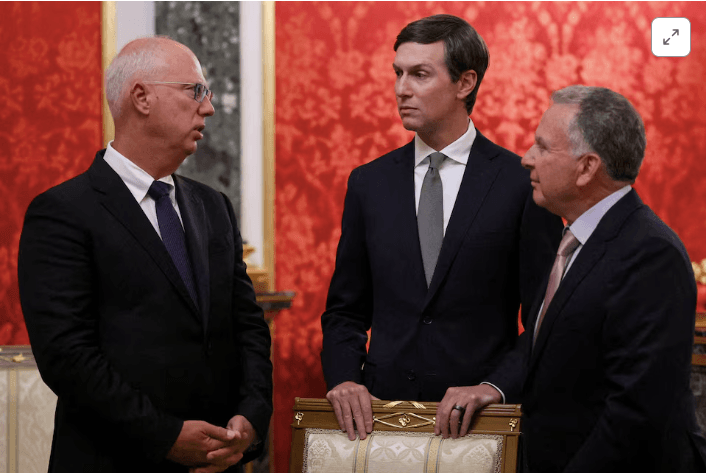
The talks reportedly involve US Special Envoy Jared Kushner and Kirill Dmitriev, a close adviser to Russian President Vladimir Putin. The discussions are taking place against the backdrop of ongoing US-Russia efforts linked to the war in Ukraine and a wider debate over how economic cooperation could contribute to a future peace settlement.
The reported proposal would potentially allow US investors to benefit from Russian gas flows to Europe if the war ends and restrictions on Russian energy exports are eased.
However, the plan faces major legal, political and ownership obstacles. Nord Stream pipelines are under US and European Union sanctions, Germany opposes a return to Russian gas imports through the network, and several eastern European countries remain firmly against renewed energy dependence on Moscow.
Kushner and Dmitriev discussed energy initiatives
Kushner and Dmitriev have met in Moscow and New York in recent weeks, according to people familiar with the matter.
It was not immediately clear how extensively Nord Stream was discussed during those meetings, but two sources told Reuters that the pipeline remains on the agenda.
Dmitriev has separately been seeking to promote the resumption of Russian gas sales to Germany. Last month, he met representatives from the US Energy and Treasury departments to discuss possible US-Russia energy initiatives.
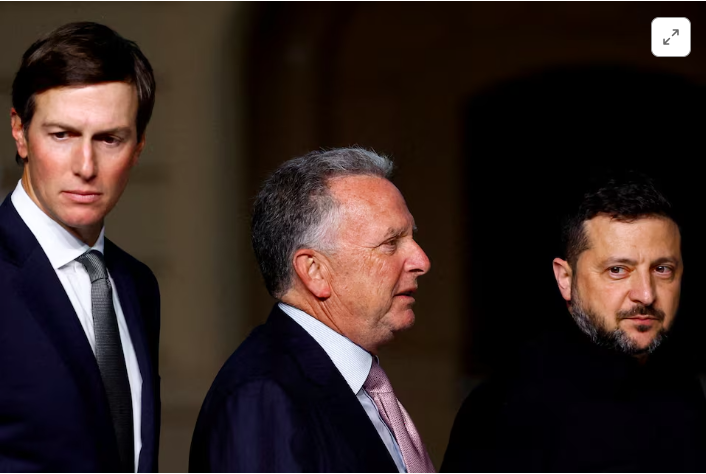
A representative for Dmitriev did not comment on the reported Nord Stream discussions.
The White House also played down the suggestion that recent talks had focused directly on the pipeline.
“Any deals will have to be negotiated by Russia with DFC and Treasury and must benefit United States taxpayers and companies,” a White House official told Reuters.
The official also said there had been “no Nord Stream discussions recently”.
Nord Stream restart faces major obstacles
Even if Moscow and Washington were interested in reviving Russian gas supplies to Germany, the process would face significant obstacles.
The Nord Stream pipelines are subject to US and EU sanctions. Reuters cited a US official as saying that, given the barriers, a deal was unlikely in the medium term.
Any reopening would require changes to the existing sanctions framework. US President Donald Trump could potentially waive or modify American sanctions, although the political environment in Washington could make such a move more difficult if Democrats gain control of Congress in the November midterm elections.
European restrictions present an additional hurdle.
A spokeswoman for Germany’s economy and energy ministry said Russian gas and Nord Stream remained under European sanctions. She also said Germany had found alternative sources of energy and that reopening the pipelines was not desired.
Any reopening would require approval from the German government.
Germany moved away from Russian gas
Before Russia invaded Ukraine in February 2022, Germany obtained more than half of its natural gas from Russia, with Nord Stream playing a central role in those supplies.
That relationship changed dramatically after Moscow reduced gas deliveries to Europe following the invasion.
The Nord Stream pipelines were subsequently taken out of operation and were damaged in a series of underwater explosions in September 2022.
Germany has since worked to diversify its energy supplies, including through increased imports of liquefied natural gas and other sources.
The country’s current position means a return to large-scale Russian gas purchases would represent a significant change in energy policy.
The German economy ministry has indicated that such a move is not currently desired.
European countries remain divided
The reported discussions are also likely to face opposition from several European countries that view renewed Russian energy dependence as a security concern.
Germany and other European governments have been spending heavily on defence since Russia’s invasion of Ukraine.
Some German lawmakers have argued that new commercial arrangements with Moscow could provide economic benefits to Russia while the war continues.
Michael Kellner, a German lawmaker who was involved in energy policy following the invasion, criticised the prospect of a US-Russia agreement involving European energy.
At the same time, Germany’s Alternative for Germany party supports restarting Russian gas supplies, highlighting the political division within the country over the issue.
Dmitriev is also expected to meet AfD leadership early next year to discuss the possibility of renewed Russian gas sales.
Poland, meanwhile, remains firmly opposed to reopening the pipeline, according to a person familiar with the government’s position.
Poland and the Baltic states have been among the European countries most strongly opposed to renewed energy ties with Russia.
Nord Stream ownership adds another hurdle
Ownership of the pipeline infrastructure could create another complication.
The company controlling Nord Stream is 51 per cent owned by Russian state energy giant Gazprom.
A further 31 per cent is divided between two German entities, while the remaining stake is held by French and Dutch companies.
According to one person familiar with the matter, the two German shareholders want to retain their stakes if Gazprom eventually sells its interest. Their aim would be to preserve German influence over the company.
That could complicate any proposal to transfer ownership or bring in a new US investor.
The ownership structure would therefore need to be addressed alongside sanctions, regulatory approvals and the question of whether Germany would permit Russian gas to flow through the system again.
Kushner has promoted ‘prosperity agreements’
The reported energy discussions fit into Kushner’s broader approach to linking economic interests with efforts to end the Ukraine war.
Days after meetings in Moscow, Kushner said in Kyiv that he had spoken with European counterparts about the effect of the war on energy prices.
He promoted what he described as “prosperity agreements”, arguing that economic opportunities could give countries and their leaders an incentive to pursue peace.
Under a possible future arrangement, US investors could potentially benefit from European energy flows while Russia could regain access to a major gas market.
Such an approach, however, would depend on a broader political settlement and the removal or modification of sanctions.
Lukoil assets also part of discussions
Nord Stream is not the only Russian energy-related business reportedly being discussed between US and Russian representatives.
Kushner and Dmitriev have also discussed the possible sale of assets belonging to Russian energy company Lukoil, according to two people familiar with the matter.
The assets reportedly include oil refineries and petrol stations in Europe and elsewhere.
Under the proposal described to Reuters, a consortium involving the US International Development Finance Corporation, along with investors from Qatar and the United Arab Emirates, could acquire the assets.
The plan would also involve US authorities lifting sanctions.
A White House official said Kushner and US Special Envoy Steve Witkoff had worked with DFC on a structure involving an upfront payment and a share of future profits for the United States.
Lukoil and Gazprom did not respond to Reuters requests for comment.
Energy diplomacy takes place amid continued war
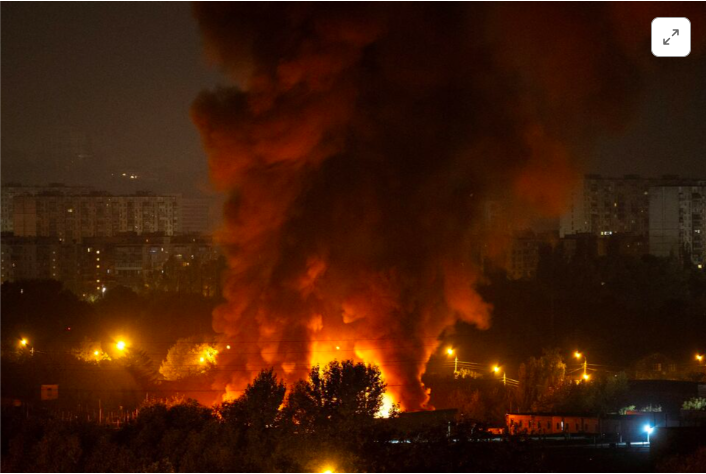
The discussions come as the war in Ukraine continues and Europe remains focused on reducing its exposure to Russian energy.
The EU has continued to impose sanctions on Russia. On October 7, EU envoys approved another large set of sanctions targeting individuals and entities linked to Russia’s military-industrial complex, with formal adoption expected at a meeting of EU foreign ministers.
At the same time, Europe continues to rely heavily on imported natural gas.
Recent Reuters reporting indicates that European LNG demand remains strong, with US LNG cargoes increasingly heading towards Europe because of favourable pricing and the region’s storage requirements.
This means Europe’s energy security calculations are continuing to evolve even as governments debate the possibility of future Russian energy supplies.
A potential deal remains far from certain
The reported US-Russia discussions do not amount to an agreement to restart Nord Stream or resume Russian gas exports to Germany.
Several conditions would have to change before such a deal could become possible, including sanctions, ownership arrangements, German government approval and broader European policy.
There is also uncertainty over Washington’s appetite for such an arrangement. While some US officials have discussed potential commercial benefits for American companies and taxpayers, another US official told Reuters that a Nord Stream deal was unlikely in the medium term.
For Europe, the issue goes beyond gas prices. Germany and other countries must also weigh energy costs against concerns about security and dependence on Russia.
The reported talks therefore illustrate how energy and business interests are increasingly being discussed alongside diplomatic efforts to end the Ukraine war. Whether those discussions can eventually produce an agreement will depend on developments in the war, sanctions policy and the positions of Germany and other European governments.