







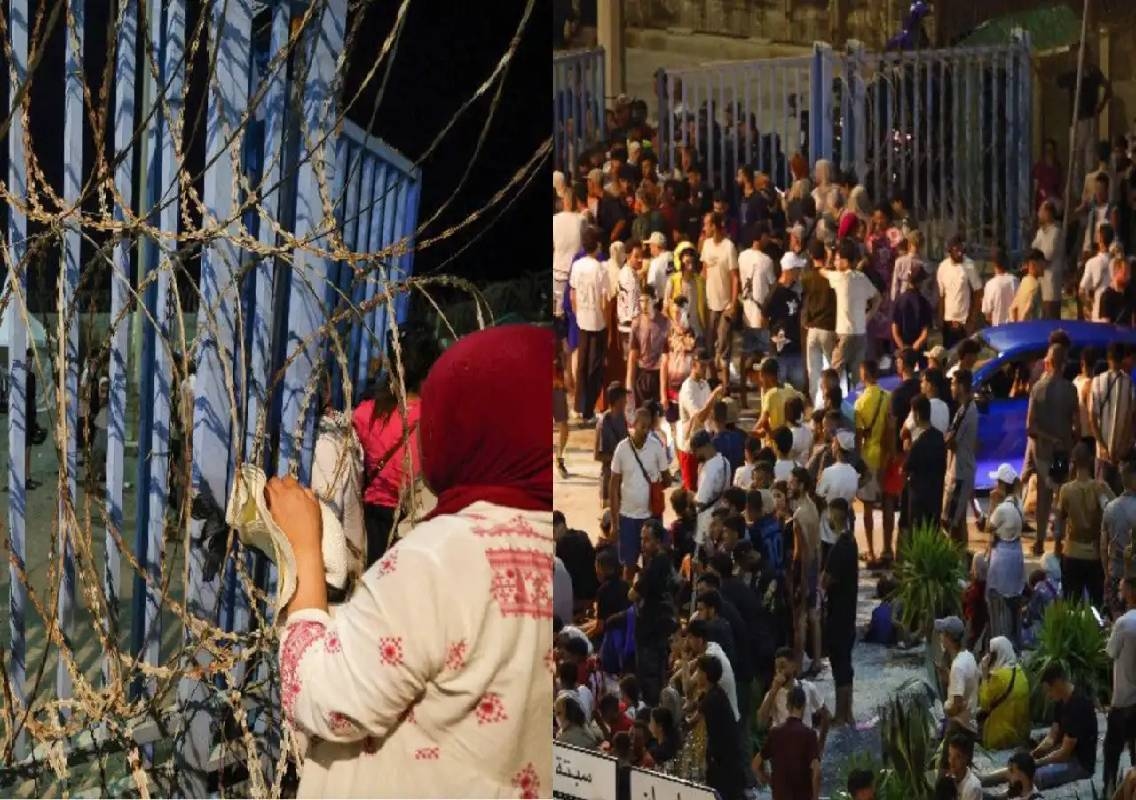


Madrid: Spain is grappling with one of its biggest migration crises in recent years after around 49,000 migrants crossed into the North African enclave of Ceuta from Morocco within hours, overwhelming local authorities and triggering political tensions across Europe. At the centre of the crisis is a recent Spanish Supreme Court ruling that changed how migrants intercepted at sea near Ceuta and Melilla must be handled.
The judgment has become a focal point of debate after Spanish authorities accused migrant smuggling networks of exploiting it to encourage thousands of people to attempt dangerous sea crossings.
What did the Supreme Court rule?
The Spanish Supreme Court ruled that the country’s “summary return” (pushback) procedure cannot be applied to migrants intercepted while attempting to reach Ceuta or Melilla by sea.
Instead of being immediately returned across the border, migrants intercepted in such circumstances must go through Spain’s ordinary immigration procedures, which provide greater legal safeguards. The court clarified that the special border rejection mechanism only applies to people attempting to cross the physical land border barriers, not those arriving by sea.
Why did the verdict trigger a migrant surge?
According to the Spanish government, criminal smuggling networks misrepresented the court’s ruling, spreading rumours that migrants arriving in Ceuta by sea could no longer be immediately deported.
Officials believe this misinformation encouraged thousands of migrants from Morocco and other African countries to attempt the crossing within a short period, creating an unprecedented humanitarian and security challenge.
What happened in Ceuta?
Within roughly 24 hours, an estimated 49,000 to 60,000 migrants crossed into Ceuta by swimming around the Tarajal breakwater or entering along the shoreline.
The influx overwhelmed the Spanish enclave, whose population is around 85,000, forcing authorities to deploy additional police and military personnel. Reception centres exceeded capacity, while many migrants remained without accommodation. Tragically, dozens of people lost their lives attempting the dangerous sea crossing.
Political fallout across Europe
The crisis quickly evolved into a wider European issue.
Italy announced temporary checks affecting travel links with Spain, while several European leaders questioned Spain’s ability to secure the European Union’s external border. At the same time, the European Commission and several EU leaders expressed support for Spain, emphasising that Ceuta occupies a unique legal position within the Schengen framework.
Is Morocco responsible?
Spanish authorities have primarily blamed migrant-smuggling networks for exploiting the court ruling.
Some reports have alleged that Moroccan border controls were initially relaxed during the crossings, but no conclusive evidence has emerged that Morocco deliberately facilitated the mass migration. Moroccan authorities later strengthened border enforcement and many migrants voluntarily returned.
Why Ceuta is strategically important
Ceuta is a Spanish autonomous city located on the northern coast of Africa and shares a land border with Morocco.
Because it forms part of Spain and the European Union, it has long been a key gateway for migrants seeking entry into Europe. The city has experienced previous migration surges, most notably in 2021, but the latest influx is significantly larger.
What happens next?
The Spanish government has increased security deployments and is working with Moroccan authorities to manage the situation.
Meanwhile, the Supreme Court ruling remains in force, meaning migrants intercepted at sea must continue to be processed under ordinary immigration procedures unless Spain’s laws are amended. The crisis is also expected to fuel further debate within the European Union over border security, asylum policies and migration management.
Conclusion
Spain’s migrant crisis is rooted in a legal ruling designed to clarify migrants’ rights at sea, but authorities argue that the judgment was exploited by human trafficking networks to encourage mass crossings. As Europe grapples with the humanitarian, legal and political consequences, the events in Ceuta have once again highlighted the challenges of balancing border security with international human rights obligations.