







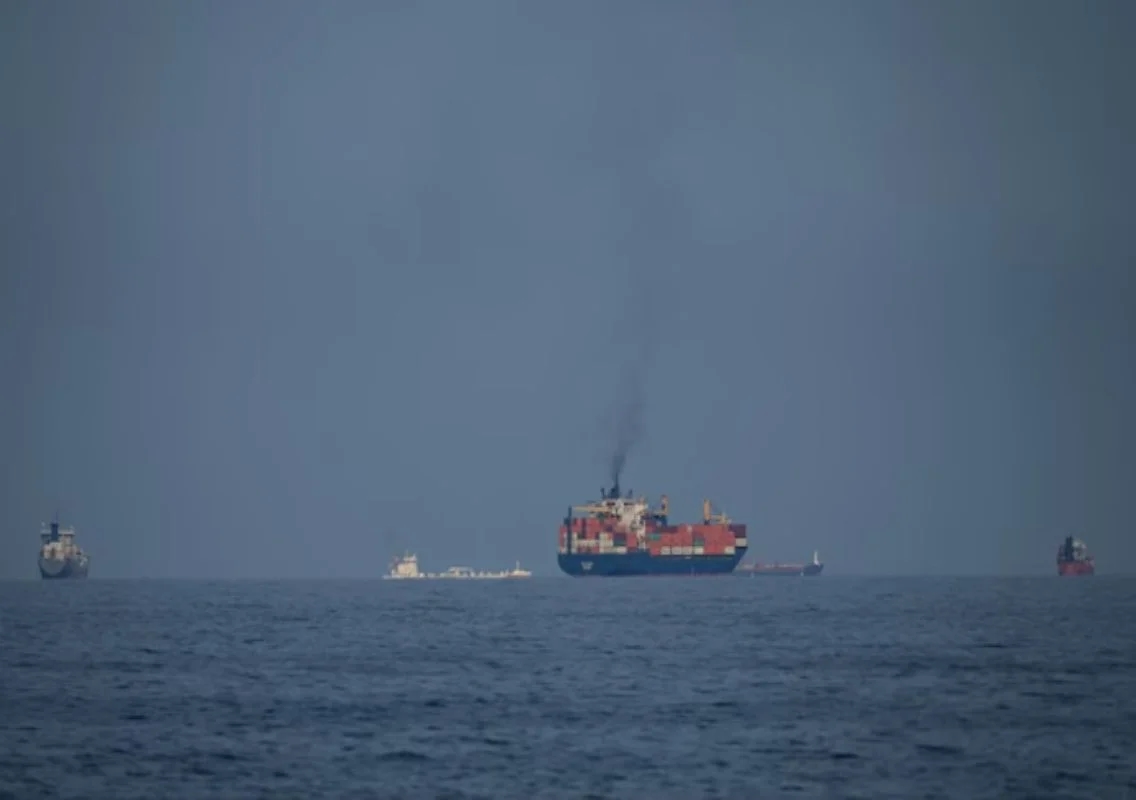


Tehran: The Strait of Hormuz, a narrow maritime corridor connecting the Persian Gulf to the Arabian Sea, has once again taken centre stage in global geopolitics, underscoring how geography shaped millions of years ago continues to dictate modern power struggles.
A narrow passage with global impact
Stretching barely 30 miles at its narrowest point, the Strait of Hormuz carries nearly one-fifth of the world’s oil and liquefied natural gas shipments. Its strategic importance has made it one of the most critical chokepoints in global trade.
Recent tensions involving Iran, the United States and Israel have once again highlighted the vulnerability of this vital passage, with disruptions sending global energy markets into turmoil.
Born from ancient oceans
The origins of the strait lie deep in geological history. Millions of years ago, the region was covered by the ancient Tethys Ocean, where marine organisms settled on the seabed and gradually transformed into hydrocarbons under immense pressure and heat.
As tectonic plates shifted, the Arabian landmass collided with Eurasia, forming the Zagros mountain range and compressing the basin that would later become the Persian Gulf. Beneath this basin lies one of the largest concentrations of oil and gas reserves on Earth.
Formation of a natural bottleneck
The same tectonic activity that created vast hydrocarbon reserves also resulted in a narrow opening at the southeastern edge of the Gulf — the Strait of Hormuz.
This geographical coincidence turned the region into a natural bottleneck, where energy resources must pass through a limited corridor, making it highly susceptible to disruption.
From river valley to sea route
Interestingly, the strait was not always a waterway. During the last Ice Age, lower sea levels exposed the Persian Gulf as a fertile river valley. Major rivers like the Tigris and Euphrates once flowed through this region into the Indian Ocean.
As sea levels rose around 12,000 years ago, the basin flooded, forming the modern Gulf and establishing the Strait of Hormuz as a key maritime route.
A cradle of civilisation and trade
The flooding of the region played a role in early human migrations and the rise of ancient civilisations such as the Sumerians. Over time, the strait evolved into a major hub for trade, linking the Middle East with South Asia, Africa and beyond.
Empires including the Achaemenids and later the Sassanids recognised its importance, developing systems to control and protect trade routes passing through the strait.
Colonial control and modern geopolitics
During the colonial era, European powers, particularly Portugal and later Britain, controlled the region to safeguard maritime trade. In modern times, influence over the strait has shifted to regional powers, especially Iran.
Since the 1979 Iranian Revolution, Tehran has maintained significant control over the waterway, often using it as a strategic lever in geopolitical conflicts.
Strategic leverage in modern conflicts
In recent developments, Iran’s decision to restrict movement through the strait amid escalating conflict has had immediate global repercussions. Oil prices surged, shipping routes were disrupted, and energy-dependent nations faced uncertainty.
Countries like India, Japan and several European nations remain highly vulnerable due to their reliance on energy imports passing through this corridor.
A fixed geography, shifting politics
Despite technological advances and alternative trade routes, the Strait of Hormuz remains irreplaceable in the global energy network. Its geography cannot be altered, and its strategic importance is unlikely to diminish.
Conclusion
The Strait of Hormuz is not just a waterway but a product of deep geological history that continues to influence global economics and politics. As tensions rise, the world is reminded that some of the most powerful forces shaping modern conflicts were set in motion millions of years ago.