







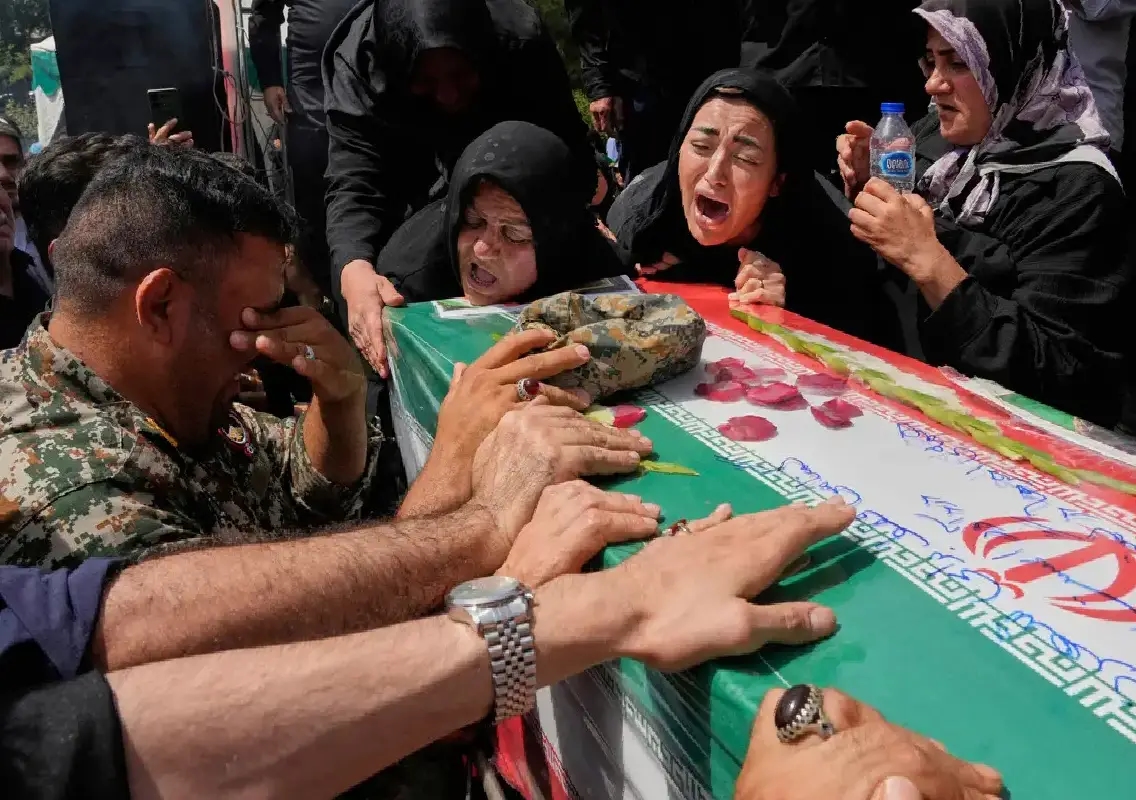


Civilians in Tehran are bearing the devastating consequences of ongoing strikes as conflict intensifies between Iran, the United States and Israel, with residential neighbourhoods increasingly caught in the crossfire.
Civilian areas turned into war zones
In the eastern district of Resalat, a mother stood helplessly near the rubble of her daughter’s home, waiting for rescue teams to recover her. “My daughter is under the rubble… she’s afraid of the dark,” she cried, reflecting the anguish faced by many families.
Days after the strike, her daughter and granddaughter were found dead beneath the debris. The attack reportedly destroyed multiple apartment buildings, killing between 40 and 50 people and leaving several others homeless.
Survivors described the suddenness of the explosions. One resident said he was thrown across the room, losing all his belongings. “This was our life,” he said, now sheltering in temporary accommodation.
Targets within neighbourhoods
The Israel Defense Forces stated that the strike targeted a Basij-linked military facility. However, analysis of satellite imagery and on-ground footage suggests that surrounding residential buildings were heavily impacted, with destruction extending up to 65 metres from the blast site.
Experts believe large bombs, possibly from the Mark 80 series, were used—raising concerns over their deployment in densely populated areas.
Legal and humanitarian concerns
Under international humanitarian law, parties in conflict must distinguish between civilian and military targets and ensure proportionality in their actions.
Legal experts have questioned whether the use of heavy explosives in crowded neighbourhoods meets these standards. The United Nations has repeatedly warned against deploying such weapons in urban settings due to the high risk to civilian lives.
Rising casualties and displacement
According to the Human Rights Activists News Agency, at least 1,464 civilians, including over 200 children, have been killed in the first month of the conflict.
Strikes have also hit police stations, military facilities, and infrastructure embedded within civilian zones, increasing the risk to nearby residents.
Fear, uncertainty and lack of protection
Residents criticised authorities for inadequate safety measures, citing a lack of shelters, warning systems, or evacuation guidance. “There are no sirens, no warnings. You just hear the explosion,” one resident said.
With internet blackouts and limited official communication, many families remain uncertain about their safety, unsure when or where the next strike may occur.
A city under siege
While the United States and Israel maintain that their operations target state infrastructure, the reality on the ground reveals widespread civilian suffering. Homes, schools, and livelihoods have been destroyed, leaving a growing sense of fear and instability.
For many in Tehran, the war is no longer a distant geopolitical conflict—it is a daily struggle for survival.