







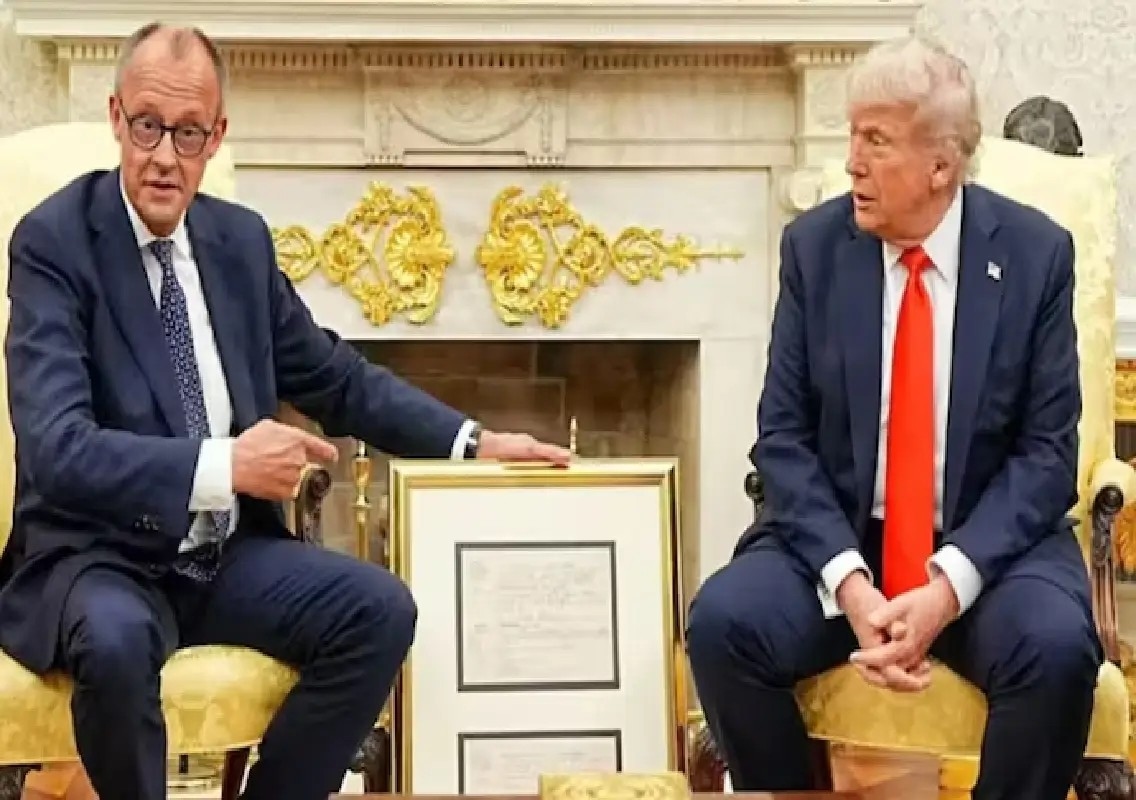


Washington: US President Donald Trump has sharply criticised German Chancellor Friedrich Merz over his remarks on the ongoing Iran conflict, accusing him of misjudging Tehran’s nuclear ambitions and misrepresenting his own stance.
In a post on Truth Social, Trump claimed that Merz “thinks it’s OK for Iran to have a nuclear weapon,” adding, “He doesn’t know what he’s talking about.” However, Merz has consistently maintained that Iran must not acquire nuclear weapons.
Dispute over Iran’s nuclear threat
Trump warned that a nuclear-armed Iran would pose a serious global risk. “If Iran had a nuclear weapon, the whole world would be held hostage,” he said, asserting that his administration was taking stronger action than previous governments.
The remarks reflect Washington’s continued hardline stance on Iran’s nuclear programme amid escalating tensions in West Asia.
Merz questions US strategy
The exchange follows comments by Merz criticising the US handling of the Iran conflict. He described Iran’s leadership as “humiliating” the United States in diplomatic engagements, pointing to stalled negotiations and lack of tangible outcomes.
Merz also expressed concern over the absence of a clear long-term strategy, stating that he did not see a defined exit plan in the ongoing conflict.
Concerns over regional stability
Highlighting Iran’s negotiating strength, Merz said the country appears more capable than previously assumed and is handling discussions “very skilfully.”
He also raised alarm about developments in the Strait of Hormuz, warning that parts of the crucial shipping route may be mined. Any disruption in the strait could have significant implications for global oil supply and trade.
Strain in transatlantic relations
The public disagreement underscores growing differences between the United States and its European allies, particularly within NATO, over approaches to major geopolitical crises.
Tensions have already been evident over issues such as the Ukraine conflict, and the Iran situation appears to be adding further strain to transatlantic relations.
Conclusion
The exchange between Trump and Merz highlights widening policy divides on handling Iran, raising concerns about coordination among Western allies at a time of heightened global uncertainty.