







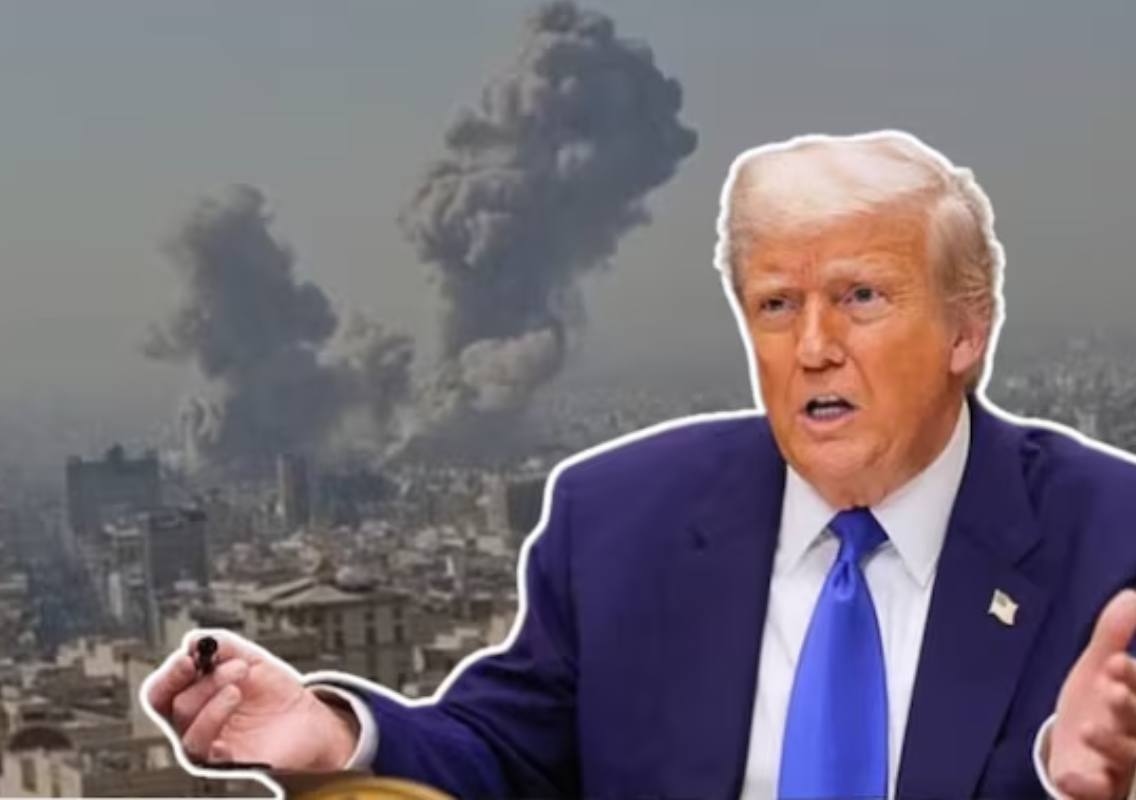


Washington: US President Donald Trump has indicated that he will wait until the beginning of the new year before deciding whether to resume military action against Iran, even as Israeli Prime Minister Benjamin Netanyahu pushes Washington to consider a fresh bombing campaign against Tehran.
In an exclusive interview with Axios on Thursday, Trump said he was not rushing to make a decision on Iran, suggesting that the US administration could continue assessing its options for several more weeks.
“I am not rushing into any decision (on Iran). We will see what happens after the beginning of the year,” Trump told Axios aboard Air Force One while returning to the United States after attending the APEC Summit in China.
His remarks come amid renewed diplomatic and military pressure from Israel for a decisive response against Iran. Although Trump said last week that another major military offensive was “quite unlikely”, Washington has not ruled out the possibility of joining Israel in a fresh operation.
The US administration is examining different military scenarios while also considering the consequences of possible Iranian retaliation, particularly against energy infrastructure in the Gulf region.
US weighs possible targets in Iran
According to Axios, the military options being examined by Washington include strikes against suspected Iranian nuclear facilities, including the Pickaxe Mountain site.
Other potential targets could include bridges, power plants and Iranian military and civilian leaders, the report said.
The White House has sought assessments from the Pentagon and intelligence officials on how Tehran might respond to different strike scenarios prepared by the US military.
One of the major concerns is the possibility that a fresh American-Israeli operation could prompt Iran to retaliate against oil and gas infrastructure in Gulf countries. Such an escalation could have consequences beyond the immediate conflict, particularly for regional energy supplies and security.
The US administration is therefore examining not only the military objectives of a possible operation but also the risks associated with Iranian counterattacks.
Trump’s latest comments indicate that Washington is not committing to an immediate decision. His statement also leaves open the possibility that the administration could continue diplomatic and economic pressure rather than return to direct military action.
Netanyahu sends Mossad chief to Washington
Israel has stepped up its diplomatic efforts to persuade the Trump administration to consider renewed military action against Iran.
Netanyahu reportedly dispatched Mossad chief Roman Gofman to Washington and Miami last week for discussions with CIA Director John Ratcliffe and White House envoy Steve Witkoff.
According to Axios, an Israeli source said Gofman, one of Netanyahu’s closest confidants, was sent to press for a resumption of the campaign against Iran.
The discussions also reportedly covered Israeli concerns about Iran’s alleged activities related to chemical weapons development.
US and Israeli sources told Axios that Gofman conveyed intelligence assessments suggesting Tehran had increased research and development in this area and conducted tests.
A US official said Trump had been briefed on the new intelligence.
The claims have added another dimension to the discussions between Washington and Jerusalem over Iran. Israel is seeking to draw attention to what it describes as emerging threats from Tehran, while the US administration is assessing the intelligence and the potential consequences of further military action.
The White House has not committed to a new strike campaign, and Trump’s comments suggest that a decision could remain pending until after the beginning of the new year.
Rubio outlines an alternative to renewed war
The Trump administration is also considering a strategy that would avoid both an immediate return to military action and a negotiated agreement with Tehran.
Last week, US Secretary of State Marco Rubio outlined this approach while speaking at a meeting with G7 foreign ministers. He said Washington had more than two choices and could continue its existing pressure campaign against Iran.
“The President doesn’t just have two options. It’s not just returning to war or signing a ridiculous peace deal. We won’t do a stupid deal. The third option we have is to continue to do what we do now,” Rubio said.
Rubio’s remarks indicated that the administration could maintain and strengthen economic restrictions while keeping military options under consideration.
He argued that continuing the current strategy would increase the economic cost for Iran without requiring Trump to set a deadline for ending the pressure campaign.
The approach is intended to weaken Iran’s economy and limit its ability to finance armed groups or rebuild its military capabilities.
Rubio also argued that Tehran was damaging its own economy by refusing to accept Washington’s conditions.
“The President is not under false time pressure, the Iranians are inflicting major damage on their own economy,” he said.
Washington keeps military and economic options open
The contrasting positions emerging from Washington and Jerusalem underline the uncertainty surrounding the next phase of the Iran standoff.
Netanyahu is pressing for another round of strikes, with Israel raising concerns about Iran’s alleged nuclear and chemical weapons-related activities. The Trump administration, meanwhile, is examining possible military targets and the risks of retaliation while keeping economic pressure as an alternative.
A renewed operation could trigger Iranian attacks against infrastructure in the Gulf, including facilities linked to oil and gas supplies. That possibility remains a major consideration in US assessments.
For now, Trump has indicated that he is prepared to wait until after the beginning of the new year before deciding whether to resume military action. The administration’s approach could therefore involve continuing economic restrictions and intelligence assessments while leaving the possibility of further strikes open.
The coming weeks are likely to be important for US-Israeli consultations and Washington’s assessment of the risks associated with escalation. However, Trump’s latest statement does not amount to a formal decision ruling out military action.