







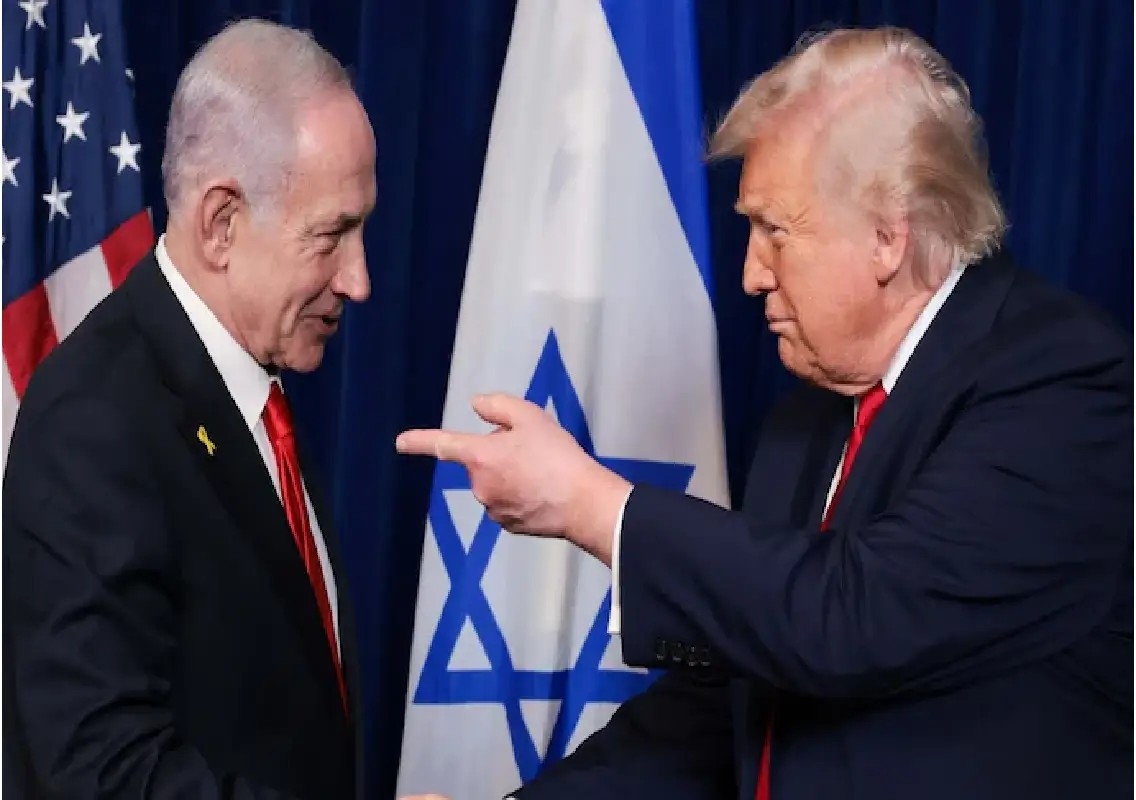


Washington: Growing differences between US President Donald Trump and Israeli Prime Minister Benjamin Netanyahu have come under renewed scrutiny following the latest exchange of missile and drone attacks between Israel and Iran. Recent developments have highlighted contrasting approaches to the conflict, with Washington pursuing diplomatic engagement while Israel continues military operations against Iranian targets and Tehran-backed groups.
The renewed hostilities have intensified debate over whether the two long-time allies remain aligned on strategy as the regional conflict enters a critical phase.
Trump pushes for diplomacy
In recent weeks, Trump has repeatedly signalled his preference for de-escalation and diplomatic engagement with Iran.
The US administration has focused on securing a ceasefire and pursuing a broader understanding with Tehran aimed at reducing regional tensions. Washington’s priorities also include preventing disruptions to global energy supplies, maintaining stability in the Strait of Hormuz and avoiding a wider conflict that could have significant economic consequences.
Trump has publicly stated that he seeks a negotiated outcome and has emphasised that excessive escalation would not serve American interests.
His administration has also sought to reassure international partners that diplomatic channels remain open despite ongoing hostilities.
Israeli strikes raise questions
While the United States has pursued diplomatic efforts, Israel has continued military operations against targets it considers threats to national security.
On June 6, Israeli forces reportedly carried out strikes against Hezbollah-linked infrastructure in Beirut’s southern suburbs. The operation drew attention because reports suggested it was conducted without prior coordination with Washington.
The action fuelled speculation about potential differences between the US and Israeli leadership regarding how to handle regional security challenges.
Israeli officials have consistently maintained that military action remains necessary to counter threats posed by Hezbollah and Iran-backed groups operating across the region.
Missile exchanges deepen crisis
The situation escalated further after Iran launched missiles towards northern Israel on June 7 following the Lebanese strikes.
Israeli authorities reported that air defence systems responded to the attack and that no major damage or casualties were recorded.
The following day, Israeli fighter jets reportedly conducted strikes on military targets in Iran, including locations near Tehran, Isfahan and Tabriz.
According to Israeli officials, the operation targeted military infrastructure associated with Iran’s missile and defence capabilities.
The strikes marked a significant escalation and effectively ended hopes that previous ceasefire arrangements could prevent renewed direct confrontation between the two countries.
White House distances itself
Following the latest Israeli military action, US officials reportedly emphasised that Washington had no direct involvement in the operation.
The statement was viewed by analysts as an indication that the United States wished to maintain distance from actions that could complicate ongoing diplomatic efforts.
Observers noted that the public distancing also highlighted the possibility of differing priorities between Washington and Jerusalem.
While the White House continues to focus on diplomatic solutions, Israel remains committed to retaining the option of military action against perceived threats.
Different strategic priorities
At the heart of the apparent disagreement lies a difference in strategic outlook.
Trump’s administration appears focused on avoiding a broader regional conflict and achieving a diplomatic breakthrough with Iran.
Netanyahu, on the other hand, has repeatedly argued that Iran’s nuclear ambitions and missile capabilities pose an existential threat to Israel and cannot be addressed solely through negotiations.
Israeli leaders have long maintained that military preparedness and pre-emptive action remain essential components of national security policy.
This divergence in priorities has become increasingly visible as events unfold on the ground.
Domestic pressures also at play
Political considerations are also influencing decision-making in both countries.
Trump faces pressure to demonstrate progress through diplomacy and avoid deeper American involvement in another Middle East conflict.
Meanwhile, Netanyahu is navigating a complex domestic political environment where security issues remain a central concern for voters and opposition parties alike.
Critics and supporters within Israel continue to debate the appropriate balance between diplomacy and military action, particularly in relation to Iran and Hezbollah.
These domestic factors add another layer of complexity to the relationship between the two leaders.
Analysts caution against firm conclusions
Despite visible differences, some analysts caution against assuming a complete breakdown in coordination between Washington and Jerusalem.
The United States and Israel continue to maintain close strategic, military and intelligence ties, and disagreements over tactics do not necessarily indicate a fundamental rupture in the alliance.
Some observers have also suggested that public differences may, at times, be part of broader diplomatic positioning, although there is no definitive evidence to support such claims.
As the conflict continues, the extent of alignment between the two governments will likely become clearer.
Conclusion
The latest round of Israeli-Iranian hostilities has highlighted differing approaches between Donald Trump and Benjamin Netanyahu at a crucial moment in the regional conflict. While Washington is prioritising diplomacy and de-escalation, Israel continues to emphasise military action against perceived threats. Whether these differences represent a temporary tactical divergence or a deeper strategic divide remains one of the key questions shaping developments in the Middle East.