







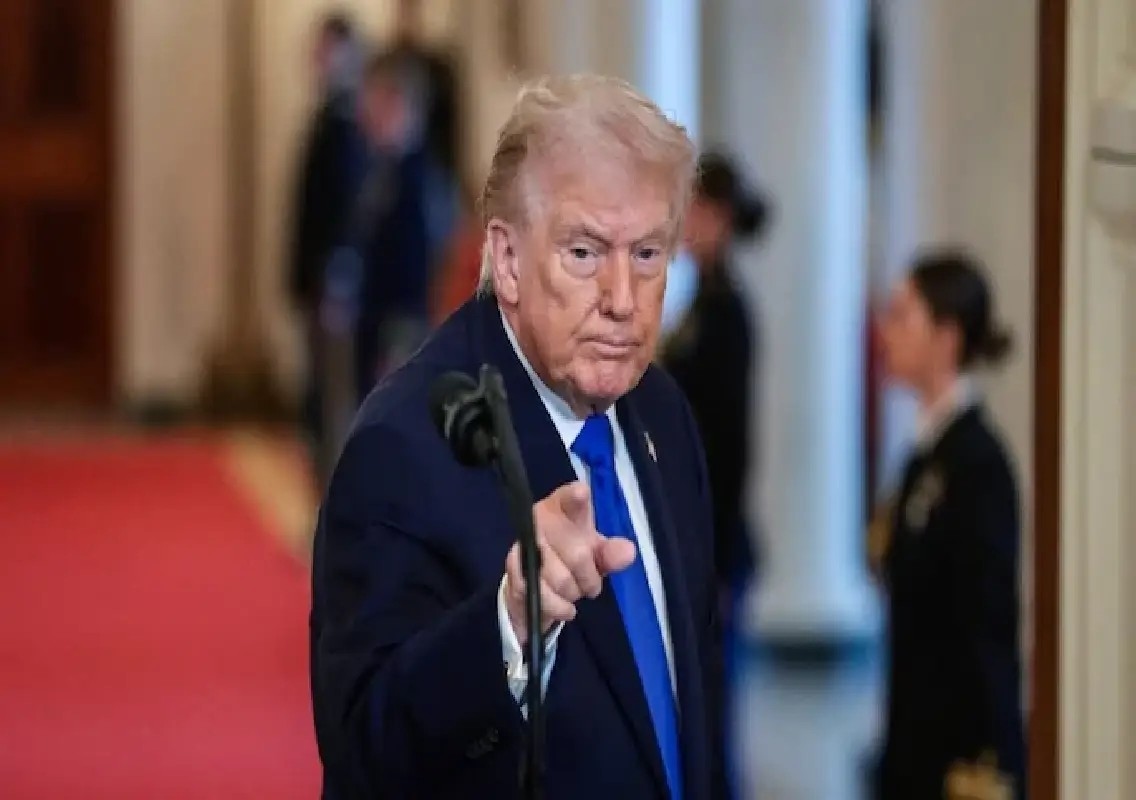


Washington, D.C.: United States President Donald Trump has expressed confidence that a long-awaited agreement between the United States and Iran is close to being finalised, stating that only documentation remains before a formal deal can be signed.
Speaking at the White House on Thursday, Trump said negotiations had advanced significantly and suggested that the agreement could be completed within days, raising hopes of a diplomatic breakthrough after months of heightened tensions and conflict in the region.
Trump signals confidence in impending agreement
Addressing reporters, Trump claimed that the United States had effectively reached a settlement concerning the conflict with Iran and that the remaining process involved finalising documents.
According to the US President, discussions have progressed to an advanced stage, with negotiators working towards completing the formalities required for a final agreement.
Trump indicated that the deal could be concluded within the next few days, adding to growing speculation that both sides are moving closer to a diplomatic resolution.
Signing ceremony may take place in Europe
Trump suggested that a formal signing ceremony could be held in Europe as early as this weekend.
While stating that he does not intend to attend personally, the President said Vice President JD Vance would represent the United States at the event if it proceeds as planned.
He also linked the prospective agreement to the reopening of the strategically important Strait of Hormuz, a critical route for global oil shipments.
According to Trump, the waterway could reopen once the agreement is formally signed, potentially easing concerns in international energy markets.
Iran says final agreement not yet reached
Despite Trump’s optimistic assessment, Iranian officials have maintained that a final agreement has not yet been concluded.
Iranian Foreign Ministry spokesperson Esmail Baghaei stated on state television that while substantial progress had been made in negotiations, Iran had not reached a final decision regarding the proposed agreement.
Baghaei claimed that many sections of the draft text had already been agreed upon but accused Washington of introducing additional demands during the talks.
He reiterated that Iran would not compromise on what it considers its fundamental negotiating positions and national interests.
Nuclear issue remains central to negotiations
A key element of the proposed agreement, according to Trump, is Iran’s commitment not to pursue nuclear weapons.
The US President stated that Tehran had agreed not to develop or acquire a nuclear weapon, describing this as the primary objective of the negotiations.
For years, Iran has consistently denied allegations that it is seeking to build nuclear weapons, maintaining that its nuclear programme is intended solely for peaceful civilian purposes.
The nuclear issue has remained at the centre of diplomatic tensions between Iran and Western nations for more than two decades.
Trump claims regional support for agreement
Trump also asserted that the proposed agreement has received backing from key regional stakeholders and leaders across the Middle East.
He said he had held discussions with regional allies and leaders, including Israeli Prime Minister Benjamin Netanyahu, and claimed there was broad support for efforts to reach a diplomatic resolution.
The President further stated that Iran’s willingness to negotiate had increased significantly following recent developments in the conflict, arguing that circumstances had changed compared to previous rounds of negotiations.
According to Trump, negotiators have already reached broad consensus on both the framework and detailed provisions of the agreement.
Regional implications of a potential deal
A successful agreement could have far-reaching consequences for regional stability, global energy markets and international diplomacy.
The reopening of the Strait of Hormuz would be particularly significant, as nearly one-fifth of the world’s oil supplies pass through the strategic waterway. Any reduction in tensions could ease concerns over disruptions to global energy supplies and shipping routes.
Analysts also note that a breakthrough could help reduce geopolitical tensions across the Middle East and pave the way for further diplomatic engagement between regional powers.
However, uncertainty remains until both sides formally confirm the final terms of any agreement.
Conclusion
The prospect of a US-Iran agreement appears closer than it has in recent months, with President Donald Trump signalling confidence that a deal could be signed within days. While Iran insists that negotiations are not yet complete, both sides acknowledge substantial progress in the talks. The coming days are expected to determine whether the negotiations result in a formal agreement capable of easing regional tensions and reshaping diplomatic relations in the Middle East.