







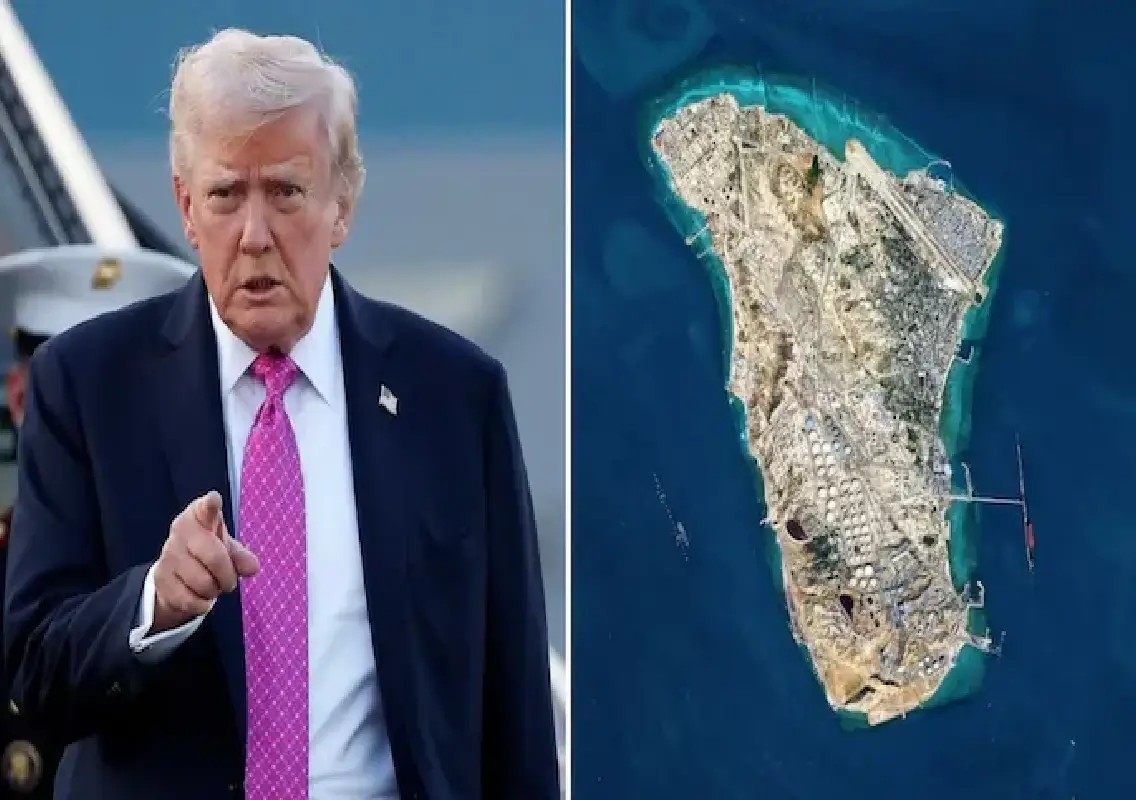


US President Donald Trump has threatened fresh military action against Iran, declaring that the United States would hit the country “very hard tonight” as tensions in the Middle East continue to rise despite ongoing diplomatic efforts.
The warning came after renewed exchanges of attacks between American and Iranian forces, further undermining a fragile ceasefire and raising concerns about a broader regional conflict. Trump also signalled his intention to take control of key Iranian oil infrastructure, including the strategically important Kharg Island.
Trump issues warning on social media
In a post on his Truth Social platform, Trump claimed that Iran’s military capabilities had been severely weakened and warned of additional military strikes.
The US President asserted that Iran’s navy, air force, radar systems and air defence capabilities had largely been neutralised. He further stated that the United States would launch a major strike against Iran later in the day.
Trump also reiterated plans to assume control of Iran’s oil and gas infrastructure in the future, drawing comparisons with US actions in Venezuela.
Kharg Island emerges as key focus
A central element of Trump’s latest remarks was Kharg Island, a vital oil export hub for Iran.
Located in the Persian Gulf, the island handles the overwhelming majority of Iran’s crude oil exports and plays a critical role in the country’s economy. Analysts consider it one of Tehran’s most strategically important energy assets.
Trump later repeated his interest in taking control of Kharg Island during a television interview, indicating that the facility remains a primary target in Washington’s pressure campaign against Iran.
Fresh attacks reported across region
The latest threats come amid continuing military exchanges between the United States and Iran.
According to reports, American forces carried out strikes targeting Iranian surveillance systems, communication networks and air defence installations. Washington described the operations as a response to continued Iranian actions in the region.
Iran responded by launching attacks against several American military facilities across the Gulf region. Iranian forces claimed to have targeted US installations in Bahrain, Kuwait and Jordan, while regional authorities reported varying levels of damage and disruption.
The renewed violence has intensified fears of a wider confrontation that could affect regional security and global energy markets.
Negotiations continue despite hostilities
Despite the escalating rhetoric and military action, diplomatic contacts between Washington and Tehran are reportedly continuing.
Trump said communication channels remain open and indicated that discussions were ongoing regarding a possible agreement. However, significant differences remain between the two sides on several key issues.
One major sticking point reportedly involves billions of dollars in Iranian funds frozen overseas. Iran is seeking access to the assets, while the United States is pushing for a phased release tied to specific conditions.
Sources familiar with the negotiations have suggested that both sides recognise the growing costs of continued conflict, although a final breakthrough has yet to be achieved.
Regional and global concerns grow
The latest developments have heightened concerns about stability in the Gulf region, particularly around key shipping routes and energy infrastructure.
Kharg Island’s significance to global oil supplies means that any escalation involving the facility could have repercussions for international energy markets. Analysts are closely monitoring the situation amid fears that further military action could disrupt oil exports and maritime trade.
With both military operations and negotiations continuing simultaneously, uncertainty remains high over whether diplomacy can prevent a further escalation of the conflict.