







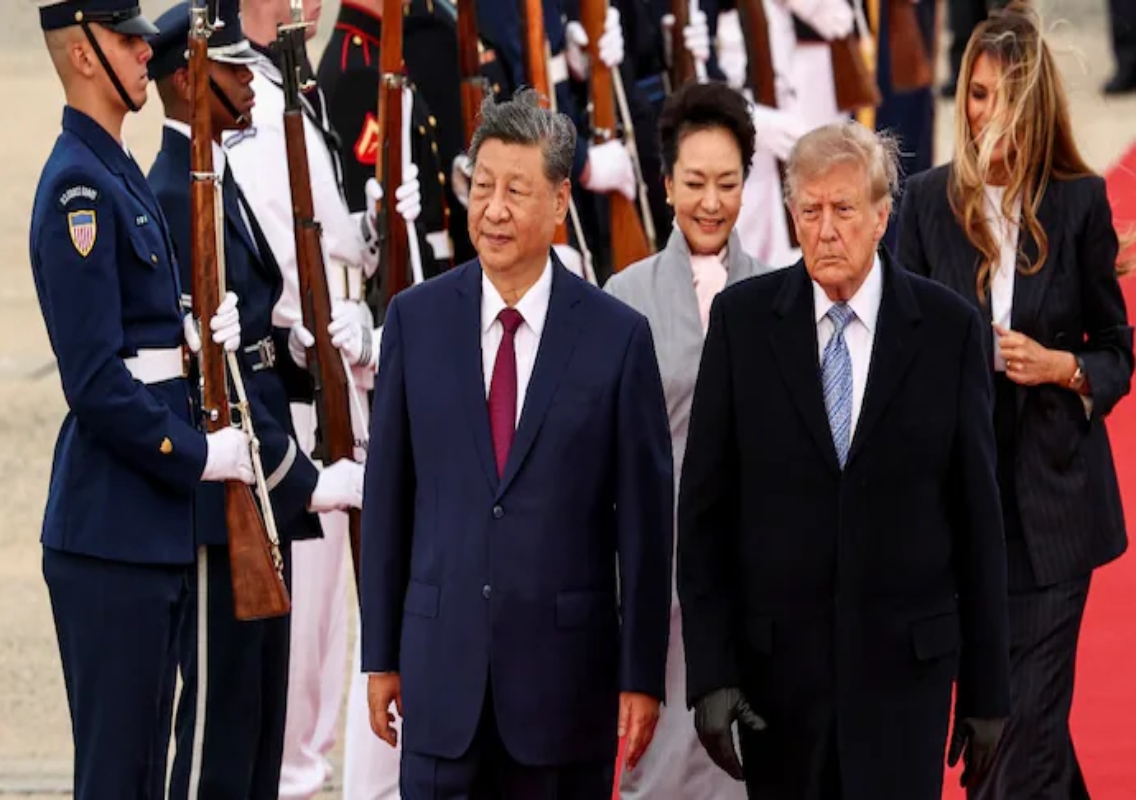


Washington: The United States and China have agreed to reduce tariffs on about $30 billion worth of non-sensitive goods in each direction and launch a formal dialogue on artificial intelligence, following Chinese President Xi Jinping’s three-day visit to Washington.
The agreements were reached during Xi’s meetings with US President Donald Trump and are part of a broader effort by Washington and Beijing to manage their trade and technology disputes while maintaining communication on sensitive issues.
The two countries also agreed to establish a communication channel for AI-related incidents and move ahead with mechanisms covering trade and investment. The arrangements extend the recent period of economic engagement between the world’s two largest economies, although several major disagreements remain unresolved.
Tariff cuts cover $30 billion in goods
Under the new arrangement, the US and China will provide more favourable tariff treatment for $30 billion worth of non-sensitive goods in each direction.
The White House said the products covered include categories such as agricultural goods, wood and cosmetics among US exports, while US imports from China include small appliances, toys and decorations. The arrangement is intended to reduce some of the tariff pressure that has affected bilateral trade.
The agreement follows months of negotiations aimed at maintaining a broader trade truce between Washington and Beijing.
Earlier discussions had focused on reducing tariffs on non-critical goods while leaving more sensitive areas, including advanced technology and strategic products, subject to separate negotiations.
The latest arrangement does not amount to a comprehensive settlement of the wider US-China trade dispute. Both governments continue to negotiate on market access, agricultural purchases, critical minerals and technology-related restrictions.
New US-China dialogue on artificial intelligence
Artificial intelligence emerged as another major area of engagement during Xi’s visit.
The two countries agreed to resume formal discussions on AI risks and benefits in November. They will also establish a communication channel through which the two sides can notify each other about significant AI-related incidents.
The initiative comes as Washington and Beijing compete intensely in advanced artificial intelligence, while also recognising that increasingly capable AI systems create risks that can cross national borders.
Chinese officials have called for AI development to remain under human control and have advocated dialogue on the technology’s risks and benefits. Xi also said the US and China could compete while finding areas in which they could cooperate.
The AI dialogue is therefore expected to focus on communication and risk management rather than ending the broader technological competition between the two countries.
Xi and Trump discuss wider economic issues
Xi’s visit covered issues beyond tariffs and artificial intelligence.
The two sides agreed to operationalise boards dealing with trade and investment, while discussions also covered energy, critical minerals and other areas affecting bilateral economic relations.
The talks followed a series of meetings between US Treasury Secretary Scott Bessent and Chinese Vice Premier He Lifeng, who had been working towards concrete outcomes before the presidential summit.
The United States has been seeking greater access to Chinese markets and more predictable supplies of strategically important materials. China, meanwhile, has sought greater stability in its trade relationship with Washington and opposed restrictions that it says affect its technological development.
Trade truce extended
The latest agreements build on an existing trade truce between the two countries.
Washington and Beijing had already agreed to extend their tariff truce, providing additional time for negotiators to work towards a broader economic arrangement. The truce had followed an earlier escalation in tariffs, when the two sides imposed increasingly high duties on each other’s goods.
The latest tariff arrangement covering $30 billion in goods is consequently part of a larger effort to prevent another escalation in the trade relationship.
However, the two governments have not resolved every issue that contributed to the earlier tariff confrontation.
Technology remains a major area of competition
Despite the launch of an AI dialogue, the United States and China continue to compete over advanced technologies.
Washington has imposed restrictions affecting access to some advanced semiconductor technologies, while Beijing has sought to strengthen its domestic capabilities in areas including chips and artificial intelligence.
The new AI channel does not remove those strategic differences. Instead, it provides an additional mechanism for the two governments to communicate about AI-related risks and incidents.
Earlier US-China discussions had already considered the possibility of an AI safety notification mechanism, although formalising the dialogue required further negotiations.
Other disagreements remain
The agreements reached during Xi’s visit do not resolve several longstanding disputes between Washington and Beijing.
Agricultural purchases, rare earth supplies, technology controls, market access and investment remain important subjects in the broader relationship. The two countries also continue to have significant differences over Taiwan and other geopolitical issues.
China has sought greater certainty for its exports and access to technology, while the US has linked some economic measures to national security and supply-chain concerns.
The two governments have therefore combined areas of cooperation with continued strategic competition.
Xi’s visit marks another round of high-level engagement
Xi’s three-day visit to Washington was his first US state visit in more than a decade and included meetings, a state dinner and discussions with Trump on trade, AI and international issues.
Trump described the discussions as productive, while Xi said the visit had added new substance to China-US relations. The two governments also agreed to maintain communication on areas where their interests overlap.
The latest agreements provide concrete steps on tariffs and artificial intelligence, but they do not eliminate the broader economic and strategic competition between Washington and Beijing.
For businesses, technology companies and global markets, the implementation of the tariff reductions and the development of the new AI dialogue will be closely watched as both countries continue negotiations.